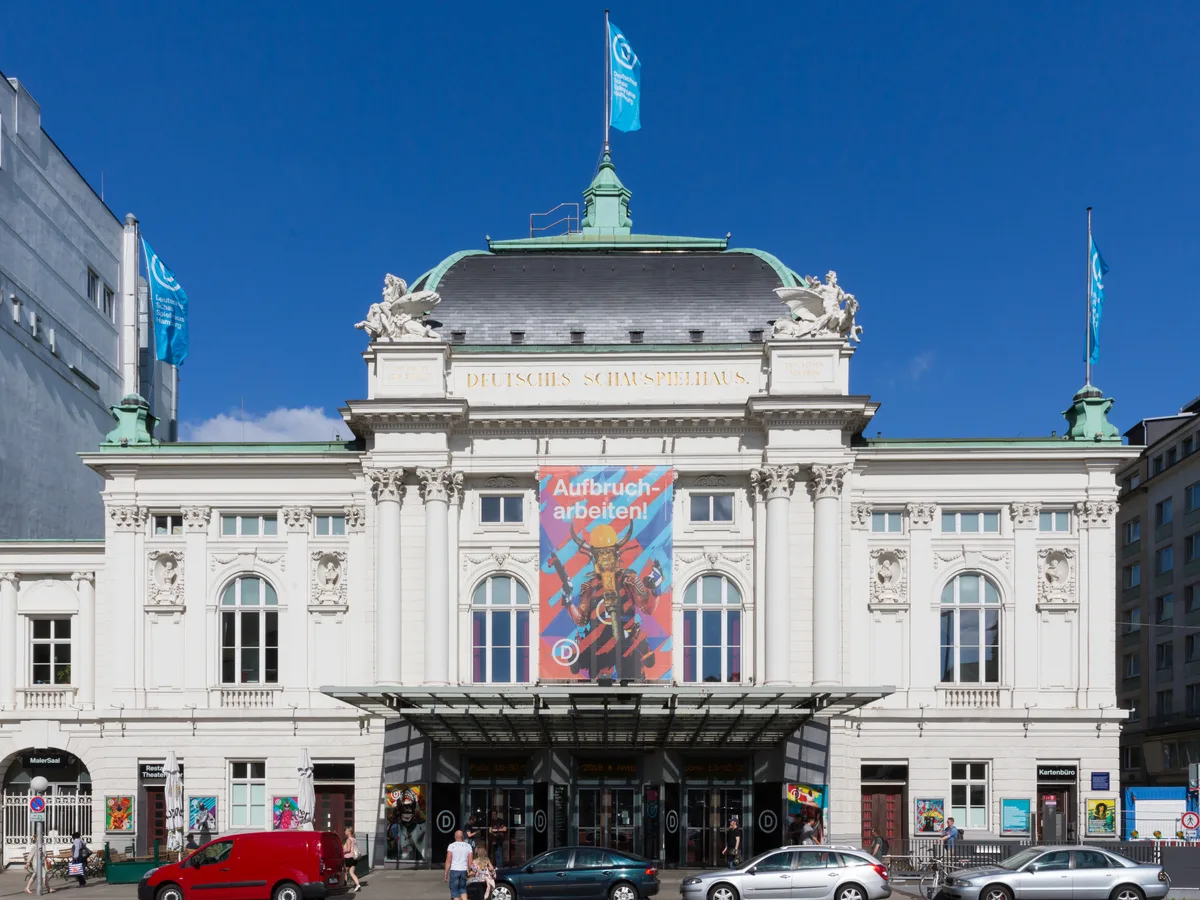
The Deutsches Schauspielhaus in the Hamburg district of St. Georg is, with 1,200 seats, the largest spoken-word theatre in Germany. It came about through a private initiative of citizens and the "Aktiengesellschaft Deutsches Schauspielhaus", founded in 1899. The plans came from the Viennese architectural firm Fellner & Helmer, who designed the neo-Baroque building on the model of the Vienna Volkstheater. On 15 September 1900 the theatre was ceremonially opened with a performance of Iphigenia in Tauris. The name Deutsches Schauspielhaus ties in with the tradition of the Hamburg National Theatre, run by Hamburg citizens in the mid-18th century and where Gotthold Ephraim Lessing worked as dramaturge. The Schauspielhaus decisively shaped the city's theatre history in the 20th century and is among the leading theatres of Germany. Hamburg developed from the 1870s into a modern city of world standing, not least owing to the founding of the Reich and rapid economic growth. The heightened self-confidence of the Hamburg upper bourgeoisie increasingly demanded a representative theatre. Until then the theatre landscape consisted of one spoken-word theatre and the city theatre, in which entertainment and opera were cultivated.
Director Bernhard Pollini's theatre monopoly broke only with his death in 1897 — whereupon Hamburg's citizens defiantly founded their own playhouse.
At a glance
- Type
- Theatre
- Location
- Hamburg, Germany
More venues in Hamburg
- Altonaer Theater · Theatre, Hamburg
- Elbphilharmonie · Multi-genre theatre, Hamburg
- Ernst Deutsch Theater · Theatre, Hamburg
- Hamburger Kammerspiele · Theatre, Hamburg
- Hamburgische Staatsoper · Opera house, Hamburg
- Laeiszhalle · Concert hall, Hamburg
- Ohnsorg Theatre · Theatre, Hamburg
- Schmidt Theater · Theatre, Hamburg
- St. Pauli Theater · Theatre, Hamburg
- Stage Operettenhaus · Musical theatre, Hamburg