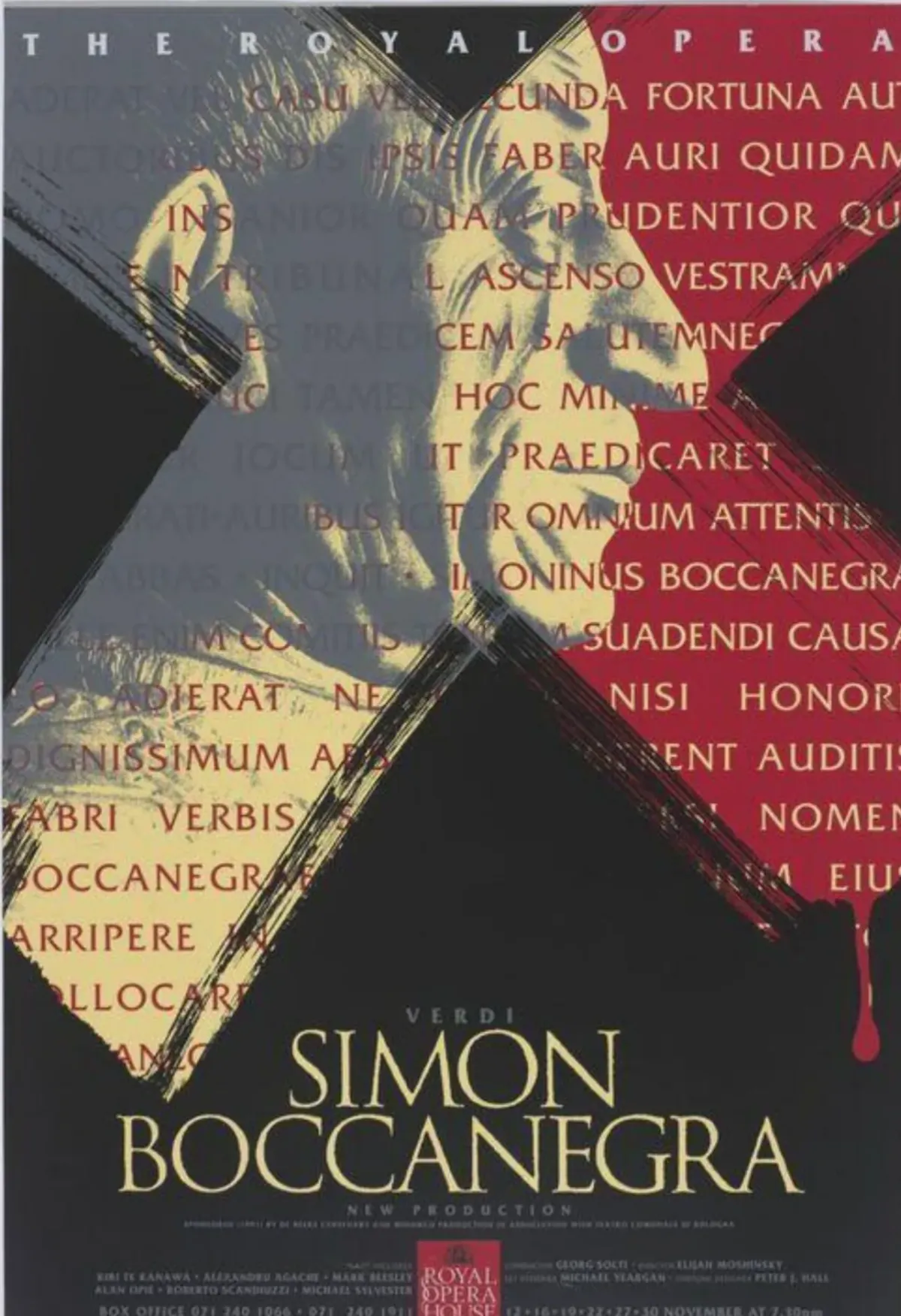
About the work
Giuseppe Verdi's three-act opera with prologue exists in two distinct versions: the original 1857 Venice version that failed, and the definitive 1881 revision with a newly composed Council Chamber scene and substantial textual revision by Arrigo Boito—the first collaboration between Verdi and the younger composer-librettist that would later produce Otello and Falstaff. The revision transforms the opera into one of Verdi's most psychologically complex works.
Plot
In fourteenth-century Genoa, the corsair Simon Boccanegra is elected Doge after the death of his beloved Maria, whose father the aristocrat Fiesco has kept their infant daughter hidden. Twenty-five years later, Fiesco still plots against Simon, unaware that the young woman he has raised as Amelia Grimaldi is actually Simon's lost daughter. The recognition scene between father and daughter, with its transformative tenderness, is among the most moving in all opera. Political conspiracies, the great Council Chamber scene, and ultimately Simon's poisoning by a former ally lead to a death in which Simon, Fiesco, and Amelia are finally reconciled in their mutual love.
Cultural significance
Simon Boccanegra is Verdi's most politically complex work and its 1881 revision transformed the opera into an ensemble piece of remarkable psychological depth. The Council Chamber scene, with its call for reconciliation between Genoa's warring factions, functions as a plea for Italian unity—a political current running through Verdi's later career. The title role is among the supreme parts for the baritone voice; Thomas Hampson, Leo Nucci, Plácido Domingo (in his late baritone career), and Dmitri Hvorostovsky have been associated with definitive modern interpretations.