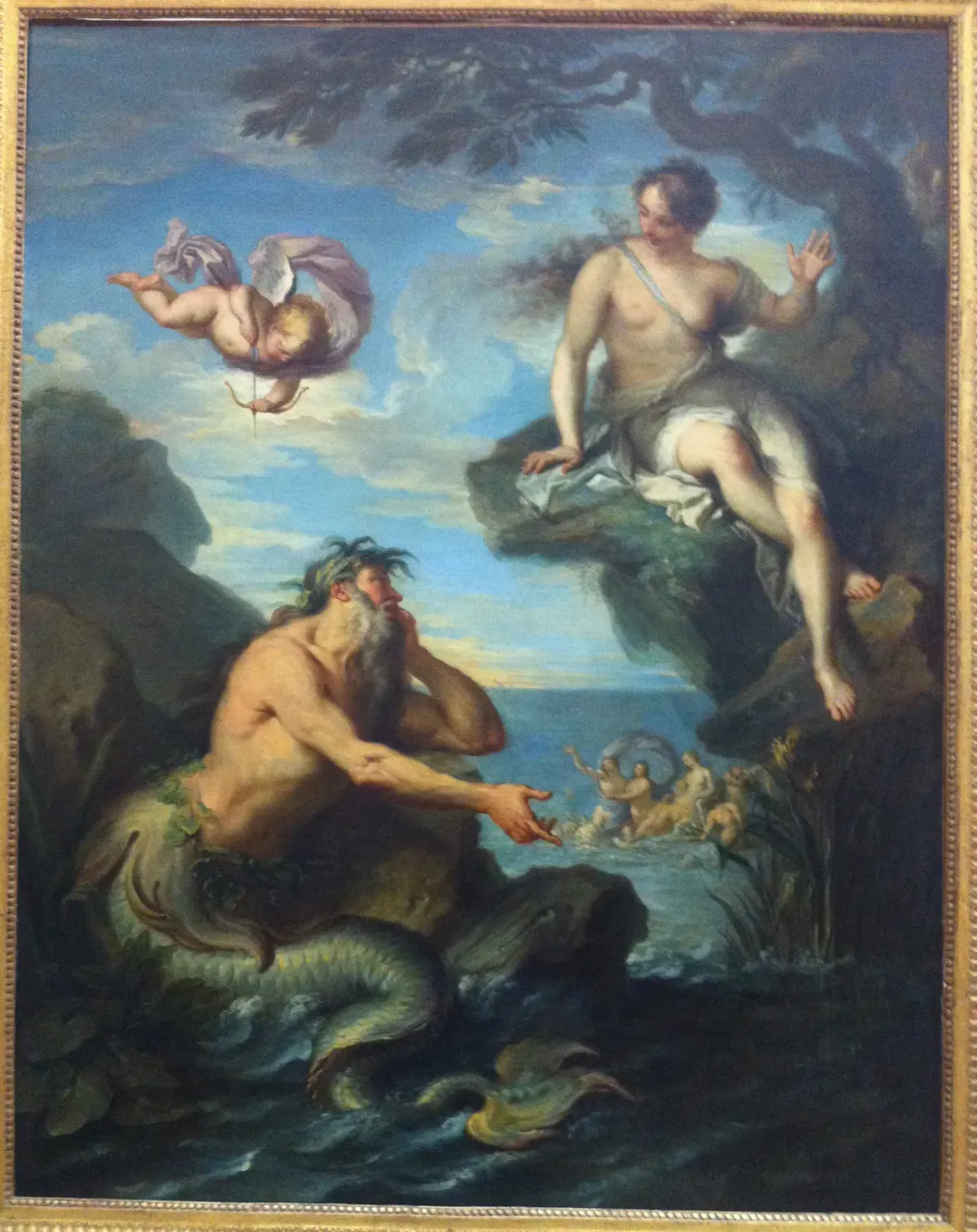
About the work
Jean-Marie Leclair's „Scylla et Glaucus" was premiered at the Académie Royale de Musique in Paris in 1746. It is the only opera by the famous French Baroque violinist and composer, a „tragédie en musique" on a subject from Ovid's „Metamorphoses". The work is notable for its brilliant instrumentation and its extended dance scenes.
Plot
The sea god Glaucus loves the nymph Scylla, who long rejects his courtship. In search of a means to win her heart, Glaucus turns to the powerful sorceress Circe. But Circe herself is seized with passion for Glaucus and tries by every art to bind him to her. When Scylla at last returns Glaucus's love and Glaucus spurns Circe, her love turns to raging jealousy. In revenge the sorceress poisons the spring in which Scylla bathes and transforms Glaucus's beloved into a monster — the rocky reef that henceforth threatens seafarers. Glaucus is left inconsolable. Choruses, gods and allegorical figures frame the action in the splendid form of French tragedy.
Cultural significance
„Scylla et Glaucus" is Leclair's only stage work; he is remembered above all as one of the most significant violinists and violin composers of his time. After a few performances the opera fell into long oblivion and was rediscovered only in the twentieth century. Today it is regarded as a high point of French Baroque opera between Lully and Rameau and is cultivated by specialist ensembles of historically informed performance.