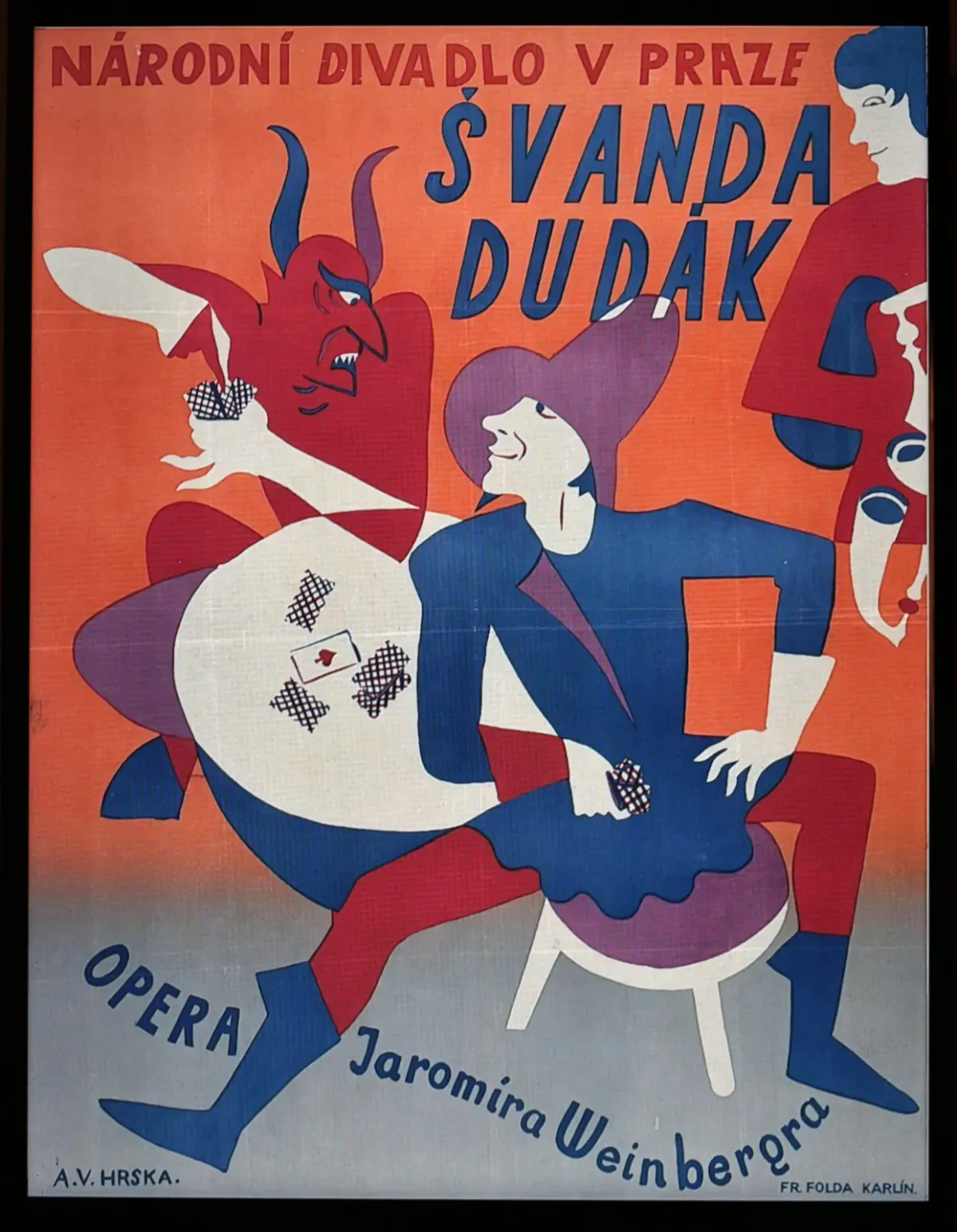
About the work
"Schwanda the Bagpiper" (Czech "Švanda dudák") is a folk opera in two acts by Jaromír Weinberger to a Czech libretto by Miloš Kareš, based on Josef Kajetán Tyl's play about the bagpiper of Strakonice; the German version was made by Max Brod. It premiered on 27 April 1927 at the National Theatre in Prague under Otakar Ostrčil, with the German-language premiere following on 16 December 1928 in Breslau.
Plot
Schwanda, the finest bagpiper in the region, lives happily with his wife Dorota until the pursued robber Babinsky takes shelter with them and lures him with tales of a bewitched, permanently sorrowful queen. Schwanda's playing makes her laugh, but when he is to marry her, Dorota appears and freezes the queen's heart again; Schwanda is condemned to death. Babinsky rescues him and later must even free him from the devil with a card trick, before a cured Schwanda, his wanderlust gone, returns home to Dorota.
Cultural significance
"Schwanda" was the first Czech opera since Smetana's "The Bartered Bride" to succeed internationally and was performed on numerous European stages in the following years; the "Polka and Fugue" from the second act remains a standalone concert piece to this day.