About the work
Pietro Mascagni's Cavalleria rusticana (1890) and Ruggero Leoncavallo's Pagliacci (1892) — here given in reverse order — are the twin masterpieces of Italian verismo. Opening with Pagliacci foregrounds the theatrical self-reflexivity and closes the evening with the rural, archaic force of Cavalleria.
Plot
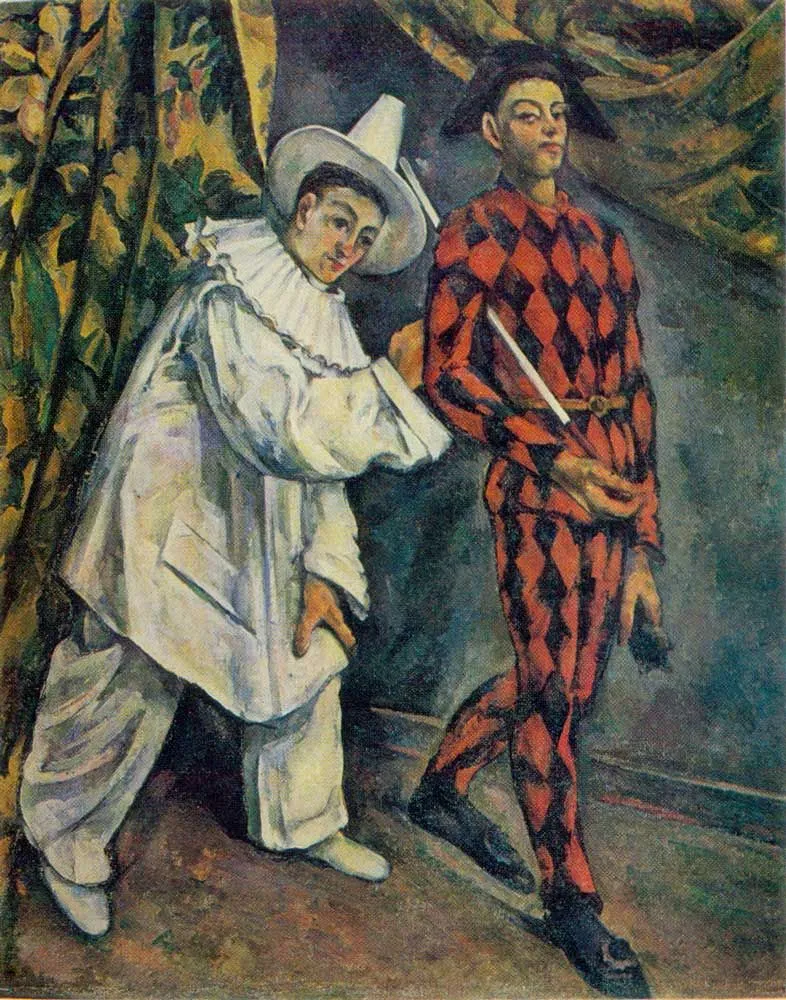
Pagliacci: A travelling theatre troupe arrives in a Calabrian village. The leader Canio discovers that his wife Nedda is having an affair with the local peasant Silvio. During the evening commedia dell'arte performance the play and reality blur: as Pagliaccio, Canio breaks down in his famous „Vesti la giubba", then on stage stabs Nedda and the rushing Silvio. „La commedia è finita!" Cavalleria rusticana: In a Sicilian village on Easter morning, Santuzza loves the young Turiddu, who has abandoned her for Lola, the wife of the carter Alfio. When Santuzza reveals the affair to Alfio, he challenges Turiddu to a duel. Offstage the two men fight; a woman cries out: „Hanno ammazzato compare Turiddu!"
Cultural significance
„Cav & Pag" embody verismo, the Italian operatic counter-movement to literary Romanticism with its focus on ordinary people and unvarnished passion. Mascagni's Intermezzo and Canio's „Vesti la giubba" rank among the most-cited moments in all opera. The Pagliacci/Cavalleria sequence chosen here — against the historical Cav/Pag tradition — is an artistic decision specific to each production.