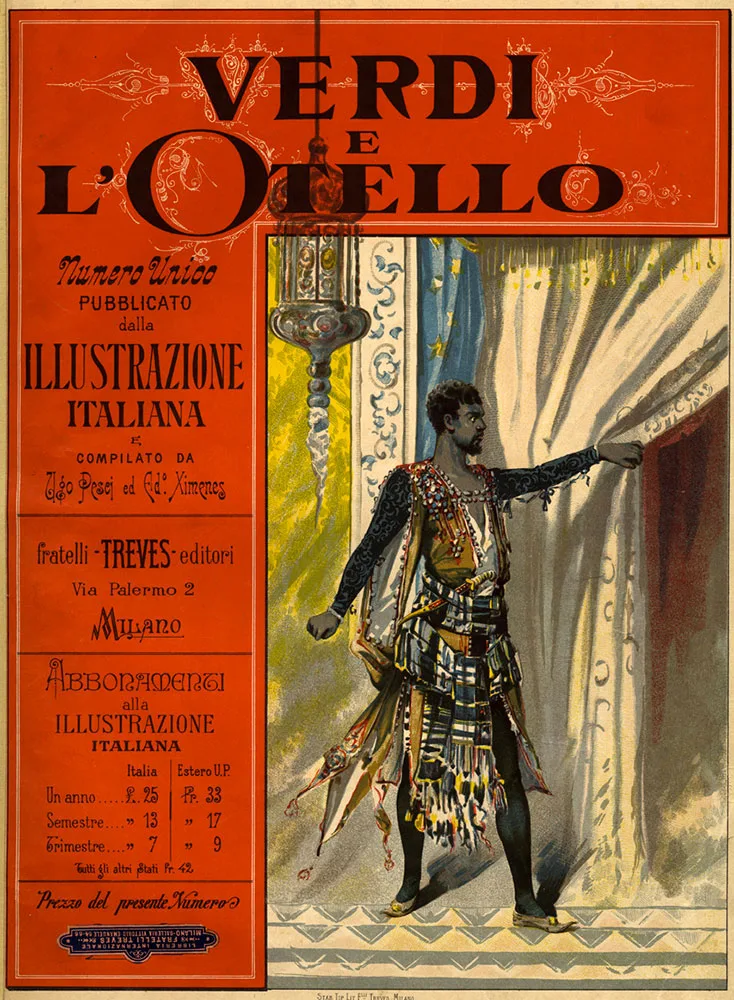
About the work
Giuseppe Verdi's four-act tragedy, with a libretto by Arrigo Boito based on Shakespeare's Othello, was premiered on 5 February 1887 at La Scala Milan. The opera ended Verdi's fifteen-year operatic silence after Aida and represents the summit of Italian tragic opera. Verdi was seventy-three at the premiere; he would compose only one more opera, the comic Falstaff, before retirement.
Plot
On the Venetian-held island of Cyprus, the Moorish general Otello returns victorious from battle and embraces his beloved wife Desdemona. His ensign Iago, passed over for promotion and consumed by racial resentment, plots to destroy them. Iago manipulates Otello into suspecting Desdemona of adultery with the officer Cassio, using a handkerchief as false evidence. Otello's rage builds through jealous confrontations until, in the final act, he strangles Desdemona in her bed. Iago's wife Emilia reveals the deception; Otello kills himself beside his dead wife, kissing her one last time.
Cultural significance
Otello represents the summit of Italian operatic composition and the closest Verdi came to the through-composed music drama of Wagner, though remaining rooted in the Italian melodic tradition. The Love Duet in Act One is among the most sublime passages Verdi ever composed. The role of Otello is among the most fearsome in the tenor repertoire, requiring tremendous stamina across four acts and capacity for both lyrical tenderness and dramatic violence. Great Otellos have been rare: Placido Domingo and Jon Vickers have defined the modern tradition.