About the work
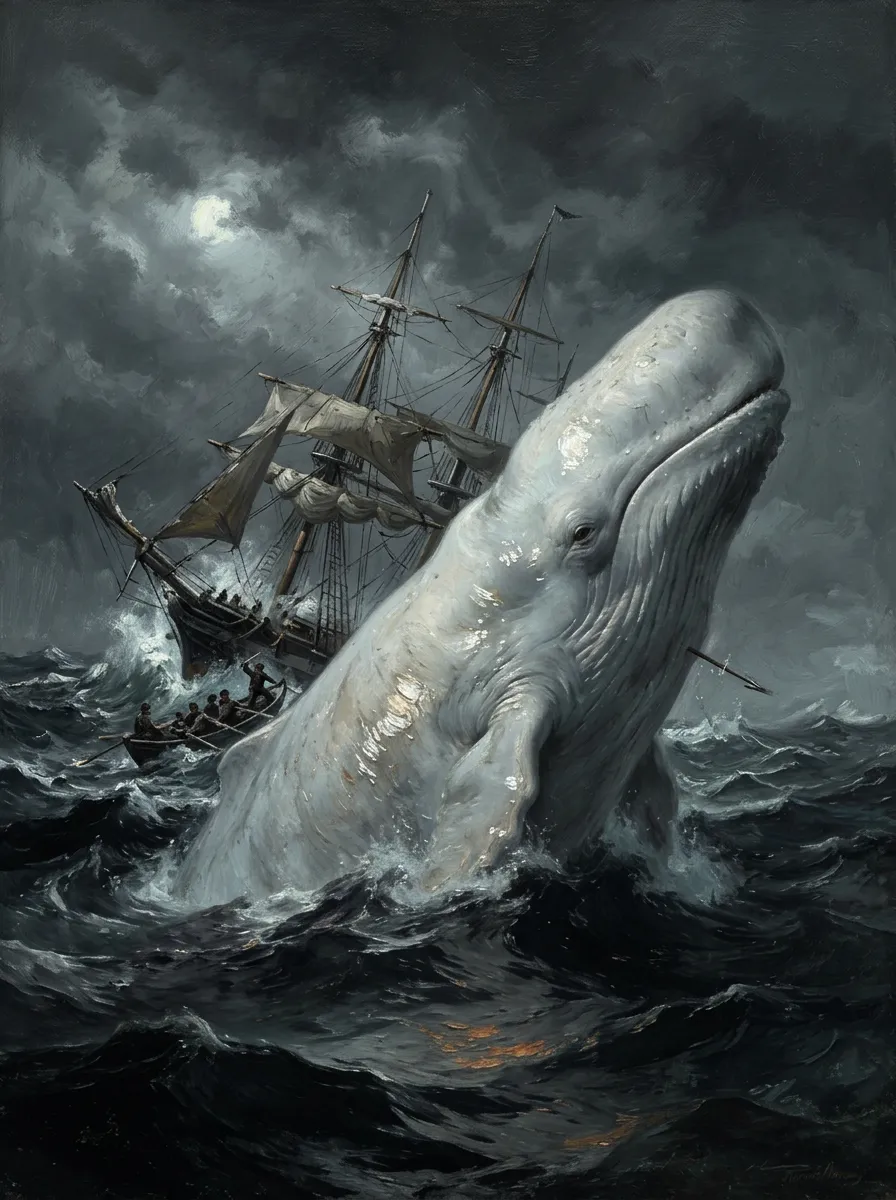
Moby-Dick is based on Herman Melville's novel of 1851 and has been adapted for the stage in various theatrical versions. The story of the obsessed Captain Ahab and his hunt for the white whale is among the great narratives of world literature.
Plot
The young Ishmael signs on to the whaler Pequod, whose captain Ahab is driven by a manic obsession: he wants to kill the white sperm whale Moby Dick, which once tore off his leg. The crew is drawn into Ahab's campaign of revenge as the voyage carries them across the world's oceans. Despite all the warnings of his officers, Ahab drives the hunt onward. In the final three-day confrontation with the whale, ship and crew are destroyed. Only Ishmael survives, the sole witness.
Cultural significance
Moby-Dick is regarded as one of the most significant novels of American literature and has been adapted many times for theatre, film and opera. The work is a multi-layered allegory of obsession, of humanity's struggle against nature, and of the limits of human knowledge.