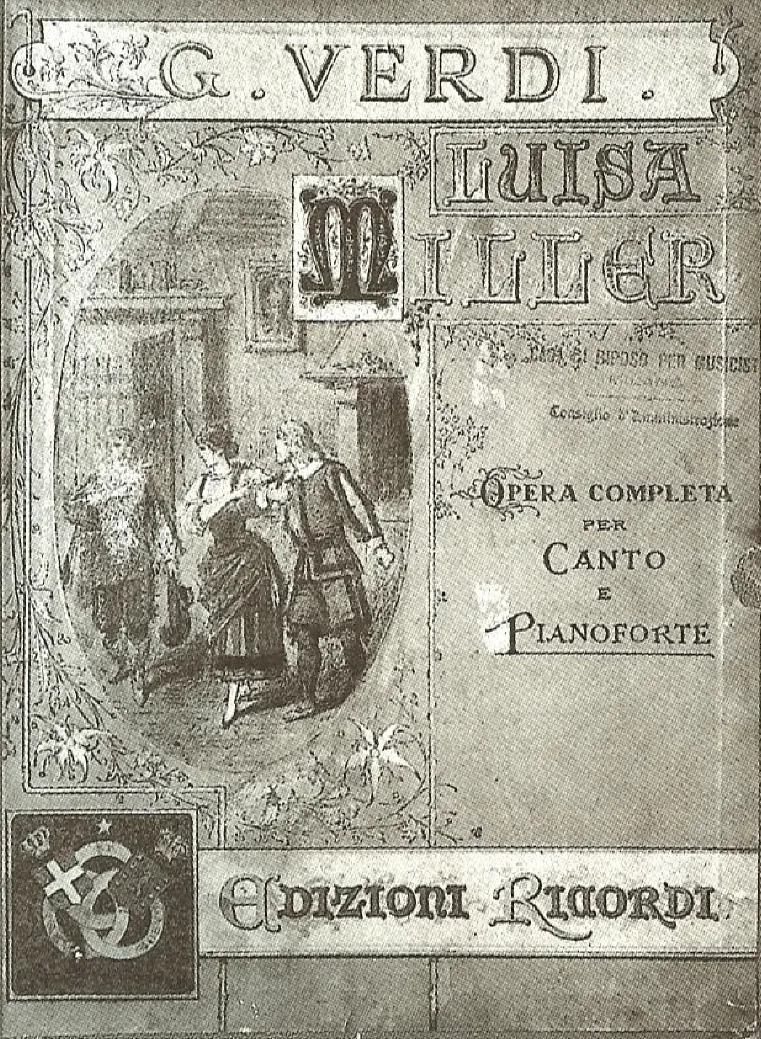
About the work
Giuseppe Verdi's opera in three acts and a prelude was premiered in Naples in 1849 and belongs to the middle group of his works, between the early patriotic operas and the „trilogia popolare" (Rigoletto, Trovatore, Traviata). Salvatore Cammarano's libretto is based on Friedrich Schiller's bourgeois tragedy „Kabale und Liebe" (1784).
Plot
In a seventeenth-century German village the simple soldier Rodolfo — in truth the son of Count Walter — loves the miller's daughter Luisa Miller. Walter wants Rodolfo to make a proper aristocratic marriage with the Duchess Federica and sends his henchman Wurm to have Luisa's father Miller arrested on a trumped-up charge. Wurm forces Luisa to write a letter claiming she never loved Rodolfo — otherwise Miller will be executed. Rodolfo, on receiving the letter, believes himself betrayed. Luisa is forced into marriage with Wurm. Rodolfo slips in to her, gives her and himself poisoned water. As she dies, Luisa confesses the blackmail. With his last strength Rodolfo shoots Wurm before dying at Luisa's side.
Cultural significance
Luisa Miller marks the transition in Verdi's output to his mature middle period. The father-daughter duets between Miller and Luisa look forward to Rigoletto/Gilda and to Germont/Violetta. Rodolfo's aria „Quando le sere al placido" is one of Verdi's finest tenor arias. The work today stands in the shadow of Verdi's great hits but is regularly in the international repertoire.