About the work
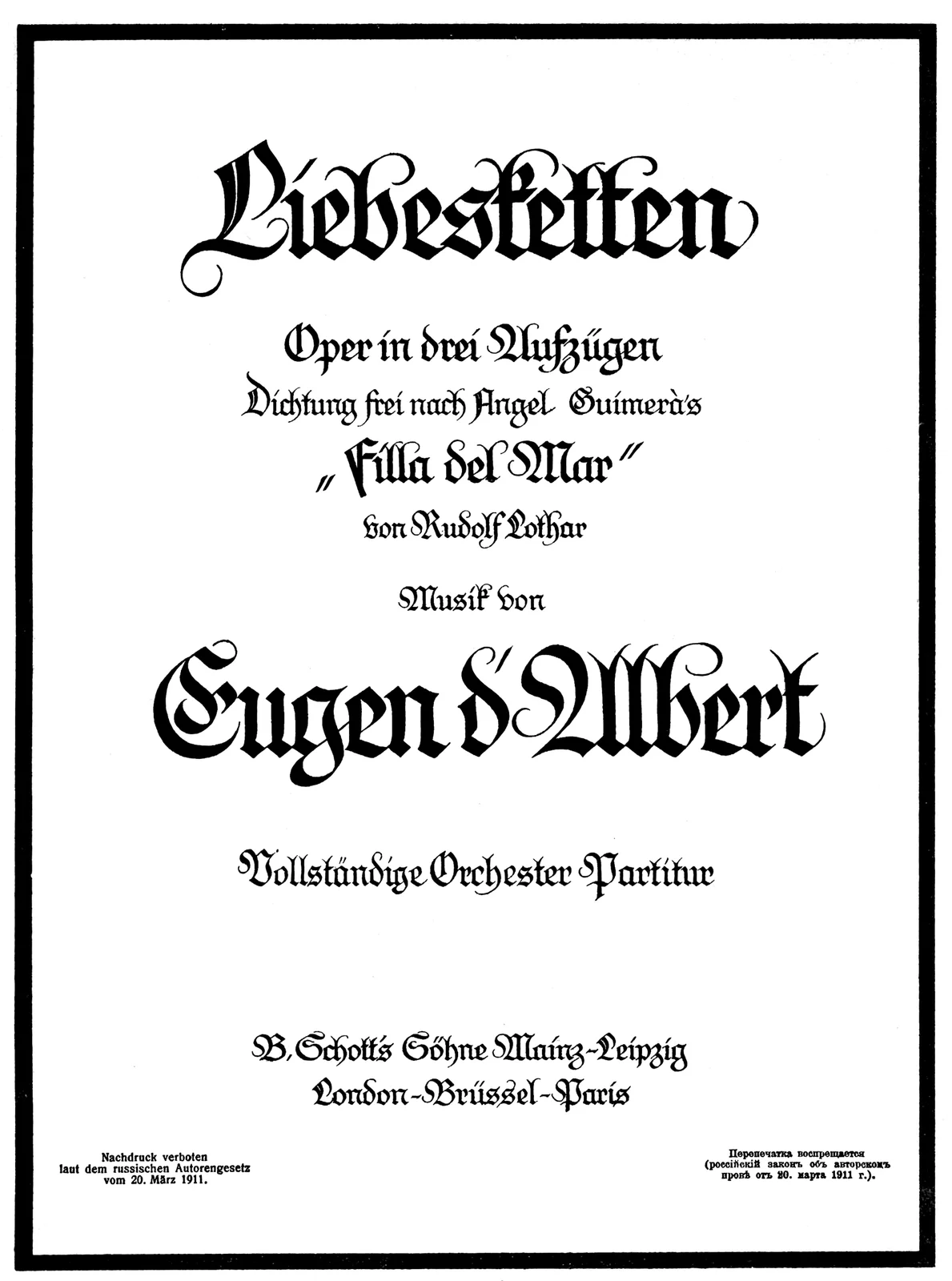
With „Liebesketten“, Eugen d’Albert set a second drama by the Catalan playwright Àngel Guimerà, whose „Terra baixa“ had already provided the basis for his worldwide success „Tiefland“; as with that opera, Rudolf Lothar wrote the libretto, here after Guimerà's „La filla del mar“. The opera in three acts premiered at the Vienna Volksoper on 12 November 1912.
Plot
On a rocky coast with a village church and an inn, harbour master Peter Martin — in love with Caterina the previous year — has now fallen for Marion, the innkeeper Noel's wife. Marion is not averse to an affair but fears her husband's jealousy, and talks Peter Martin into feigning affection for the young Turkish woman Sadika, the sole survivor of a shipwreck who has lived in the couple's household for years. The pretended feeling sets off a web of entanglements that only rekindles the very jealousy it was meant to avert.
Cultural significance
That d’Albert returned to Guimerà and Lothar after „Tiefland“ shows how strongly this Mediterranean, folk-dramatic material had shaped him; unlike „Tiefland“, however, „Liebesketten“ never secured a lasting place in the repertoire and is rarely staged today.