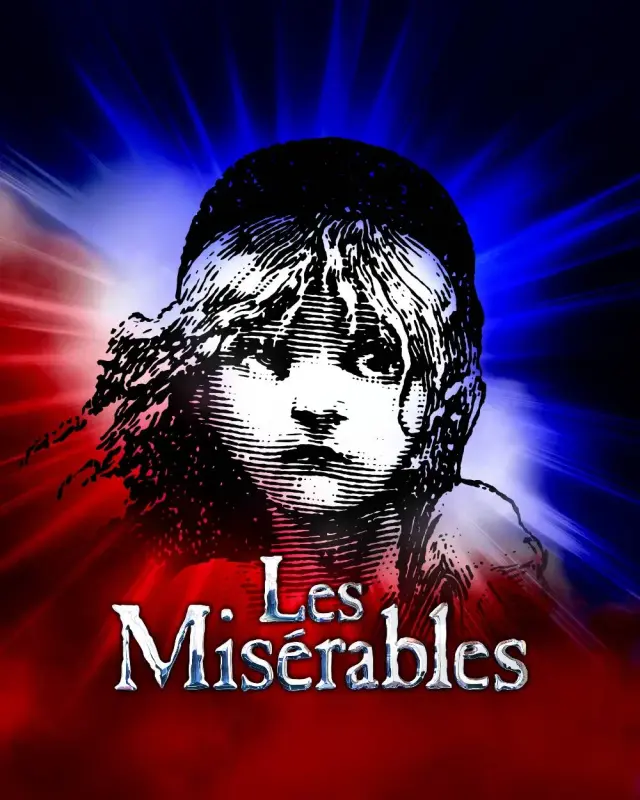
About the work
Claude-Michel Schönberg's pop opera, with lyrics by Alain Boublil (French original) and Herbert Kretzmer (English adaptation), was premiered in French in 1980 at the Palais des Sports in Paris. Cameron Mackintosh's English-language version opened in 1985 at the Barbican in London and transferred to the West End, where it became the second-longest-running musical in history. Based on Victor Hugo's 1862 novel, the work brought grand French romanticism to the sung-through musical tradition.
Plot
Jean Valjean, released from the galleys after nineteen years for stealing bread, breaks parole and remakes his life as the prosperous Monsieur Madeleine. Pursued relentlessly by the righteous Inspector Javert, Valjean takes in Cosette, orphaned daughter of the dying factory worker Fantine. Years later, the adult Cosette falls in love with the student revolutionary Marius during the 1832 Paris uprising. At the barricade, Valjean saves Marius's life, rescues him through the Paris sewers, and reveals his true identity. Javert, unable to reconcile his rigid sense of justice with Valjean's mercy, drowns himself in the Seine. Valjean dies at peace, united at last with his adopted daughter.
Cultural significance
Les Misérables is the defining sung-through musical and the supreme example of the French school of musical theatre. The anthem Do You Hear the People Sing? has become a protest song adopted by political movements from Hong Kong to Ukraine. The role of Valjean demands a tenor of remarkable range and dramatic weight—Colm Wilkinson's original performance set the benchmark. Tom Hooper's 2012 film with Hugh Jackman brought the material to cinema audiences worldwide. The Stage Palladium Theater Stuttgart hosted the German-language production from 2022.