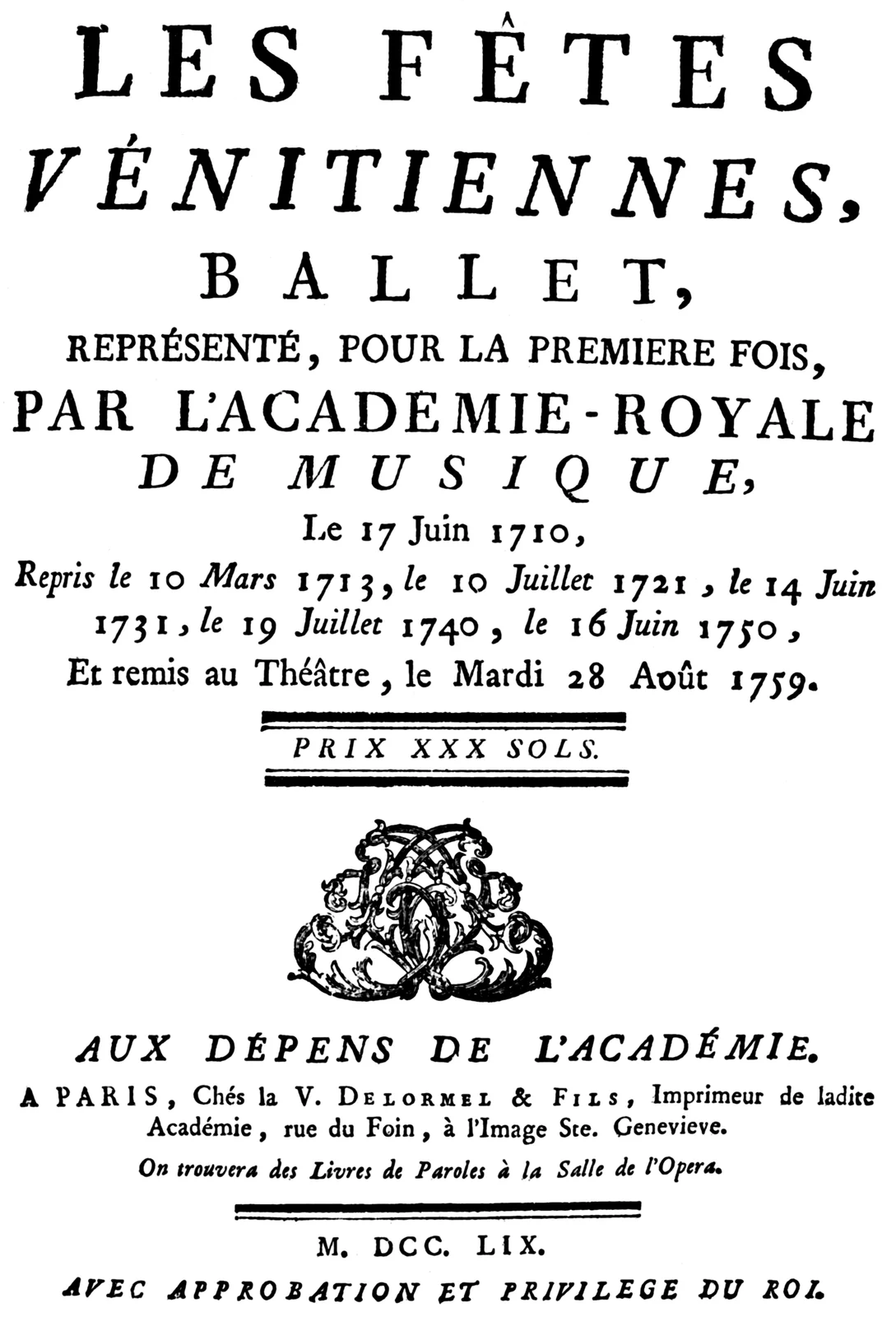
About the work
Opéra-ballet by André Campra, to a libretto by Antoine Danchet, first performed on 17 June 1710 by the Académie royale de musique at the Théâtre du Palais-Royal in Paris. The work consists of a prologue and originally three, later up to five, loosely connected 'entrées'.
Plot
The prologue shows Carnival inviting the gods of love to Venice while banishing Reason. The following entrées string together self-contained episodes set in Venice – among them fortune-tellers on St Mark's Square and a singing master – rather than following a continuous plot.
Cultural significance
The work became Campra's greatest stage success, running for some fifty consecutive performances. With its sequence of short, dance-driven scenes, Campra answered the public's fatigue with the weighty tragédie lyrique and helped define the opéra-ballet genre.