About the work
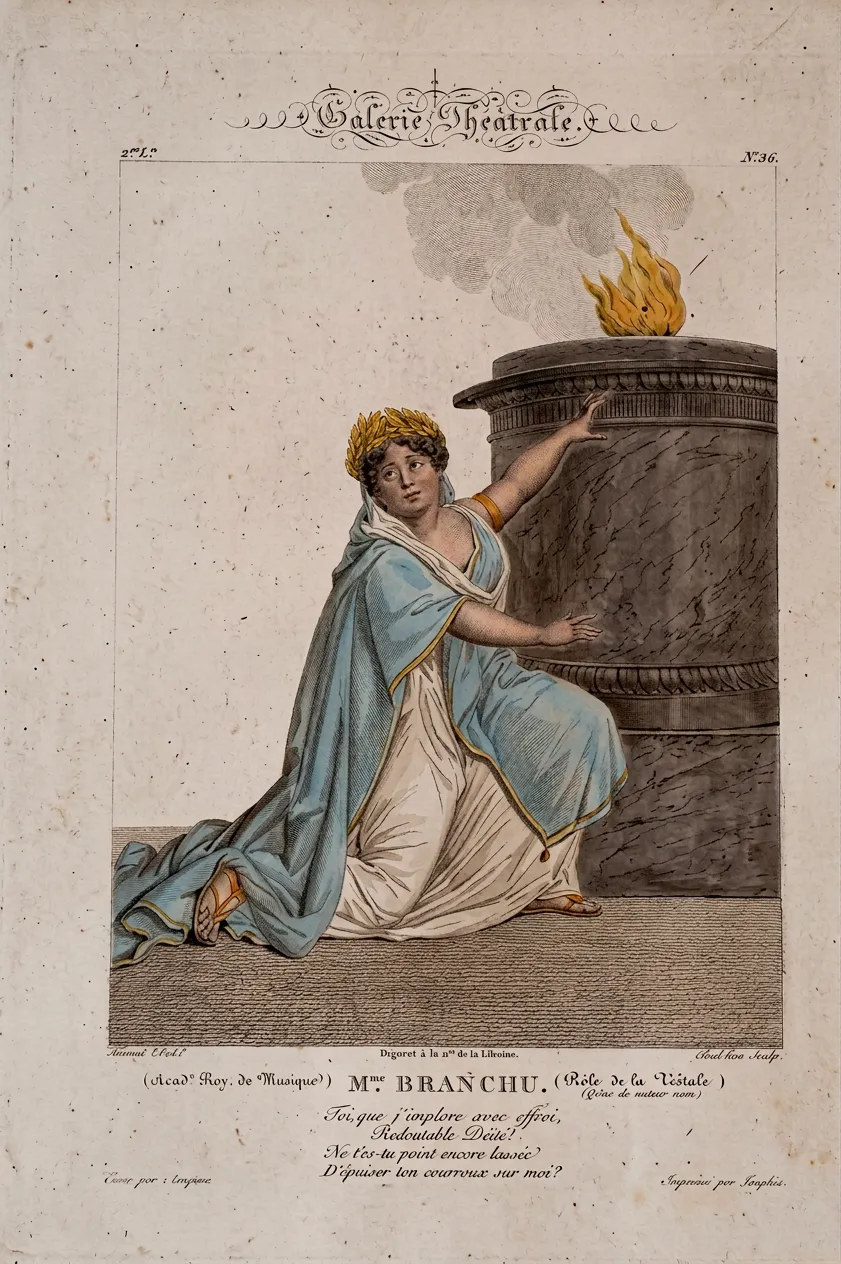
Gaspare Spontini's „La Vestale" was premiered at the Paris Opéra in 1807 and promoted by the Empress Joséphine. The „tragédie lyrique" about a Vestal Virgin in ancient Rome was a triumphant success and is regarded as a bridge between the opera of Gluck and French grand opéra. Spontini's monumental, passionate style influenced Berlioz and Wagner.
Plot
In ancient Rome the Vestal Virgin Julia secretly loves the victorious general Licinius. As a priestess of Vesta she is bound to eternal chastity and must guard the sacred flame, whose extinction is punished by death. When Licinius returns to the city in triumph, it is Julia's duty to present him with the victor's wreath. At night she keeps the watch alone at the altar; Licinius makes his way to her, and in the rapture of reunion the sacred flame goes out. The sacrilege is discovered: Julia is condemned to be buried alive, since she will not reveal her lover's name. As she is already being led to execution, lightning strikes the altar and rekindles the sacred fire — a sign of the goddess's forgiveness. Julia is pardoned and united with Licinius.
Cultural significance
„La Vestale" was one of the most successful operas of its time and a key work on the road to grand opéra. Spontini's union of ancient pathos, grand choral dramaturgy and glowing melody became a model for French and German opera of the nineteenth century. The title role is among the great challenges for dramatic sopranos; Maria Callas's interpretation at La Scala in Milan (1954) made the work famous again in the twentieth century.