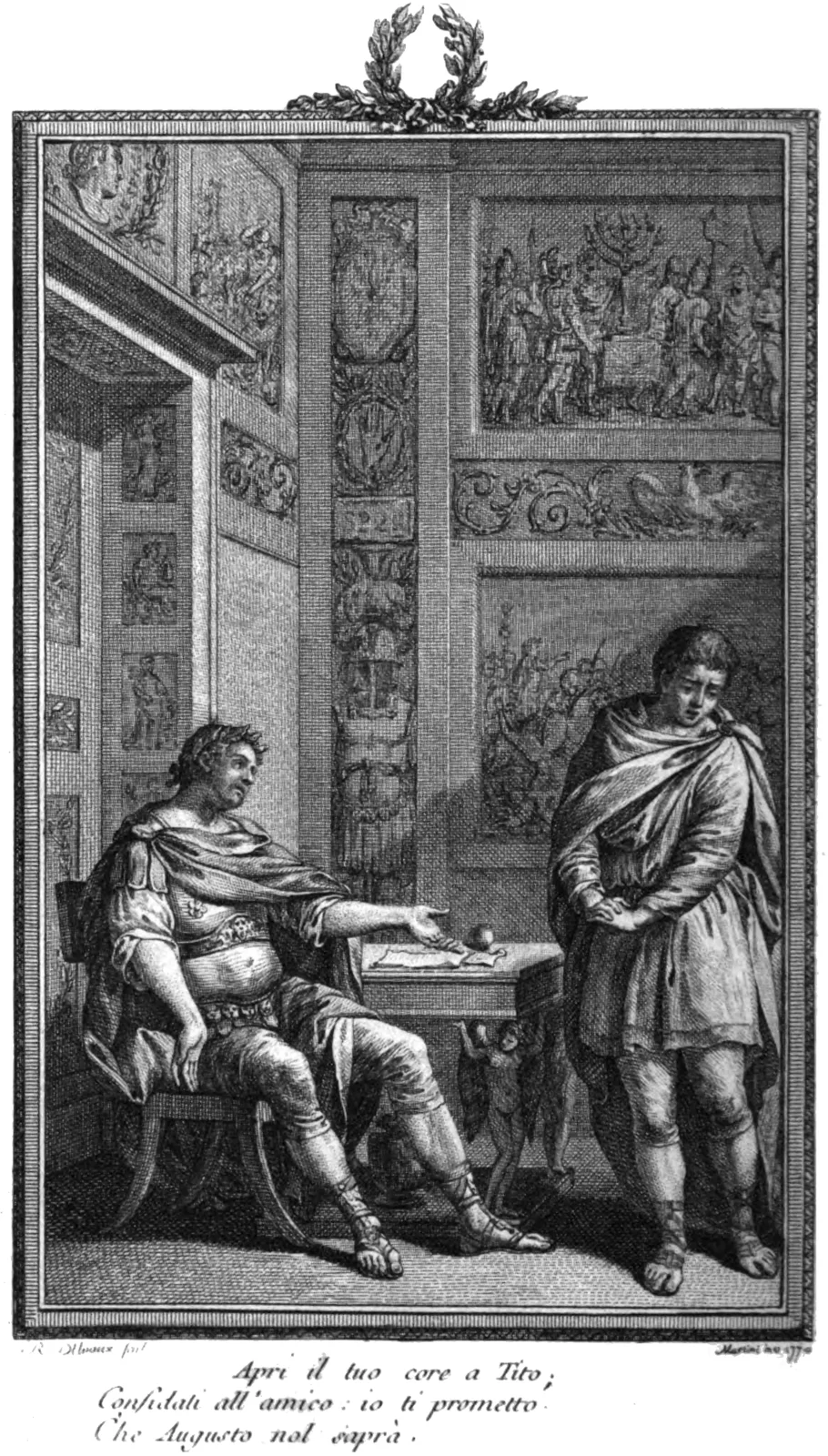
About the work
Dramma per musica in three acts by Antonio Caldara to a libretto by Pietro Metastasio, first performed on 4 November 1734 at the Vienna Hoftheater for the nameday of Emperor Charles VI. Caldara's was the very first setting of a text that would later be reset around fifty times, most famously by Wolfgang Amadeus Mozart in 1791; the ballets were composed by Nicola Matteis the Younger.
Plot
The Roman emperor Titus is renowned for his clemency. When a conspiracy against him is uncovered, involving his friend Sesto, who has been drawn in by the vengeful Vitellia, daughter of the former emperor Vitellius, Titus must choose between justice and mercy. In the end he pardons all the conspirators, including Sesto and Vitellia, confirming his reputation as a just and merciful ruler.
Cultural significance
With around fifty known settings, 'La clemenza di Tito' is among Metastasio's most frequently performed librettos; Caldara's 1734 version stands at the start of that history, more than fifty years before Mozart's celebrated opera of the same title. The premiere was cast with six soloists, mixed chorus and orchestra.