About the work
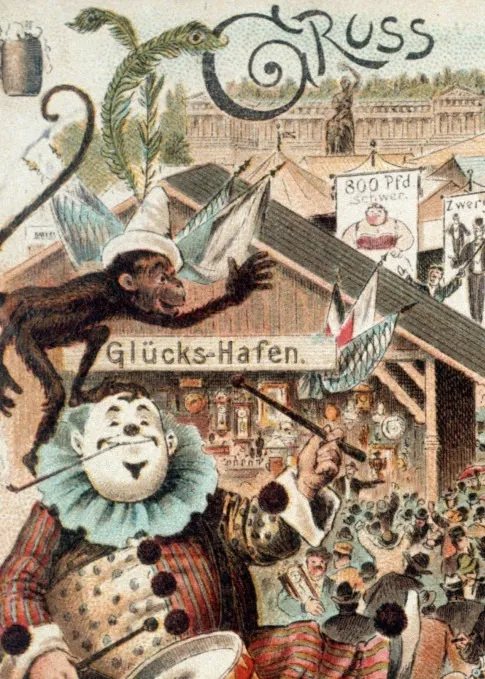
Ödön von Horváth's Volksstück „Kasimir and Karoline" was premiered in Leipzig in 1932. Set against the backdrop of the Munich Oktoberfest, it shows how economic crisis wears down a love. In a rapid succession of short scenes, interspersed with telling „silences", a couple falls apart under unemployment and social fear.
Plot
On one evening at the Munich Oktoberfest, the just-dismissed chauffeur Kasimir and his fiancée Karoline fall out. Kasimir's bitterness over the loss of his job poisons the mood; Karoline seeks distraction and yields to the courtship of the staid cutter Schürzinger and finally of the lecherous commercial councillor Rauch, who lures her with money and promises of advancement. Kasimir, in turn, falls in with the petty criminal Merkl Franz and his girlfriend Erna. Over the course of the festival night — among beer tents, roller coaster and fortune-teller — the two drift apart for good. By the end the couples have re-sorted: Karoline stays with Schürzinger, Kasimir pairs off with Erna. Their love has not broken on a betrayal but on the economic hardship that deforms all feeling.
Cultural significance
„Kasimir and Karoline" ranks, alongside „Tales from the Vienna Woods", among Horváth's most significant Volksstücke. The Oktoberfest as a place of forced merriment becomes an image of a society drowning out its crisis with pleasure. Horváth's montage technique and his famous pauses, in which the unspoken grows loud, made the play a model of the modern Volksstück; it belongs to the standing repertoire of German-language stages.