About the work
Henrik Ibsen wrote John Gabriel Borkman in Christiania in 1896; the play was published by Gyldendal in Copenhagen, Christiania and Stockholm on 15 December 1896. After a copyright-securing reading at London’s Avenue Theatre that December, the actual world premiere took place on 10 January 1897, simultaneously at two Helsinki theatres, the Finnish-language Suomalainen Teatteri and the Swedish-language Svenska Teatern.
Plot
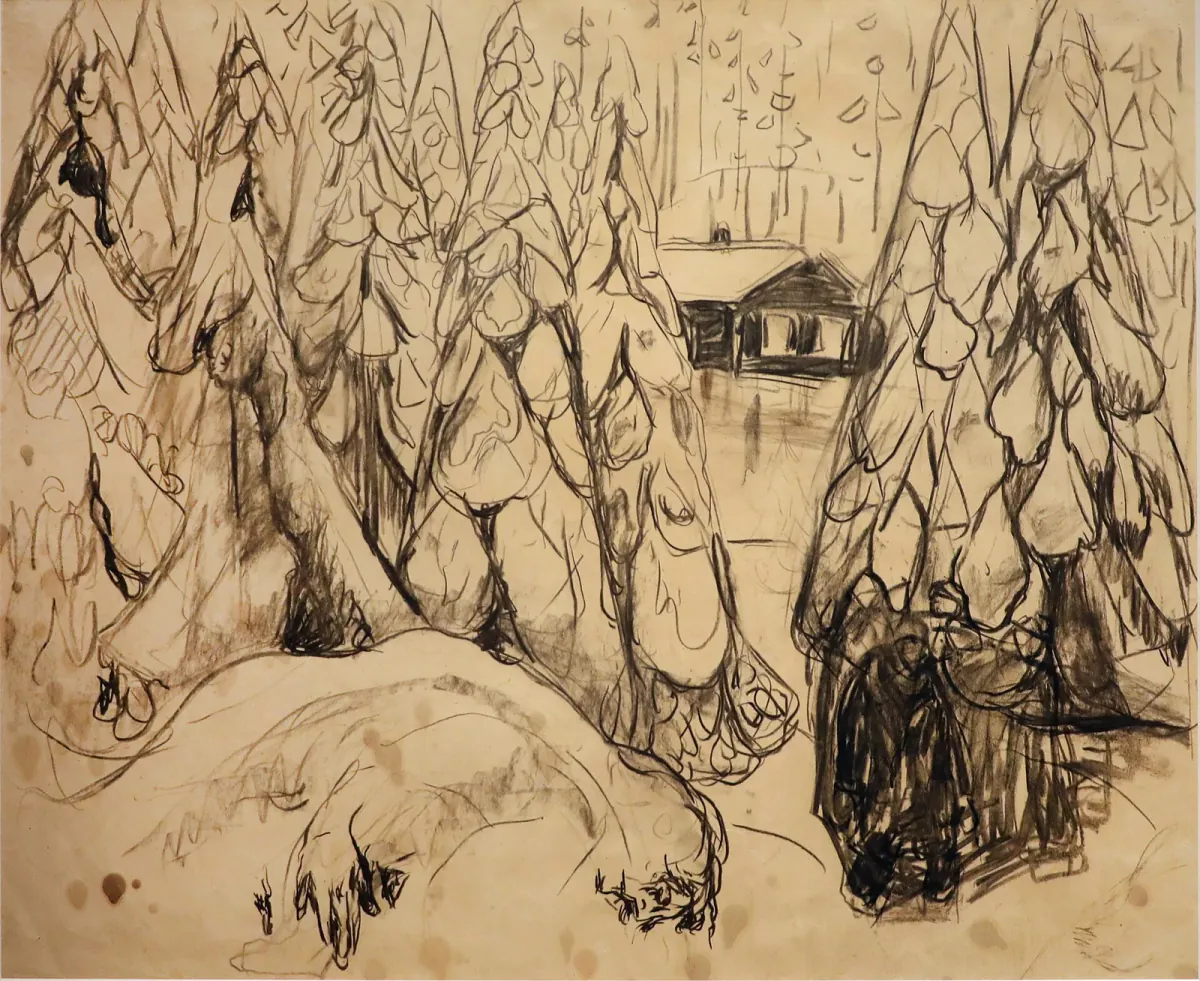
Eight years after his release from prison for embezzlement, former banker Borkman lives in isolation on the upper floor of his estranged wife Gunhild’s house. Her twin sister Ella, once his great love, seeks closeness with Erhart, the couple’s son, as her own death nears. When Gunhild refuses to give up their son, the family conflict escalates; Borkman flees into the winter cold with Ella and dies.
Cultural significance
The play became Ibsen’s greatest stage success since A Doll’s House and was quickly translated into English, French, Russian and German; the first print run of 12,000 copies had to be increased by a further 3,000 before release. Scholars have also read the figure of the failed power-seeker Borkman as an engagement with contemporary ideas of the Übermensch.