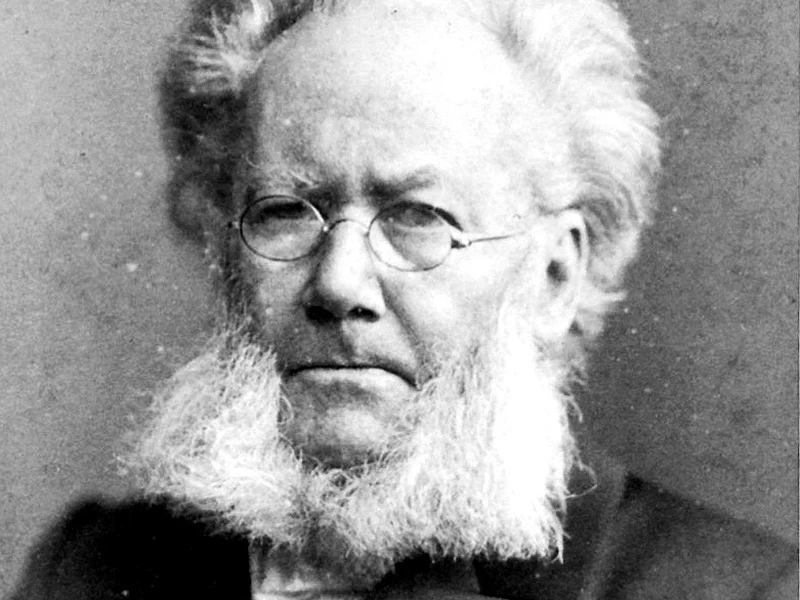
Biography
Henrik Ibsen (1828-1906), born in Skien in southern Norway, is the founder of modern drama and the most performed dramatist after Shakespeare. Ibsen spent twenty-seven years in voluntary exile in Italy and Germany, returning to Norway only in 1891. His mature social-problem plays—A Doll's House (1879), Ghosts (1881), An Enemy of the People (1882), The Wild Duck (1884), Rosmersholm (1886), Hedda Gabler (1890)—broke decisively with nineteenth-century melodrama and theatrical convention, establishing realist drama as the serious theatrical medium of the modern era. His earlier verse dramas Brand and Peer Gynt are equally central to the Norwegian repertoire. A Doll's House scandalised European audiences with its portrayal of Nora Helmer's decision to leave her husband and children; the work has been continuously relevant to every generation of feminist theatre. Ibsen died in Oslo in 1906 after a series of strokes.
On Stagelog
Loading stats...