About the work
Giuseppe Verdi's four-part opera was premiered on 19 January 1853 at the Teatro Apollo Rome, just two months before La Traviata—the middle work of Verdi's so-called trilogia popolare (Rigoletto, Il Trovatore, La Traviata). The libretto by Salvadore Cammarano, completed after his death by Leone Emanuele Bardare, is set in fifteenth-century civil war in northern Spain. The opera is notorious for its dense, convoluted plot that has made it the butt of jokes and the target of adoration in equal measure.
Plot
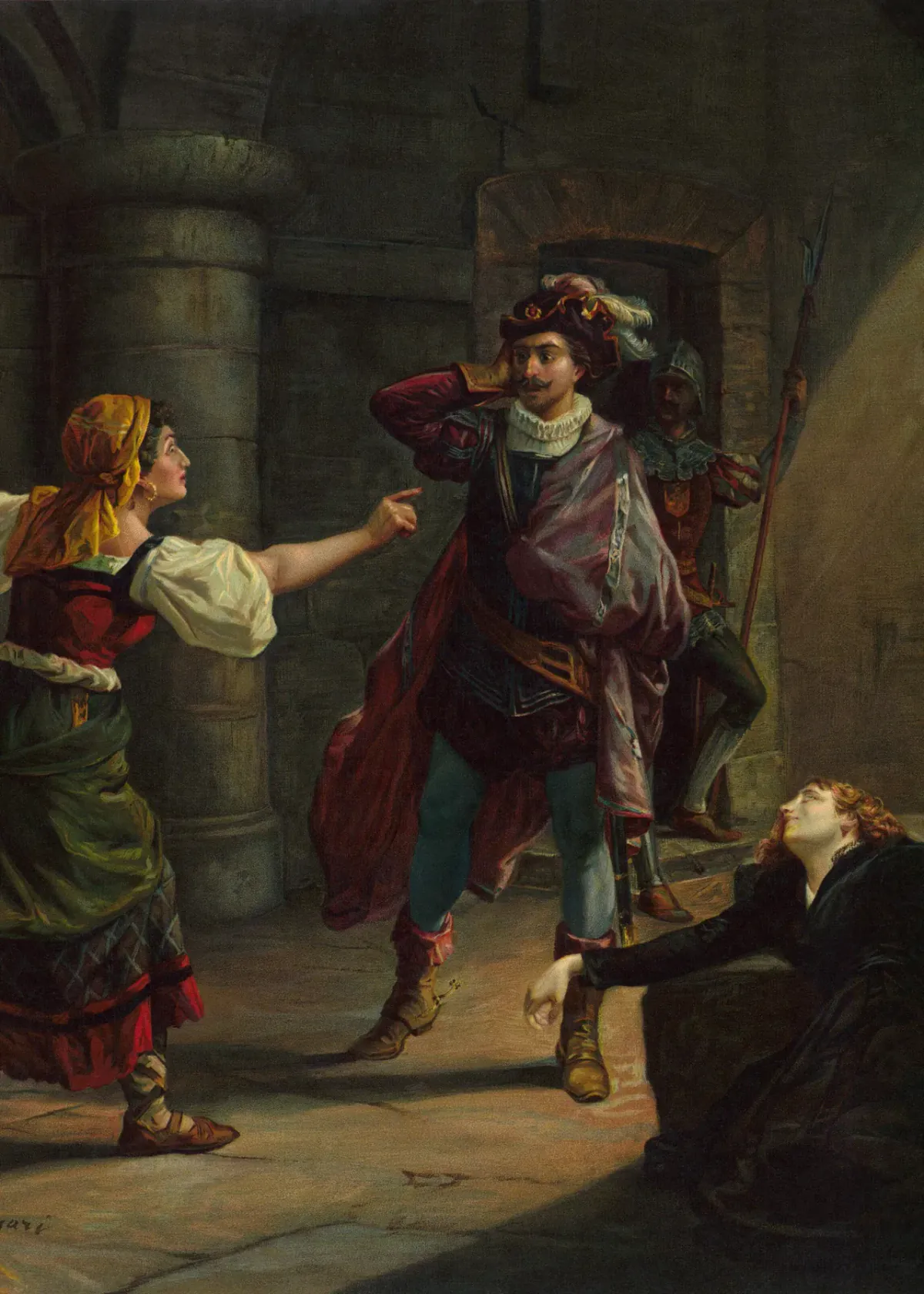
In a prologue narrated by the captain Ferrando, a gypsy woman was burned at the stake a generation ago; her daughter Azucena revenged herself by stealing a baby—but in her confusion threw her own child into the fire, keeping the stolen one as her son. The kidnapped child, Manrico, is now a troubadour loyal to the Count of Urgel's rebellion. He loves Leonora, who is also loved by his rival Count di Luna. Through duels, sieges, and the pyres that punctuate every act, the tragedy unfolds: Leonora poisons herself rather than become Count di Luna's bride, Manrico is executed, and Azucena reveals to the Count that he has just killed his own brother.
Cultural significance
Il Trovatore contains more musical highlights than almost any other Verdi opera: the Anvil Chorus, the Miserere scene, Di quella pira, the trio ending the Prologue. The opera demands four world-class principals—Leonora, Azucena, Manrico, and Di Luna—each with a defining aria. The operatic adage often attributed to the impresario of the La Scala premiere: 'You need nothing for Il Trovatore except the four greatest singers in the world.' Productions by David McVicar at the Metropolitan Opera and Alvis Hermanis have renewed interest in its psychological dimensions beyond its celebrated vocal fireworks.