About the work
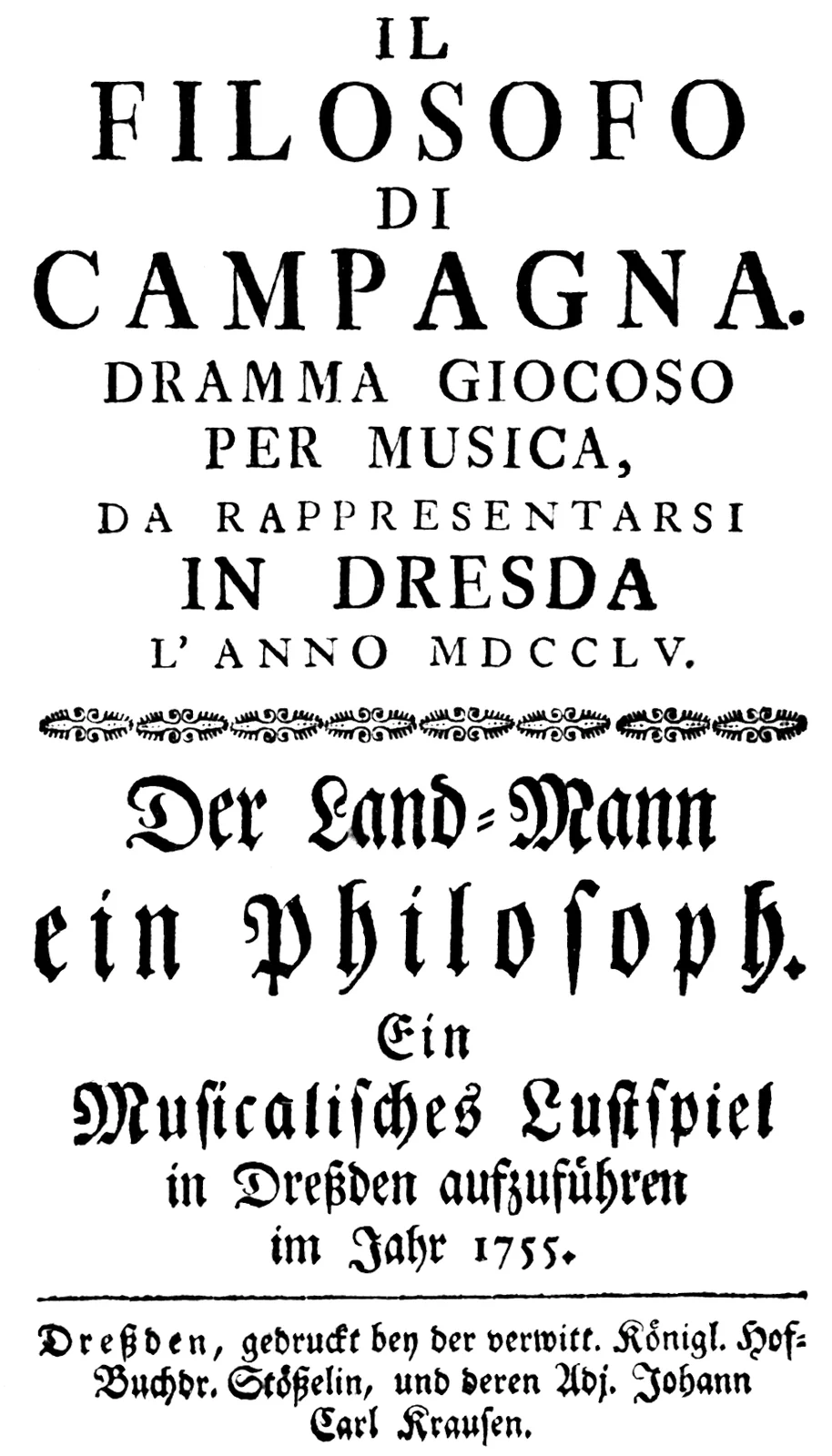
Il filosofo di campagna is a dramma giocoso per musica in three acts by Baldassare Galuppi to a libretto by Carlo Goldoni. It premiered on 26 October 1754 at the Teatro San Samuele in Venice, during the productive partnership between the two that gave comic opera much of its lasting shape.
Plot
The farmer Tritemio wants his daughter Eugenia to marry the wealthy peasant Nardo, though Eugenia loves the nobleman Rinaldo. The housekeeper Lesbina poses as Eugenia to block the match, but ends up making Nardo fall for her instead. Once the mix-up is cleared up, Nardo marries Lesbina, while a secretly arranged double wedding unites Eugenia with Rinaldo; Tritemio is consoled by Nardo's niece Lena.
Cultural significance
The opera became one of the great successes of eighteenth-century Venetian opera buffa and was restaged across Europe in the following decades. It stands as an example of how comic opera moved from farce toward a musically integrated social comedy in which the aria itself carries the action forward.