About the work
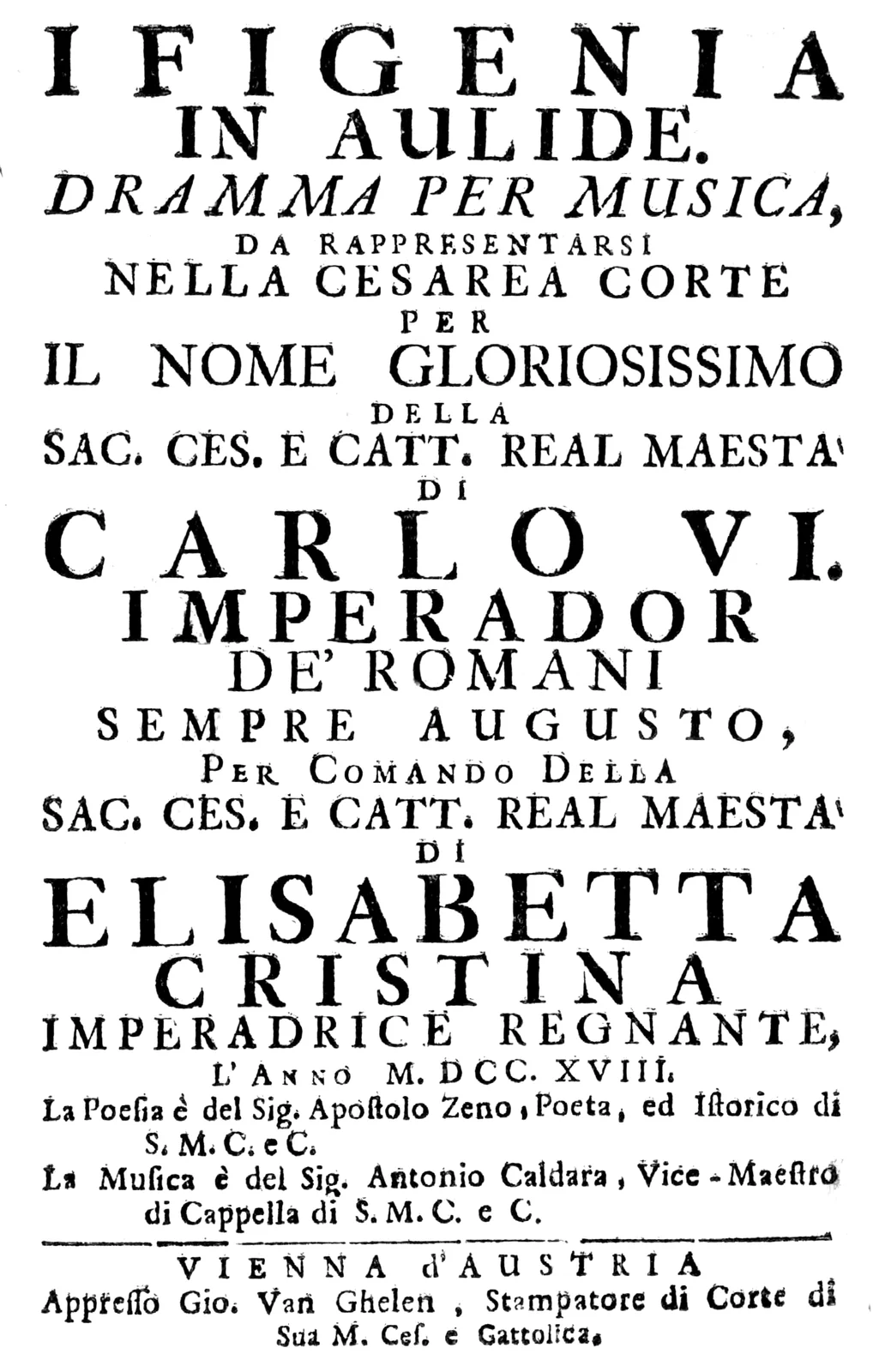
Dramma per musica in three acts by Antonio Caldara to a libretto by Apostolo Zeno after Racine's 'Iphigénie', first performed on 5 November 1718 at the Vienna Hoftheater for the nameday of Emperor Charles VI; the stage designs were by Giuseppe Galli Bibiena.
Plot
The Greek fleet gathered at Aulis is held back from sailing to Troy by a prolonged calm. An oracle demands the sacrifice of Agamemnon's daughter Iphigenia, whose fate becomes entangled with the love between the warrior Achilles and the captive princess Elisena. In the end, the priest Calchas reveals that the one truly meant for sacrifice is Elisena, a secret daughter of Helen; her death appeases the gods and allows the fleet to depart.
Cultural significance
After its premiere, Caldara's setting fell into obscurity and remained unperformed for roughly three centuries, until the ensemble Accademia Bizantina rediscovered it as a modern-day first performance at the Innsbruck Festival of Early Music in August 2025. The score calls unusually for four obbligato trumpets and timpani in the opening aria and includes an aria with obbligato solo violin.