About the work
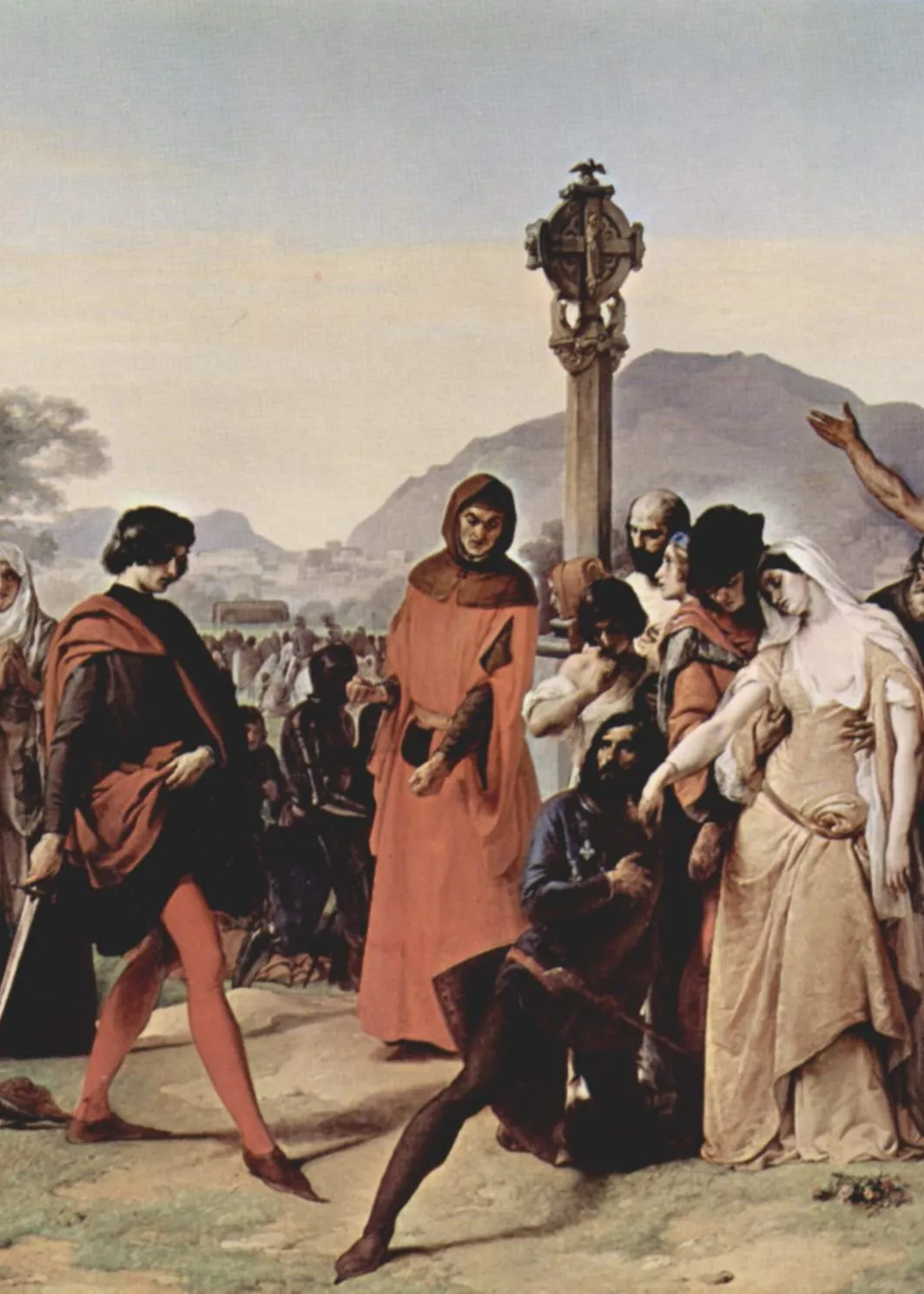
Giuseppe Verdi's „The Sicilian Vespers" („Les Vêpres siciliennes" / „I vespri siciliani") was premiered at the Paris Opéra in 1855 — Verdi's first grand opéra composed expressly for Paris, to a libretto by Eugène Scribe and Charles Duveyrier. The work combines grand historical tableau, ballet and political drama against the background of a historical uprising.
Plot
Sicily in 1282, under the oppressive rule of the French occupiers. The Sicilian duchess Elena seeks revenge for her executed brother and incites the people against foreign domination. The young patriot Arrigo loves Elena and fights for the freedom of Sicily — until he learns that the hated French governor Monforte is his own father. Between his love for Elena, his loyalty to the rebel cause and his newly discovered bond with his father, Arrigo is torn. Meanwhile the conspirator Procida drives the uprising forward. When the bells ring for the wedding of Arrigo and Elena, they also give the signal for the massacre: the Sicilians rise and slay the French — the historical „Sicilian Vespers".
Cultural significance
„The Sicilian Vespers" is Verdi's first great French grand opéra and a monumental work of his middle period. It demands great voices, choral masses and a ballet, and is among the most demanding Verdi scores. Today the work is performed in both the Italian and the French version; the overture and Elena's brilliant bolero belong to the concert repertoire.