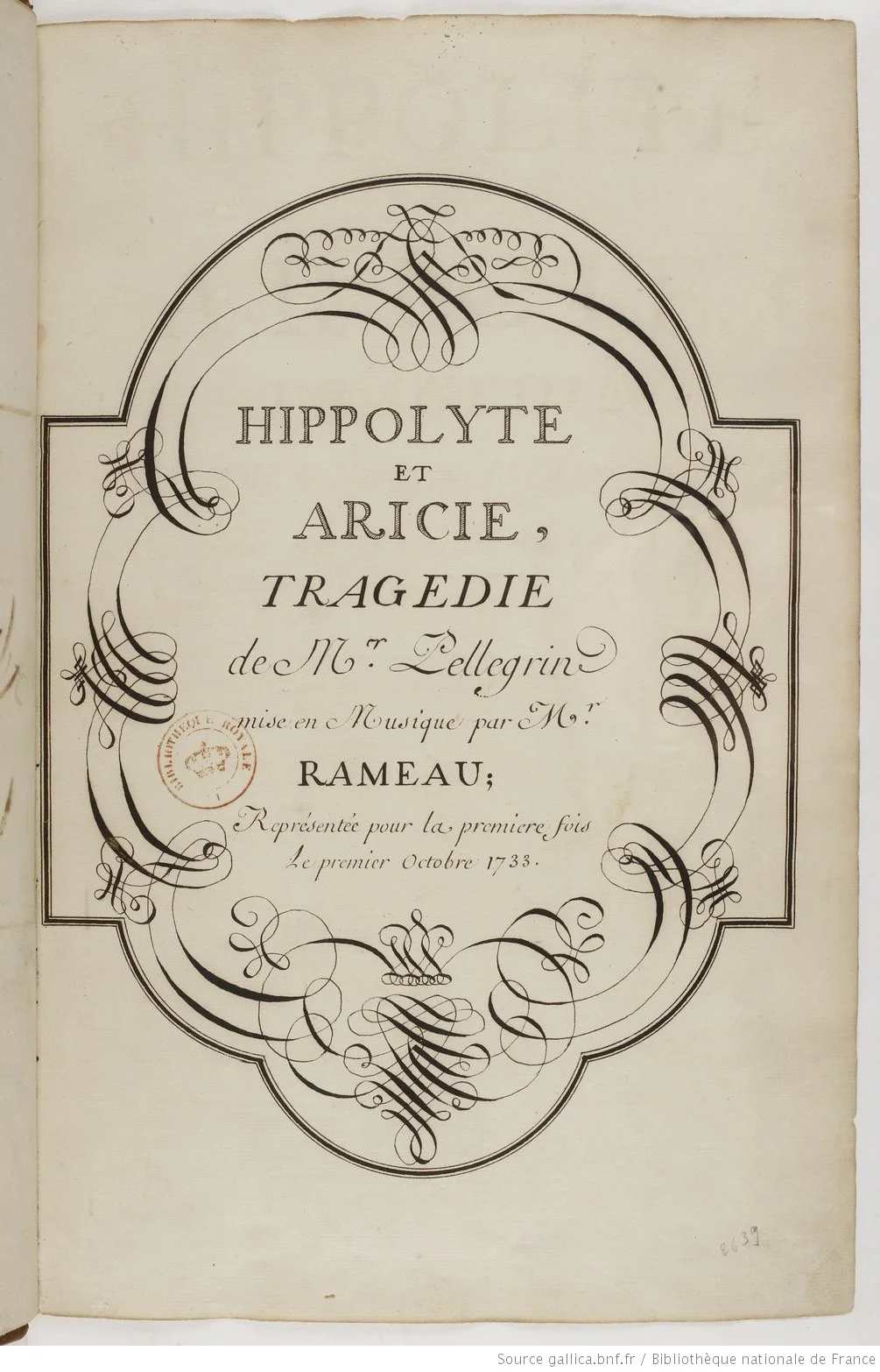
About the work
Hippolyte et Aricie is a tragédie en musique by Jean-Philippe Rameau, with a libretto by Abbé Pellegrin after Racine's Phèdre. Its premiere on 1 October 1733 at the Académie royale de musique in Paris was Rameau's first major opera and immediately triggered a dispute between conservative "Lullistes" and the new "Ramistes".
Plot
Hippolyte loves Aricie but is desired by his stepmother Phèdre. When his father Thésée, believed dead, returns from the underworld, Hippolyte is wrongly accused of seducing Phèdre and appears to be killed by a sea monster. The goddess Diana saves him and unites him with Aricie, though he never sees his father again.
Cultural significance
As Rameau's stage debut, the opera's harmonically daring, orchestrally rich score broke with Lully's tradition and became the flashpoint of the Ramiste-Lulliste controversy that shaped Parisian musical life in the 1730s.