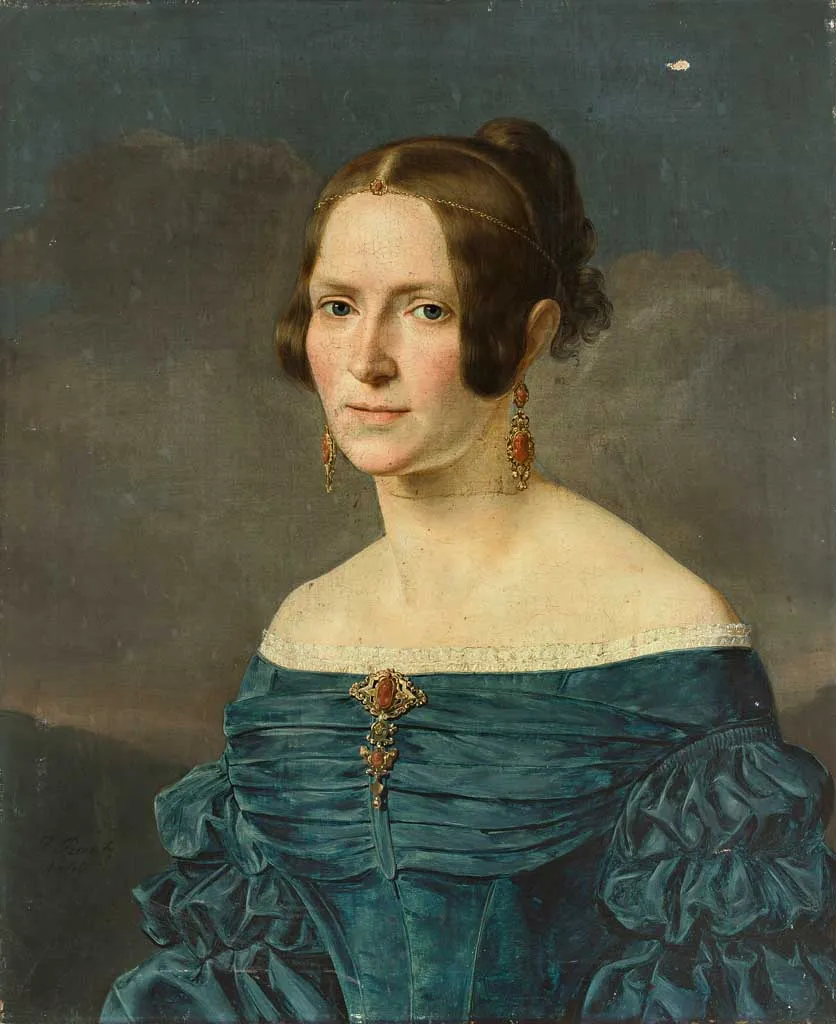
About the work
„Frauenliebe und -leben" — listed here under the title „Frauenliebe und -sterben" — is a song cycle by Robert Schumann from 1840, his „year of song". Schumann set eight poems by Adelbert von Chamisso for voice and piano. The cycle depicts a woman's life from first love to the death of her husband and is among the most famous works of Romantic song.
Plot
In eight successive songs a woman passes through the stages of her love. At the beginning she beholds the beloved man and can think of nothing else („Since I saw him"); she takes him for the „noblest of all" and doubts she is worthy of him. There follow the disbelieving happiness of love returned, the engagement with the ring on her finger, the preparation for the wedding and the wedding itself. The young woman becomes a mother and tenderly sings to her child at her breast. In the final song happiness breaks off abruptly: the husband has died. In grief the woman withdraws into the world of her memory — at the end the piano repeats the melody of the first song and closes the circle of a whole life.
Cultural significance
Schumann's cycle is one of the most-sung works of Romantic song literature and a high point of his output in the „year of song", 1840. At the same time the image of woman conceived in the nineteenth century — the woman's total devotion to the man — is today critically discussed, which has prompted numerous staged interpretations and re-contextualisations. The cycle belongs to the core repertoire of the song recital.