About the work
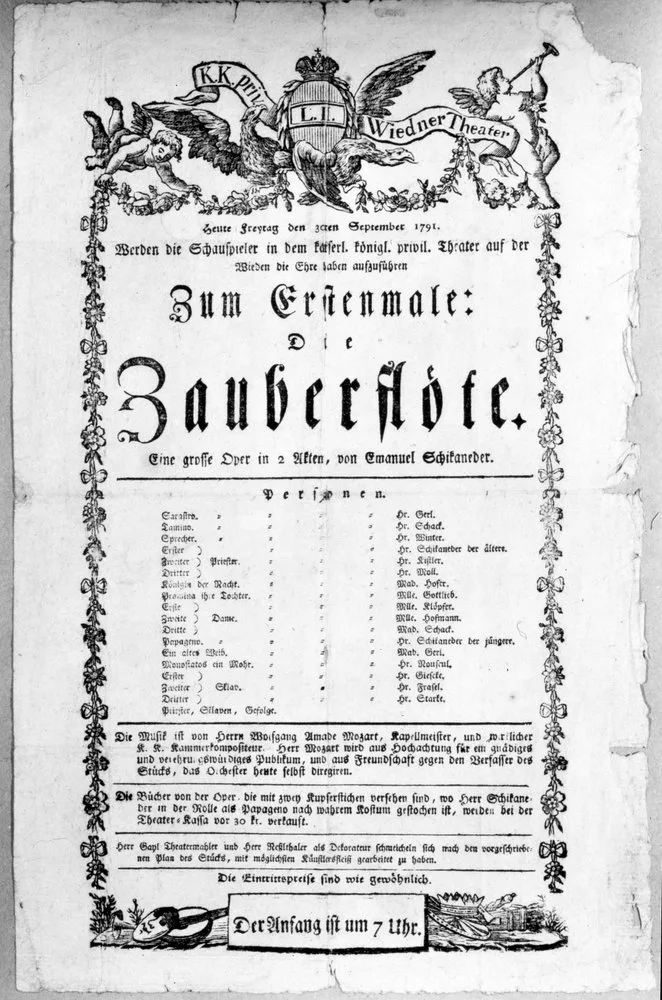
Wolfgang Amadeus Mozart's German singspiel in two acts was premiered on 30 September 1791 at the Freihaustheater auf der Wieden in Vienna, just two months before the composer's death. The libretto by Emanuel Schikaneder combines fairy-tale adventure with Enlightenment ideals and Masonic symbolism, producing one of the most beloved works in the entire operatic repertoire.
Plot
Prince Tamino is rescued from a serpent by three ladies of the Queen of the Night, who shows him a portrait of her daughter Pamina and promises her hand if he rescues her from the sorcerer Sarastro. Accompanied by the bird-catcher Papageno, Tamino sets out—but discovers that Sarastro is not a villain but an enlightened priest, and that the Queen is the embodiment of vengeful darkness. Tamino and Pamina must pass trials of fire and water to prove worthy of initiation. Papageno, less heroically inclined, finds his own bride Papagena. At dawn, Sarastro's realm of wisdom triumphs over the Queen's nocturnal fury.
Cultural significance
Die Zauberflöte is the most frequently performed German opera in the world and the culmination of the Viennese singspiel tradition. The Queen of the Night's second-act aria Der Hölle Rache kocht in meinem Herzen, with its stratospheric coloratura reaching high F, is among the most famous moments in all of opera. Ingmar Bergman's 1975 film adaptation remains a defining interpretation, and Julie Taymor's Metropolitan Opera production with its oversized puppets introduced the work to new generations.