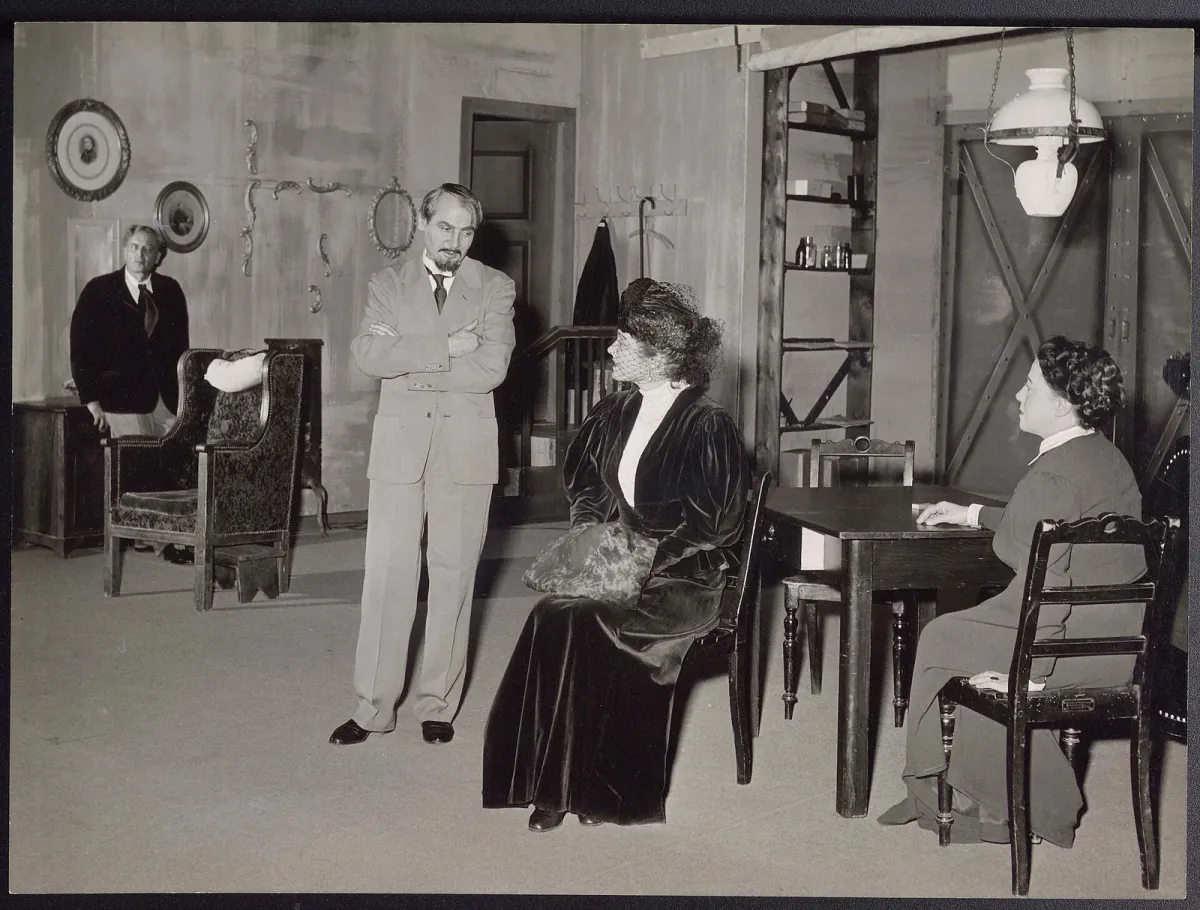
About the work
Henrik Ibsen's drama in five acts was premiered in Bergen in 1884. „The Wild Duck" („Vildanden") is considered one of Ibsen's psychologically most refined plays and a key work of his middle period. With the central symbol of the captive wild duck, Ibsen created a multi-layered image for the necessity of the „life-lie".
Plot
In Christiania (Oslo), the idealistic Gregers Werle meets his old school friend Hjalmar Ekdal again after many years. Hjalmar lives with his wife Gina, her 14-year-old daughter Hedvig and his old father in a photographic studio with an attic where they keep wild animals — including a wild duck. Gregers discovers: his father, the wealthy merchant Werle, once passed his mistress Gina off to Hjalmar and years before pinned a dubious forest deal on old Ekdal — who has lived in social shadow ever since. Gregers, driven by „the idealist's claim to truth", urges that Hjalmar must learn: Hedvig is not his but Werle's daughter. Hjalmar, overwhelmed by the truth, rejects Hedvig. Hedvig — torn by love for the man she takes for her father — tries to prove her love by shooting the wild duck. Instead she shoots herself with grandfather's pistol.
Cultural significance
The Wild Duck is Ibsen's most nuanced work on the question of truth and lie in bourgeois life. Doctor Relling's famous line „Take the life-lie from an average man and you take his happiness with it" became an aphorism. The play is considered a forerunner of Chekhov and twentieth-century psychological drama. Productions by Peter Zadek, Thomas Ostermeier and Ivo van Hove have kept the play strongly present in the last 30 years.