About the work
Dramatic poem by the Hungarian writer Imre Madách, written in 1859–60 while he was living in retreat on his estate after the failed revolution of 1848–49, and first published in 1861. Its stage premiere followed on 21 September 1883 in Budapest.
Plot
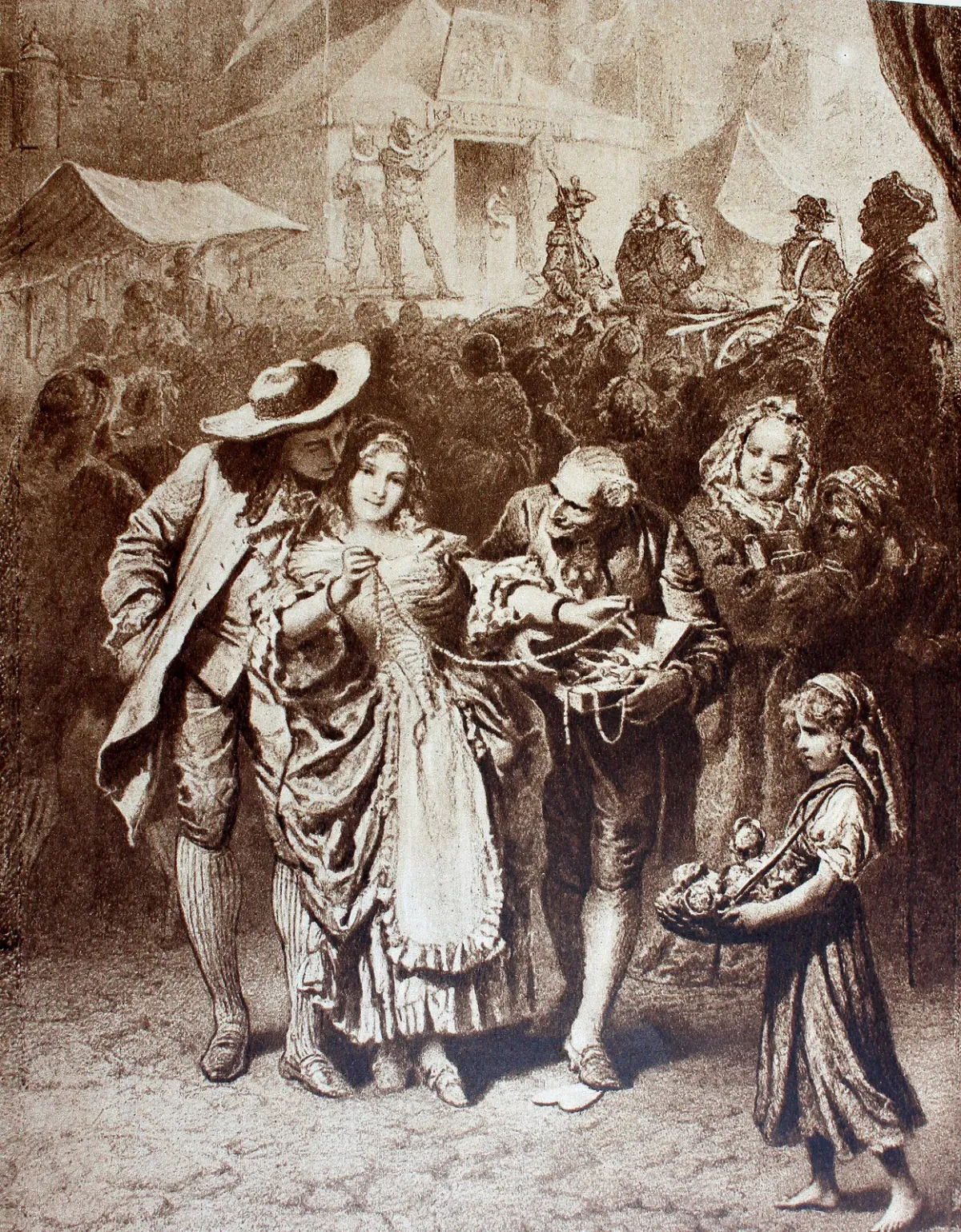
After the expulsion from paradise, Lucifer, the spirit of denial, puts Adam into a dream in which he and Eve journey through fifteen stations of human history—from the civilisations of antiquity through Rome, the Renaissance and the French Revolution to a dystopian future. In each era Adam takes on an important role, only to watch his faith in progress collapse against reality. On waking he contemplates suicide, but is held back by Eve's announcement that she is pregnant and by God's call to keep striving.
Cultural significance
Influenced by Goethe's "Faust", the work is considered the most important drama in Hungarian literature and remains a staple of Hungarian theatre repertoire; its closing line has become one of the country's best-known quotations. It has been translated into more than a dozen languages, including a German edition published by Corvina in Budapest.