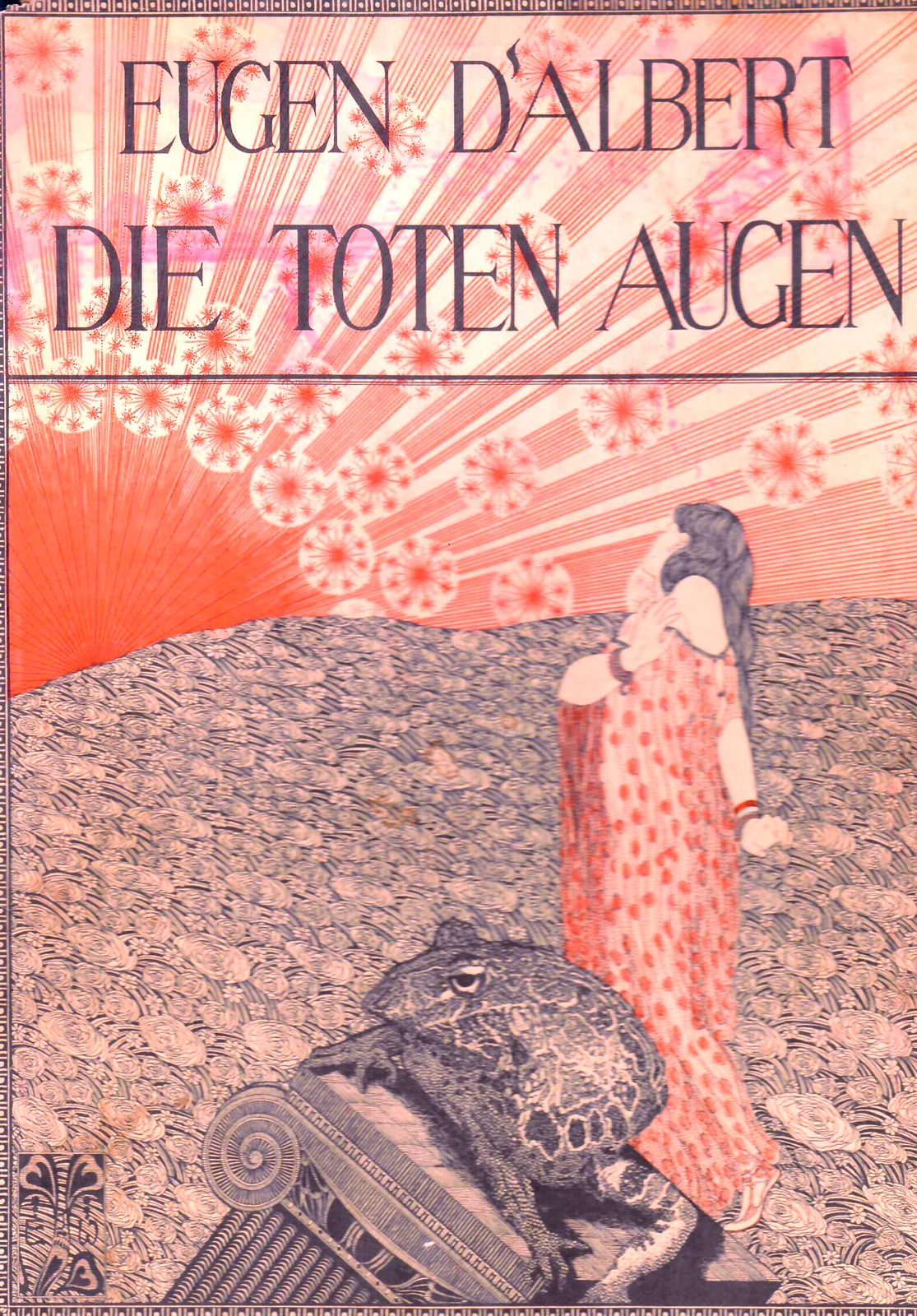
About the work
Eugen d’Albert set „Die toten Augen“ to a libretto by Hanns Heinz Ewers and Marc Henry, based on Henry's own play „Les yeux morts“ (1897). Billed as a "stage poem in a prologue and one act", the opera premiered at the Dresden court opera on 5 March 1916 and ranks among d’Albert's most elaborately scored works.
Plot
The blind Greek woman Myrtocle is married to the outwardly ugly Roman senator Arcesius, whose noble character makes her imagine him handsome. When Jesus, passing through Jerusalem, restores sight to the blind, she has herself healed — but is warned she will curse him before sunset. Now able to see, she mistakes the handsome Galba for her husband and embraces him; the jealous Arcesius kills his friend in a rage. To preserve the illusion that sustains her love, Myrtocle stares into the sun and blinds herself again.
Cultural significance
The premiere is said to have drawn almost a quarter of an hour of applause; the lushly orchestrated, late-Romantic score ranks among d’Albert's most ambitious operatic projects. After decades of absence from the stage it has seen occasional revivals in recent years.