About the work
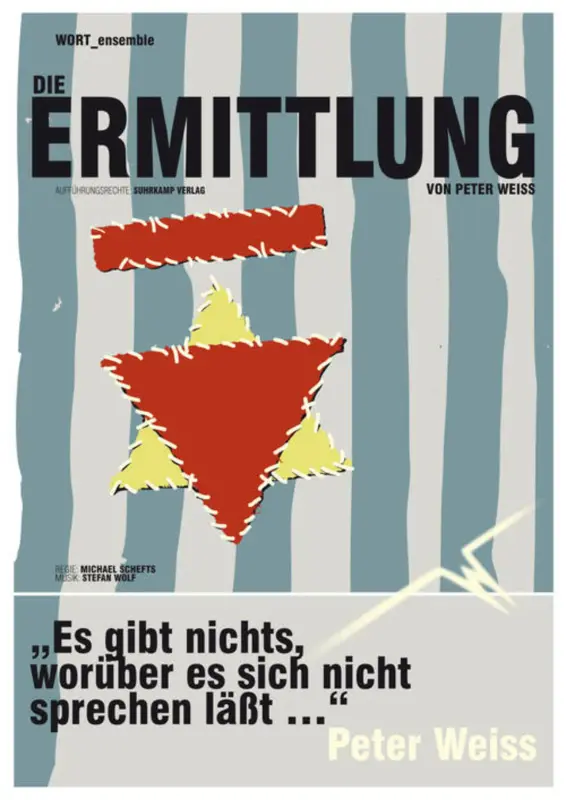
Peter Weiss's „The Investigation" was premiered simultaneously in several cities in 1965 and is the most significant work of German documentary theatre. Conceived as an „oratorio in 11 cantos", the text shapes the testimony of the Frankfurt Auschwitz Trial (1963–1965) into a strictly composed stage form.
Plot
In eleven „cantos" the play follows the path of the victims from arrival at the ramp to the crematoria, without ever naming the camp. On stage, numbered witnesses face named defendants; their words are condensed directly from the trial transcripts. In sober, serial language the witnesses describe the system of extermination — selection, starvation, torture, shootings, gas. The defendants deny, gloss over, shift responsibility and invoke orders. Weiss refrains from any psychologising and any gesture of compassion; the montage of facts itself is meant to work and to confront the audience with the question of guilt, complicity and continuing effect.
Cultural significance
„The Investigation" is the founding work of documentary theatre and one of the most important artistic confrontations with the Holocaust. The simultaneous premiere at numerous stages in East and West in 1965 was an event of great public impact. The work is still performed and read worldwide today, especially on days of remembrance.