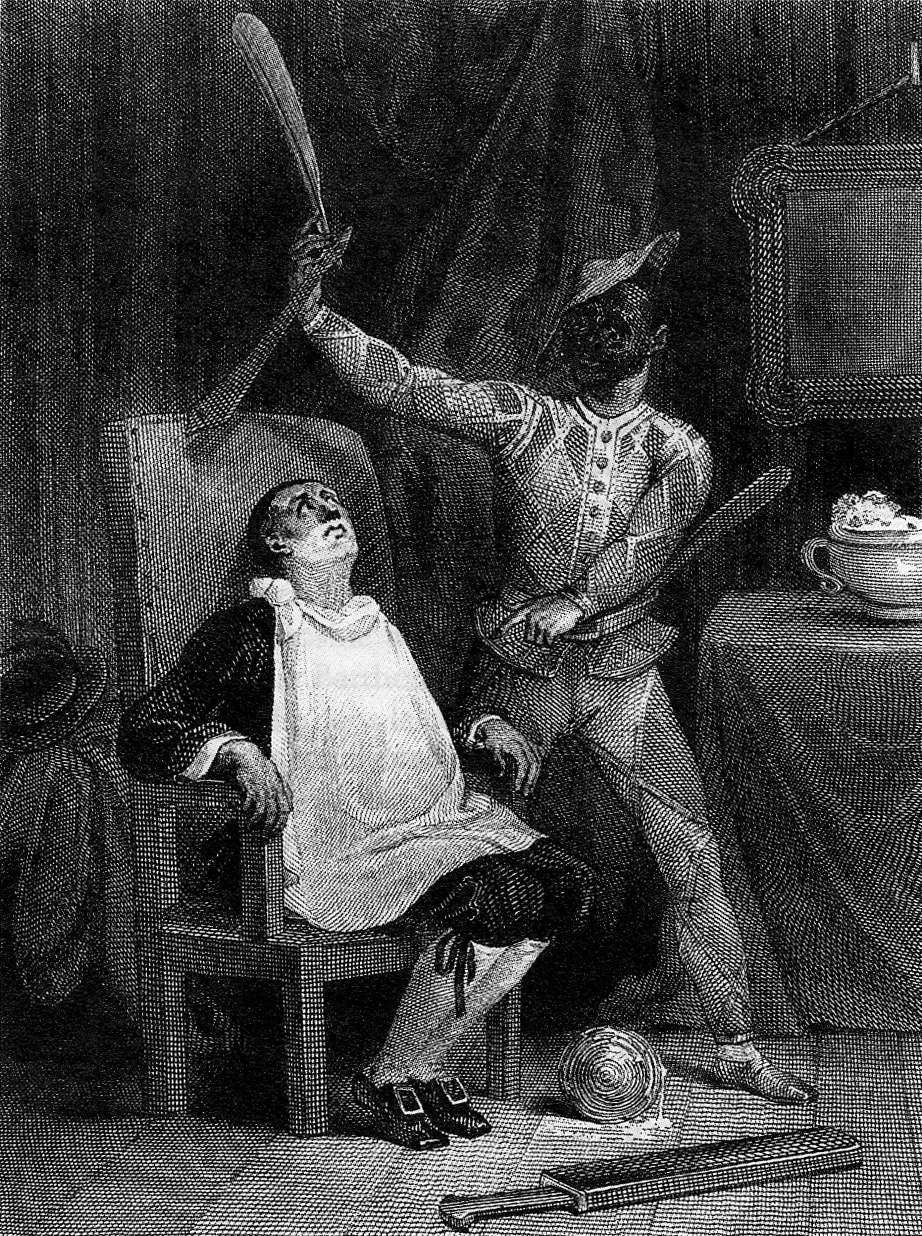
About the work
A four-act comedy by Pierre-Augustin Caron de Beaumarchais, first performed at the Comédie-Française on 23 February 1775. The original five-act version failed with audiences; only the version the author tightened within two days became a success.
Plot
In Seville, the young Count Almaviva, in disguise, courts Rosine, the ward of the suspicious Doctor Bartolo. With the help of the resourceful barber Figaro, he manages to evade Bartolo's watch and win Rosine for himself.
Cultural significance
With Figaro, Beaumarchais created one of the most influential stage characters of the 18th century. The play provided the source for Rossini's opera buffa of the same name (1816) and for Figaro's return in "The Marriage of Figaro".