About the work
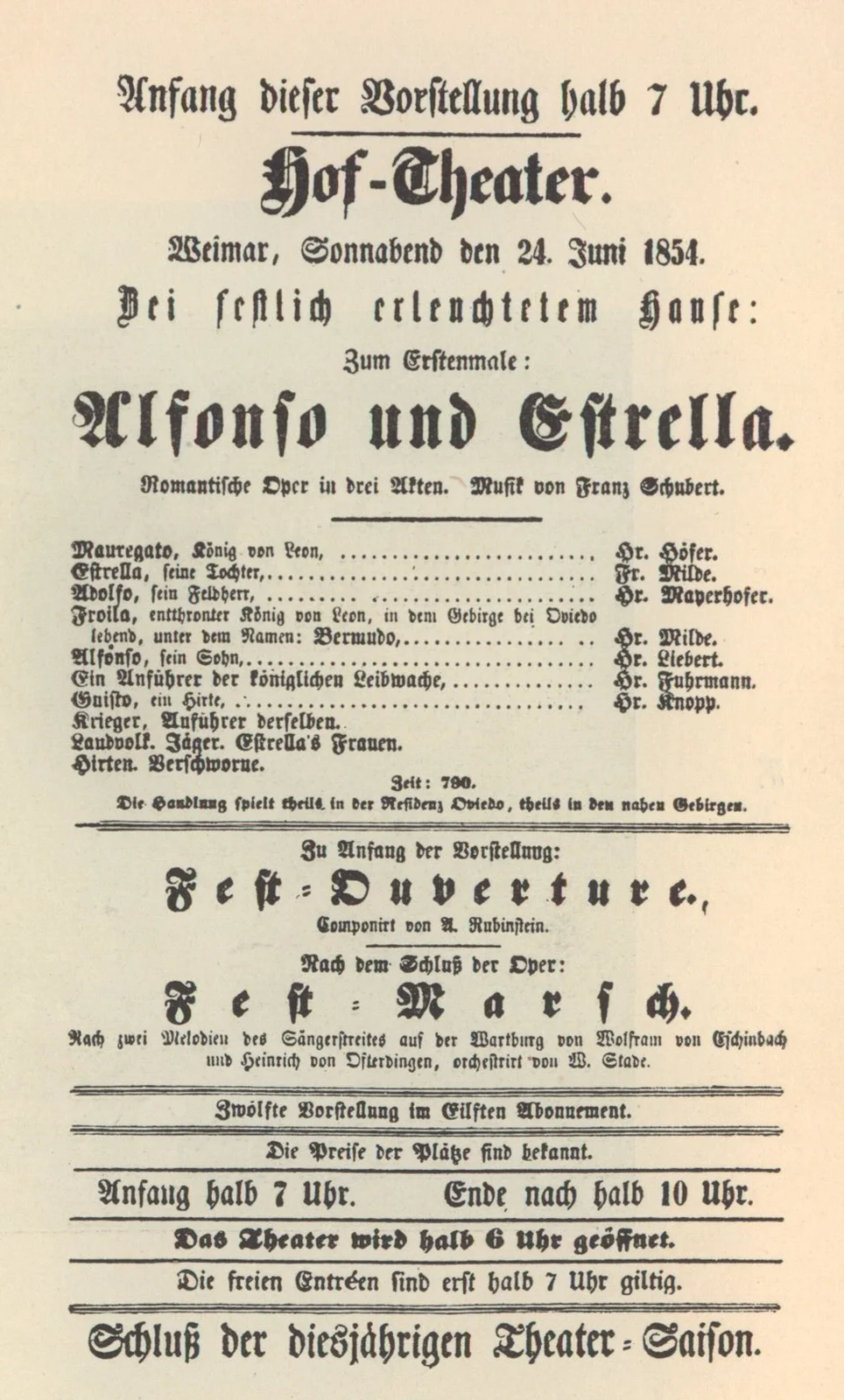
Alfonso und Estrella is a through-composed romantic opera in three acts by Franz Schubert, written to a libretto by his friend Franz von Schober and deliberately conceived without spoken dialogue. Schubert composed the score between September 1821 and February 1822 in Sankt Pölten and Vienna, but opera houses in Vienna, Berlin, Dresden and Graz all turned it down. Only in 1854 did Franz Liszt bring a heavily abridged version to its premiere at the Weimar Court Theatre.
Plot
Alfonso, son of a deposed king, and Estrella, daughter of the usurper, meet while hunting and fall in love without knowing each other's origins. A gift from Alfonso, the legendary "Chain of Eurich", becomes the key to resolving the political conflict: after a rebellion and a rescue, Estrella's father repents his wrongdoing, the old royal house is restored, and the throne passes to the young couple.
Cultural significance
Despite Liszt's advocacy, the opera never achieved lasting stage success; critics have long faulted its weak dramatic pacing despite the richness of Schubert's music. It nonetheless stands as evidence of Schubert's symphonic, song-like personal style applied to opera and is still occasionally revived in concert or adapted stagings.