About the work
Friedrich Schiller's play in five acts was premiered in Weimar in 1804 — two years before Schiller's death and his last completed drama. The play interweaves the fate of the Swiss national hero William Tell, who fights against Habsburg tyranny, with the history of the Swiss Confederation.
Plot
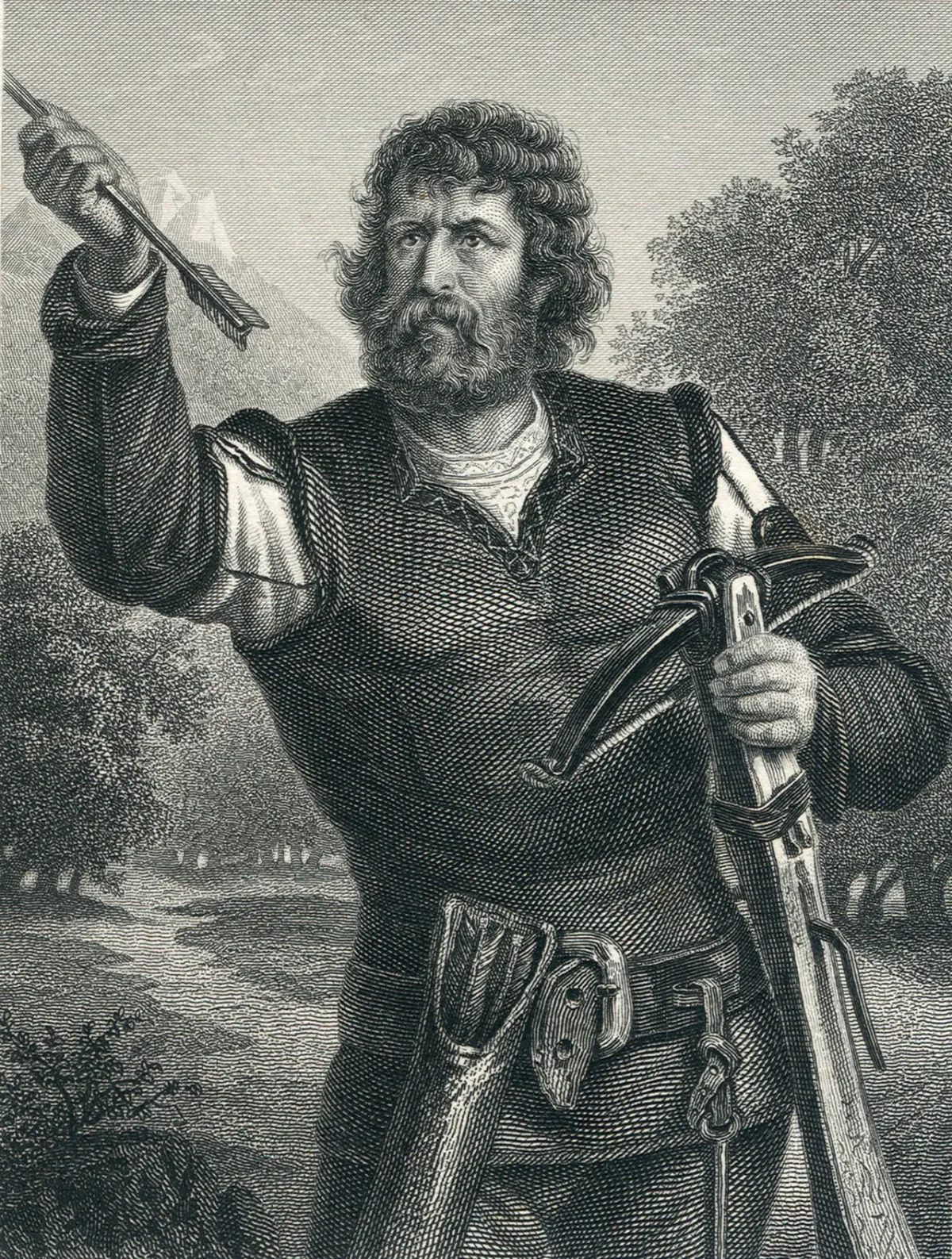
Central Switzerland in the early fourteenth century. The Habsburg bailiffs cruelly oppress the Swiss peasants. In the prologue the hunter William Tell rescues the peasant Baumgarten from Wolfenschießen's pursuers by ferrying him across Lake Lucerne in a storm. On the Rütli meadow the three representatives of the original cantons swear the famous „Rütli oath" against tyranny. Tell, who avoids political activity, comes into conflict with the bailiff Gessler, who commands him to shoot an apple from his son's head. Tell hits the apple; a second arrow in his coat reveals that he had it ready for Gessler had he hit the boy. Gessler has Tell put in chains, but Tell escapes in a storm on the lake. In the „Hohle Gasse" he ambushes Gessler and shoots him with the crossbow. The Confederate uprising drives out the Habsburgs. In the final image Tell rejects the congratulations of Queen Agnes of Hungary, who wishes to avenge her father Albrecht (the Emperor) — Tell embodies the idea of just self-defence, not political revenge.
Cultural significance
Wilhelm Tell is Schiller's most popular work and required reading in the German-speaking world — especially Switzerland. Famous lines („Through this hollow way he must come") have become proverbial. Rossini's opera „Guillaume Tell" (1829) is based on Schiller. Hitler's later ban on the play in 1941 — he felt uncomfortable about the regicide motif — is historically documented.