About the work
Johann Wolfgang von Goethe's novel of education in eight books appeared in 1795/96 and is considered the archetype of its genre — every later German Bildungsroman tradition from Keller through Mann to Grass passes through this book. As stage work numerous adaptations exist, including multi-hour compilations featuring the novel's embedded theatre scenes, which Goethe himself wished to see performed on stage.
Plot
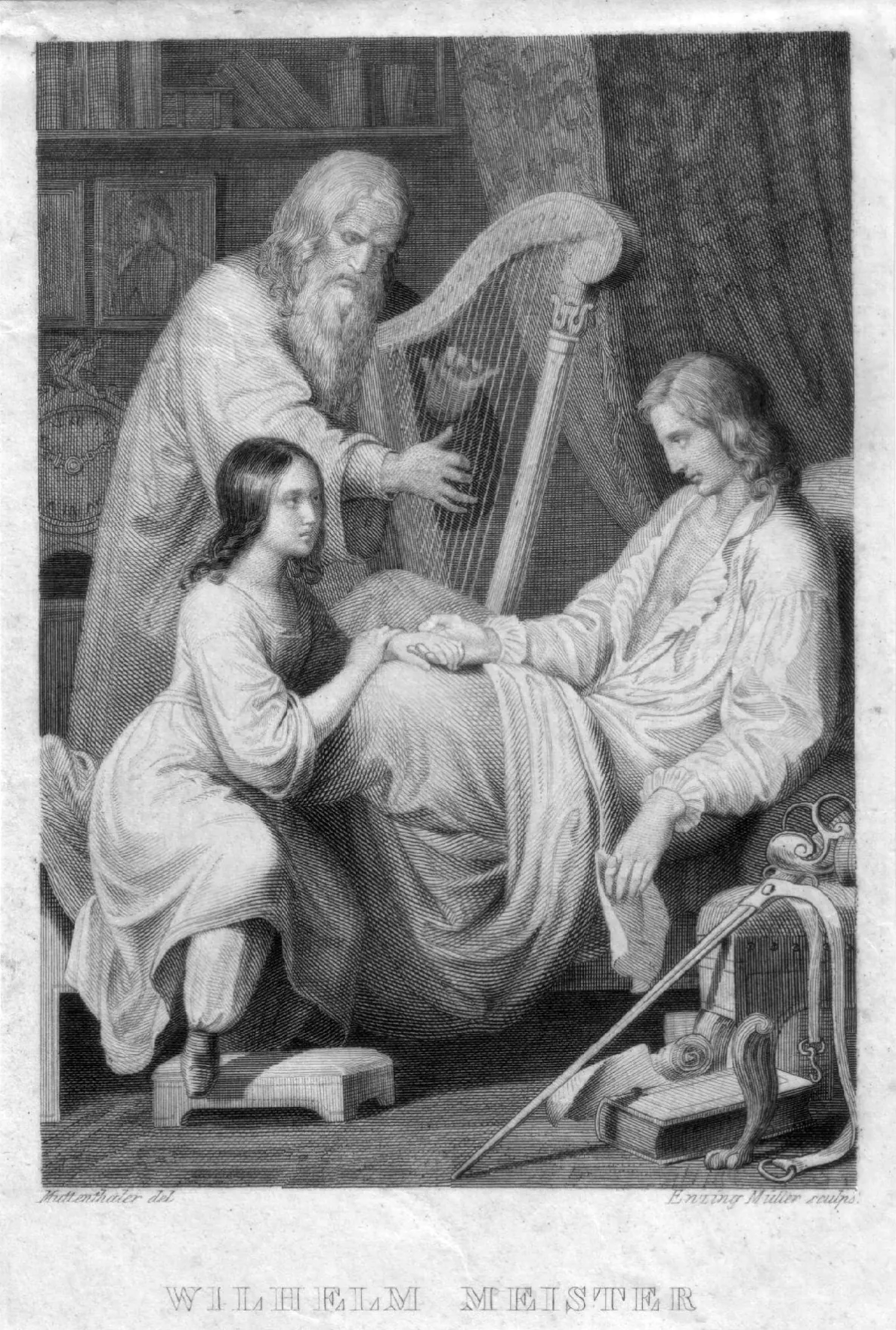
The young merchant's son Wilhelm Meister abandons bourgeois life and joins a travelling theatre troupe to realise himself as actor and playwright. He stages a Hamlet into which he inserts his own reflections. At the same time he encounters mysterious figures — Mignon, a childlike Italian girl, and the old Harper. Over the years Wilhelm recognises that theatre was not the goal but only a passage. In the end he finds his place in the Tower Society, a secret group that guides individuals toward their destiny.
Cultural significance
The Lehrjahre is one of the most influential works of German literature and contains in the Wilhelm Meister poems some of the best-known verses in the German language (Kennst du das Land, wo die Zitronen blühn). Stage adaptations range from Peter Stein's monumental Schaubühne production of the 1980s to newer work by Tilmann Köhler. Franz Schubert's settings of the Mignon and Harper songs remain central to the concert repertoire.