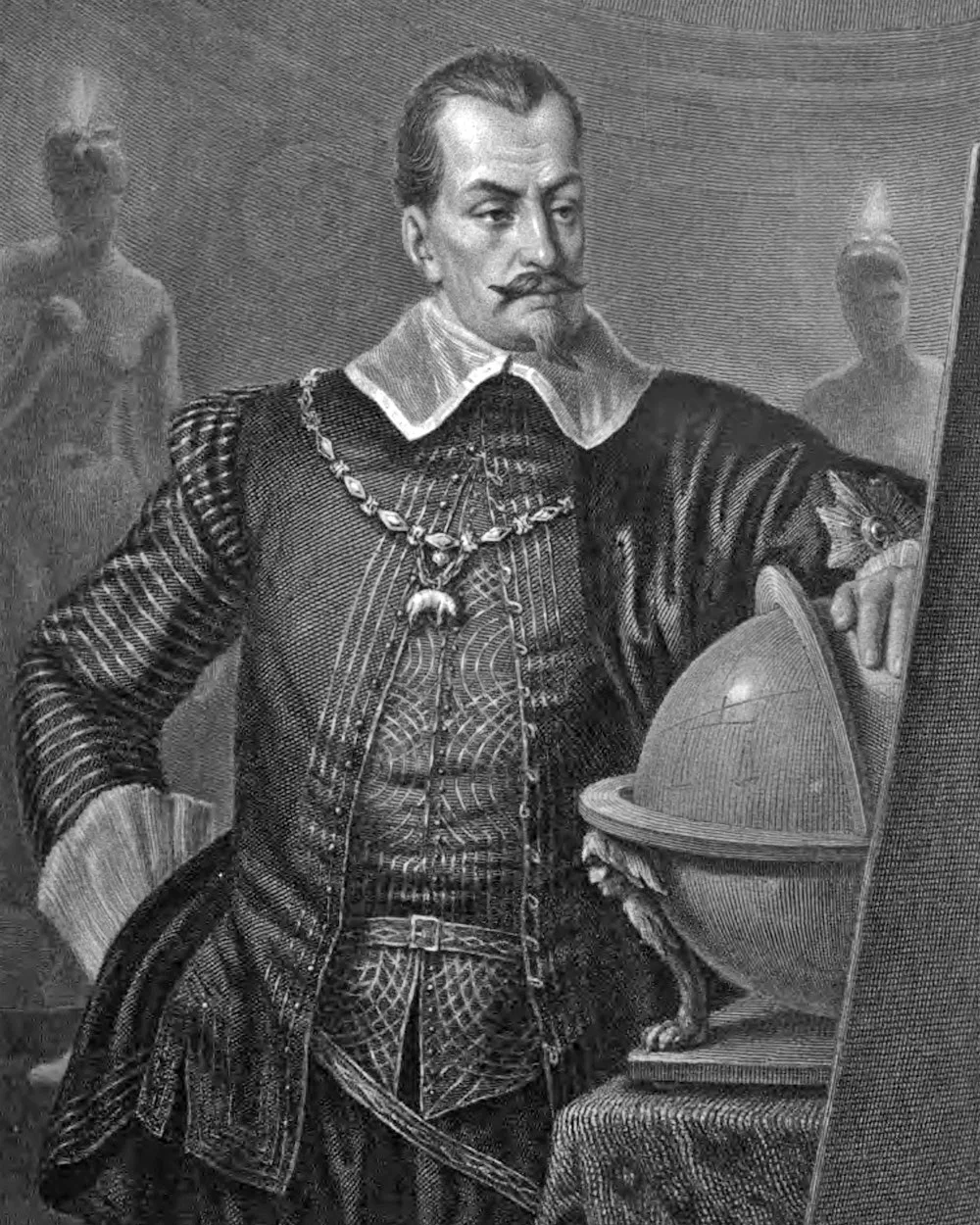
About the work
Friedrich Schiller's dramatic trilogy „Wallenstein" was first performed in Weimar in 1798/99 and is regarded as his most mature historical drama. It comprises the prelude „Wallenstein's Camp", „The Piccolomini" and „Wallenstein's Death", and treats the rise and fall of the imperial general Albrecht von Wallenstein during the Thirty Years' War. Schiller wrote the work in blank verse of great linguistic power.
Plot
At the height of the Thirty Years' War, Wallenstein commands as generalissimo a vast army personally devoted to him. „Wallenstein's Camp" depicts the motley world of the soldiers who idolise their commander. In „The Piccolomini" the intrigues thicken: Wallenstein, estranged from the emperor, secretly opens negotiations with the Swedish enemy and contemplates treason in order to force a peace and a power of his own. His young confidant Max Piccolomini, torn between loyalty and duty, loves Wallenstein's daughter Thekla; but Max's father, Octavio Piccolomini, works secretly for the emperor to bring Wallenstein down. In „Wallenstein's Death" the conspiracy collapses: the troops desert, Max seeks and finds death in battle, and Thekla follows him into ruin. Wallenstein, resolved to act too late, is murdered at Eger by officers acting on the emperor's behalf.
Cultural significance
„Wallenstein" is the most significant German historical drama and a centrepiece of Weimar Classicism. Schiller combined close engagement with historical sources with questions of freedom, guilt and the individual's entanglement in history. The trilogy belongs to the standing repertoire of the major German-language stages and to school reading. Productions such as Peter Stein's (2007), which played all three parts in a single day, are regarded as theatrical events.