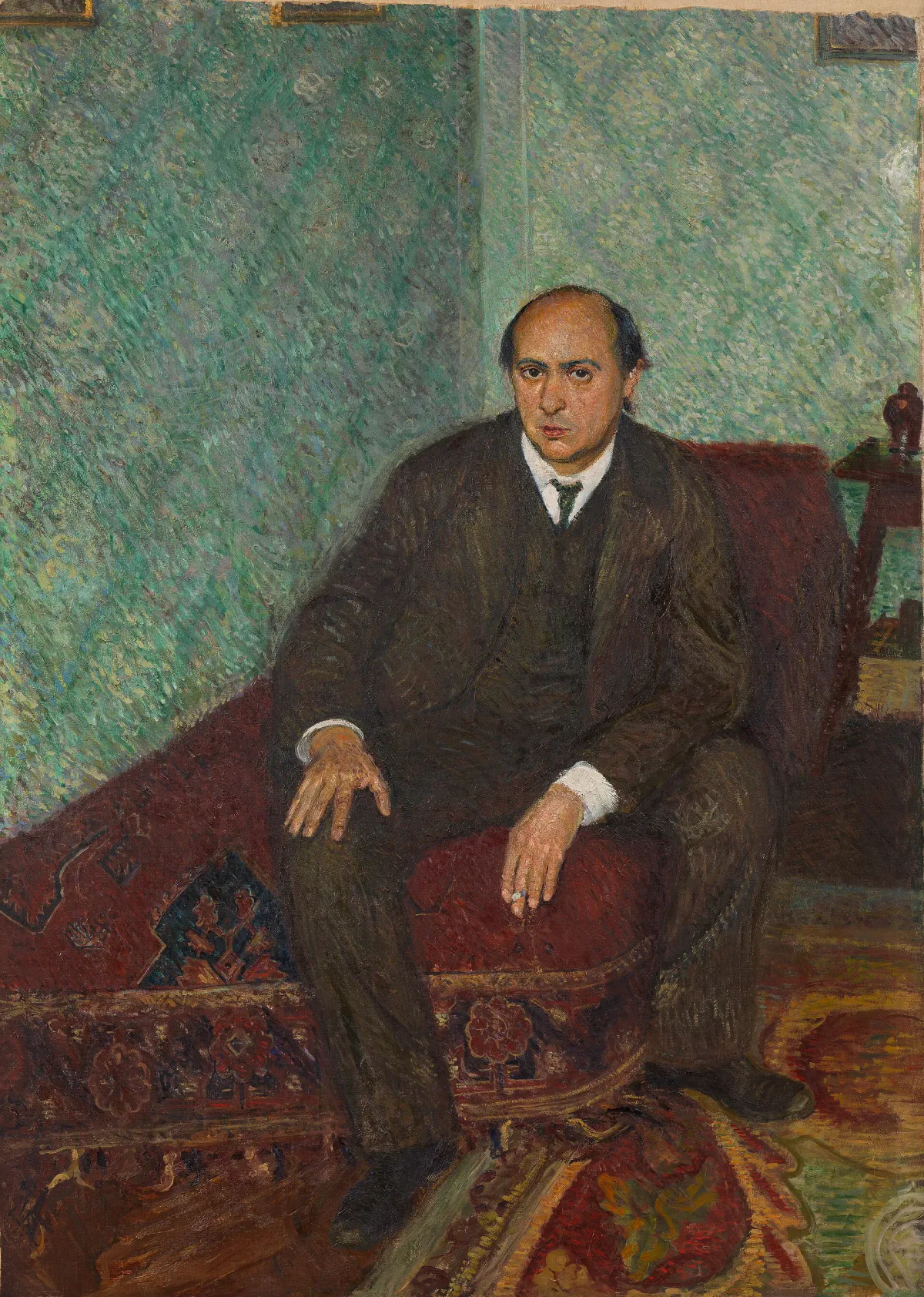
About the work
Arnold Schoenberg's „Verklärte Nacht" („Transfigured Night") op. 4 was composed in 1899 — Schoenberg was 25 — and first performed in Vienna in 1902 by the Rosé Quartet. The work was originally written for string sextet (two violins, two violas, two cellos); Schoenberg's later arrangement for string orchestra (1917, revised 1943) is today's standard concert form. The work is a key example of late Romanticism on the threshold of modernism.
Plot
The work is a one-movement programme piece based on the poem of the same name by Richard Dehmel (1896): A woman walks with her lover at night through a moonlit cold forest. She confesses to him that she is pregnant by another man — out of fear that her life would otherwise pass without a child, she had given herself to a stranger. He listens silently. After a long pause he answers: „Look at how brightly the universe shines!" The light of the moon, the warmth of love and the strength of his understanding will transfigure the strange child as if it were his own. The two embrace and walk on through the bright, transfigured night. Schoenberg structures the music in five parts that follow Dehmel's stanzas: walking together — confession of guilt — desperation — transfiguration — wandering on. Themes from Wagner („Tristan") and Brahms blend into a personal late-Romantic colour.
Cultural significance
Verklärte Nacht is Schoenberg's first internationally recognised work and remains his most-performed. The work was at its premiere a scandal — Vienna's conservative critics rejected the chromatic harmony and Dehmel's „indecent" subject (extramarital pregnancy). Famous recordings include those by Pierre Boulez, Herbert von Karajan, Daniel Barenboim, Esa-Pekka Salonen. Antony Tudor's ballet „Pillar of Fire" (1942) used the music. Verklärte Nacht is a bridge between the Romantic chamber-music tradition and Schoenberg's later twelve-tone development.