About the work
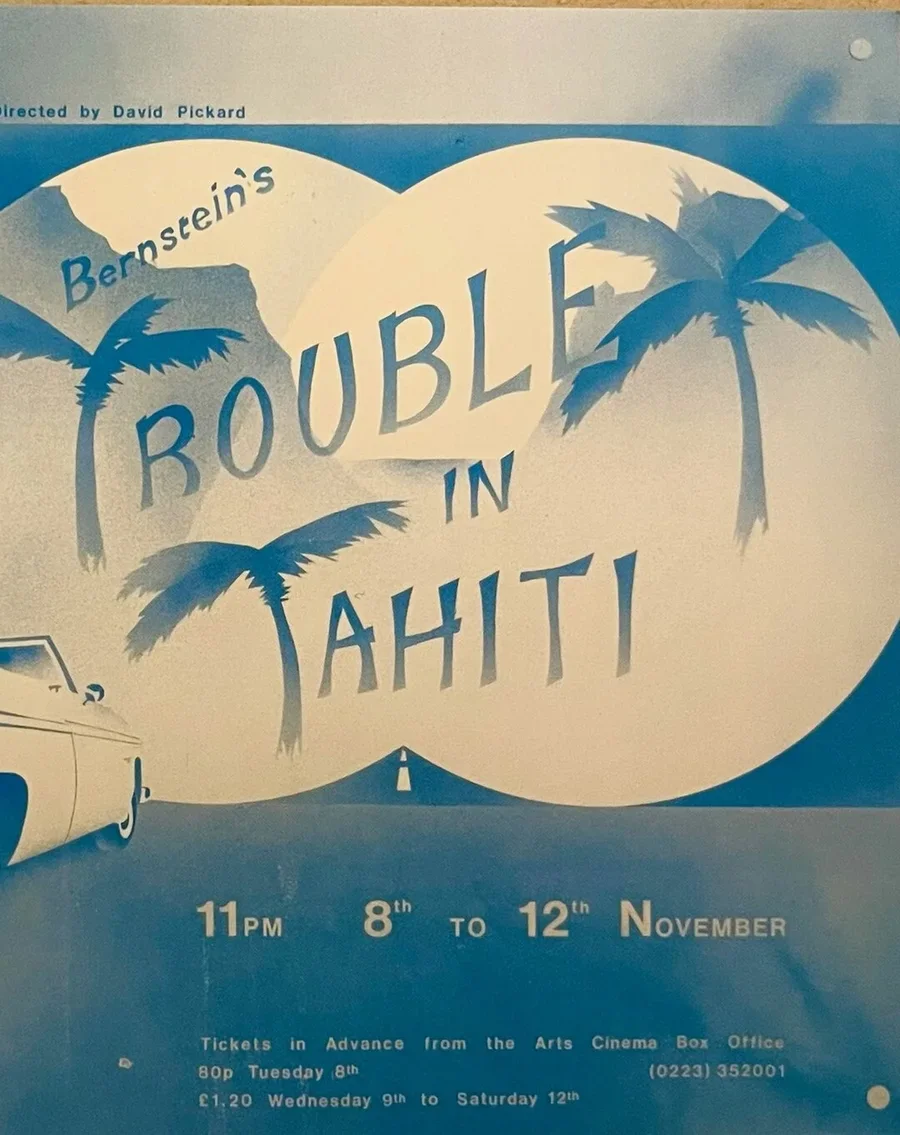
Trouble in Tahiti is a one-act opera in seven scenes by Leonard Bernstein, to his own English libretto. It received its premiere on 12 June 1952 at the Festival of the Creative Arts, founded by Bernstein, at Brandeis University in Waltham, Massachusetts — Bernstein conducted and directed it himself. It is his first opera, composed during his honeymoon, and draws autobiographically on the marriage of his own parents.
Plot
The opera depicts a single day in the life of the American suburban couple Sam and Dinah. Behind the gleaming façade of prosperity and a family home lies an emptiness of the soul: the two have forgotten how to talk to one another, and competition and routine have crowded out love. A three-part jazz trio comments on the action like a Greek chorus, ironically extolling the virtues of suburban life. In quarrel, in the longing for closeness and in the inability to allow it, the loneliness of both is revealed. In the evening Sam suggests going to the cinema — to a shallow South Seas film called "Trouble in Tahiti" — and the couple takes refuge in the "bought-and-paid-for" magic of the screen rather than in real reconciliation.
Cultural significance
Trouble in Tahiti is the darkest of Bernstein's "musical" operas and one of only two works for which he wrote both words and music. Its sharply observed satire on post-war American consumer society combines operatic arias with a jazz and pop idiom. The NBC Opera Theatre brought the work to television in November 1952. Bernstein returned to Sam and Dinah later in his opera A Quiet Place (1983). The roughly 40-minute piece remains in the repertoire to this day and is regarded as Bernstein's most personal stage work.