About the work
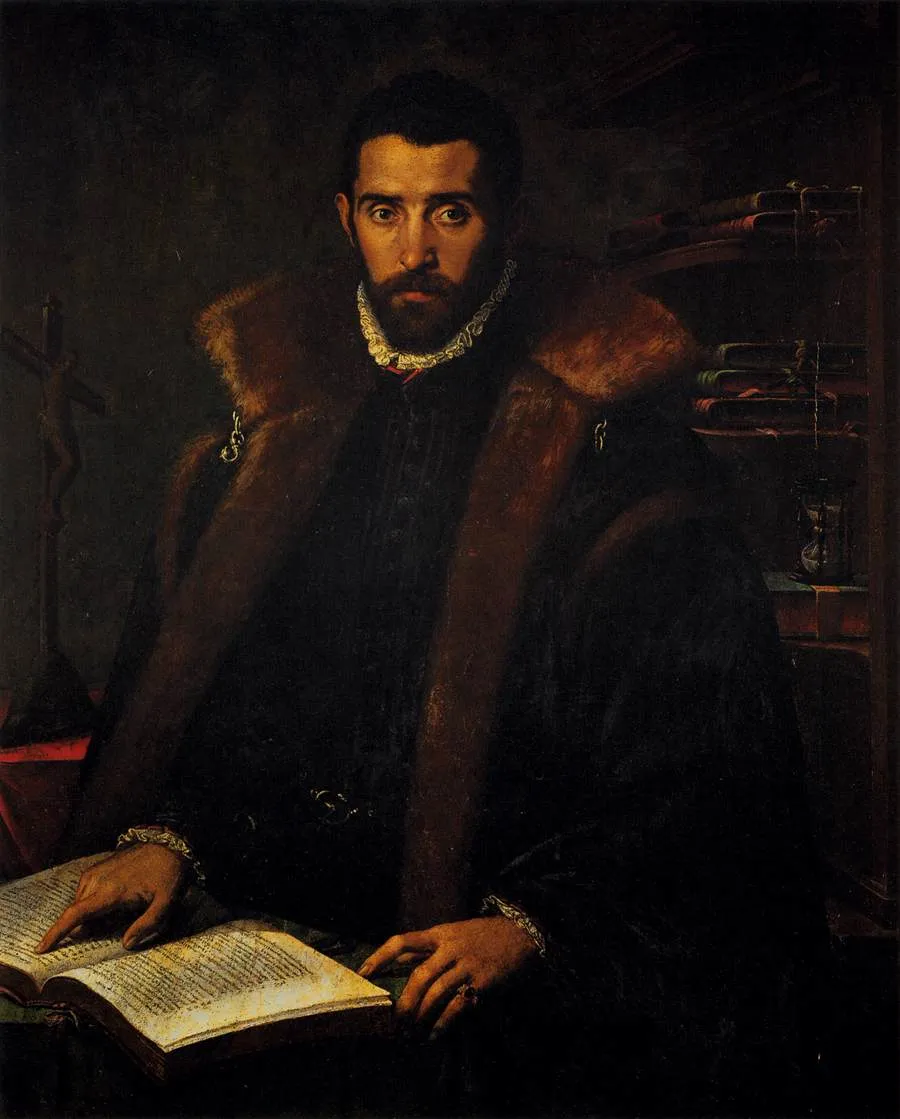
Torquato Tasso is a play in five acts by Johann Wolfgang von Goethe that places the Italian poet Torquato Tasso (1544–1595) at the centre of the action. The play, which adheres strictly to the classical rule of the three unities of place, time and action, was written between 30 March 1780 and 31 July 1789. It appeared in print in February 1790 but was not premiered until 16 February 1807 in Weimar.
Plot
The setting is Belriguardo, a country palace of Duke Alfonso II of Ferrara. The young poet Tasso presents the Duke with his completed epic "Gerusalemme liberata" (Jerusalem Delivered); the Princess Leonore d'Este, the Duke's sister, crowns him with Virgil's laurel. Tasso is deeply moved, for he secretly loves the Princess. At that moment Antonio Montecatino, the Duke's worldly secretary of state, returns from a successful mission in Rome. Remote from art and coolly rational, he meets the sensitive poet with mockery. Offended, Tasso draws his sword and challenges Antonio — a grave breach of courtly order. The Duke punishes Tasso with mild confinement to his room, but Tasso feels the penalty as a profound injustice. At the Duke's wish, Antonio is to reconcile with Tasso; Countess Leonore Sanvitale mediates, yet pursues ends of her own — she wishes to win the poet and his fame for herself. Tasso, increasingly consumed by mistrust, believes himself betrayed by all. At their parting the Princess confesses an affection meant purely in friendship; in the surge of his feelings Tasso embraces her, whereupon she rejects him in horror. This breach of etiquette seals his fate: he is now an outcast. The Duke, Princess and Countess leave the estate; even his work no longer belongs to him. Despairing, and aware of his own wavering nature, Tasso clings at the last to the superior Antonio, his supposed enemy — "as the sailor to the rock on which he was to be wrecked". To him remains only the gift of poetry: "And when man falls silent in his torment, a god gave me to tell how I suffer."
Cultural significance
Goethe came to know Tasso's principal work Jerusalem Delivered through a German translation published in 1744 that was in his father's possession. The introduction by the editor Johann Friedrich Kopp, and essays by Wilhelm Heinse in the journal Iris, gave him access to Tasso's biography. In March 1780 Goethe began writing the play, completing the first act in November of the same year. After an interruption of several months he resumed work on 19 April 1781 and, on 25 August at Tiefurt, read the finished sections to Duchess Luise. A manuscript, now lost, also went to Barbara Schulthess.