About the work
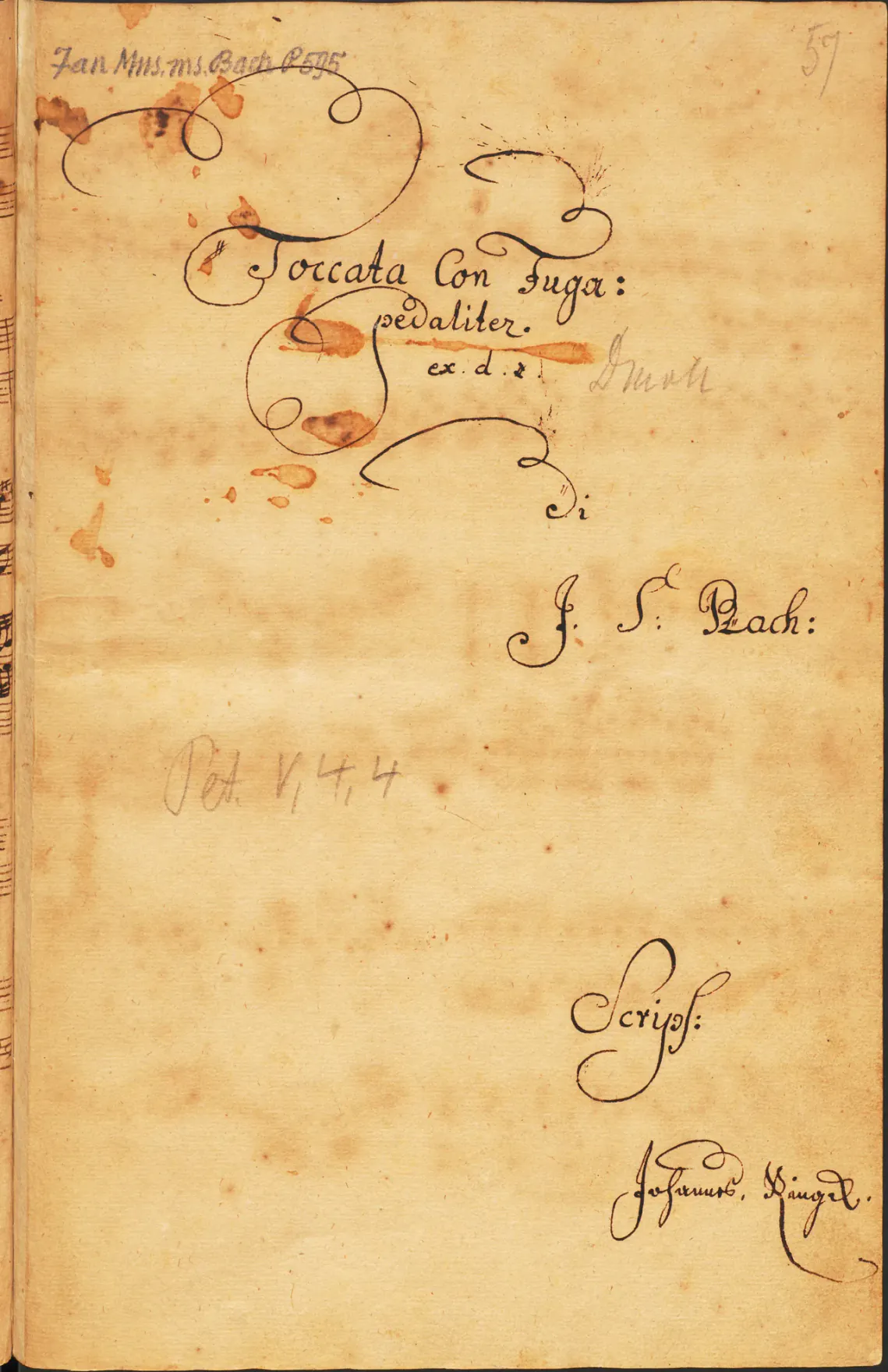
Johann Sebastian Bach's „Toccata and Fugue in D minor" (BWV 565) is the most famous organ work in musical history. The composition is traditionally ascribed to Bach — the exact date of composition is disputed (probably the early Weimar years, c. 1704-08). The work combines an improvisational toccata with a four-voice fugue.
Plot
The composition consists of three parts: Toccata, Fugue, Coda. The Toccata opens with the iconic motif: a diminished seventh chord, a descending scale, and the famous mordent — these first seconds belong to the most recognisable sound sequences in Western music. The Toccata is rhetorical-improvisational, with dramatic pauses, arpeggios, scales, plunging chords. The Fugue follows — a four-bar subject, worked out in four voices, contrapuntally skilful but shorter and simpler than Bach's mature fugues (which fuels doubts about authenticity). The Coda returns to the improvisational Toccata gesture and closes with a majestic D minor chord.
Cultural significance
Toccata and Fugue in D minor is the most popular organ composition of all time and, through Walt Disney's „Fantasia" (1940) — the piece opens the film in Leopold Stokowski's orchestral arrangement — has become a pop-culture icon. It is standard repertoire for every organist. The question of authenticity — some musicologists consider the piece to be the work of another composer or a youthful exercise of Bach — remains open. Famous recordings: Helmut Walcha, E. Power Biggs, Marie-Claire Alain, Ton Koopman, Hans-André Stamm. The composition has been arranged countless times — from Liszt's piano version to heavy-metal renditions.