About the work
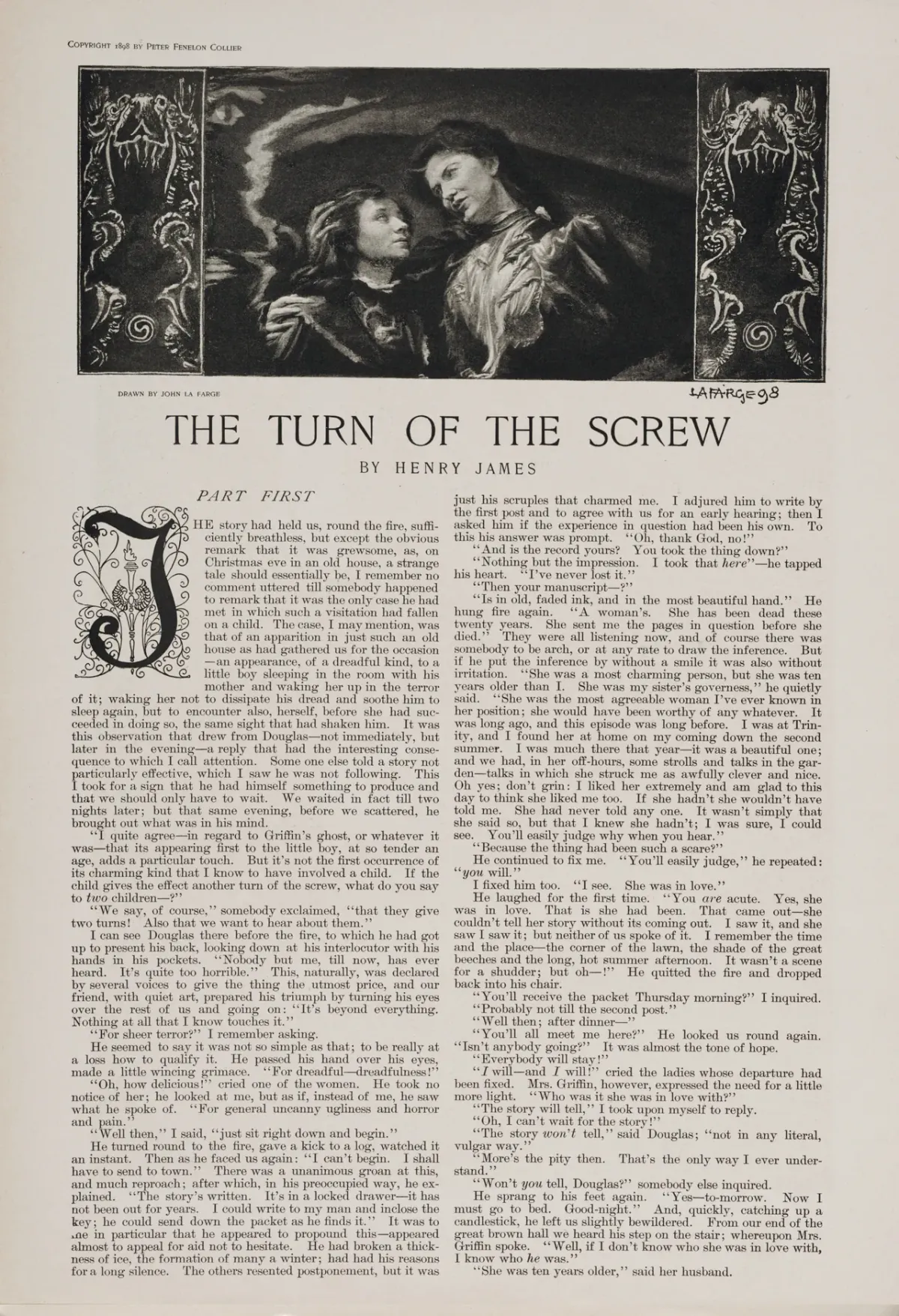
Benjamin Britten's chamber opera, in a prologue and two acts, was premiered in Venice in 1954. Myfanwy Piper's libretto is closely based on Henry James's 1898 novella, preserving the central ambiguity: whether the ghosts are real or the governess's delusion remains open.
Plot
A young governess takes charge of the orphans Miles and Flora at the country house Bly. She soon sees the ghosts of Peter Quint, the late former manservant, and Miss Jessel, the previous governess. She becomes convinced the spirits seek to corrupt the children. The housekeeper Mrs Grose hints at dark earlier events. As Flora hysterically denies everything and is sent to London, the governess struggles with Miles for a confession. In the final scene she forces him to speak Quint's name aloud — the ghost vanishes, but Miles collapses dead in her arms.
Cultural significance
The Turn of the Screw is one of the most performed chamber operas of the twentieth century and Britten's tightest score. The twelve-tone „Screw" theme — which advances by one further step in each of the sixteen variations — shapes the entire structure. The piece remains a central example of Britten's preoccupation with innocence, seduction and childhood threat — themes now read more controversially than at the premiere.