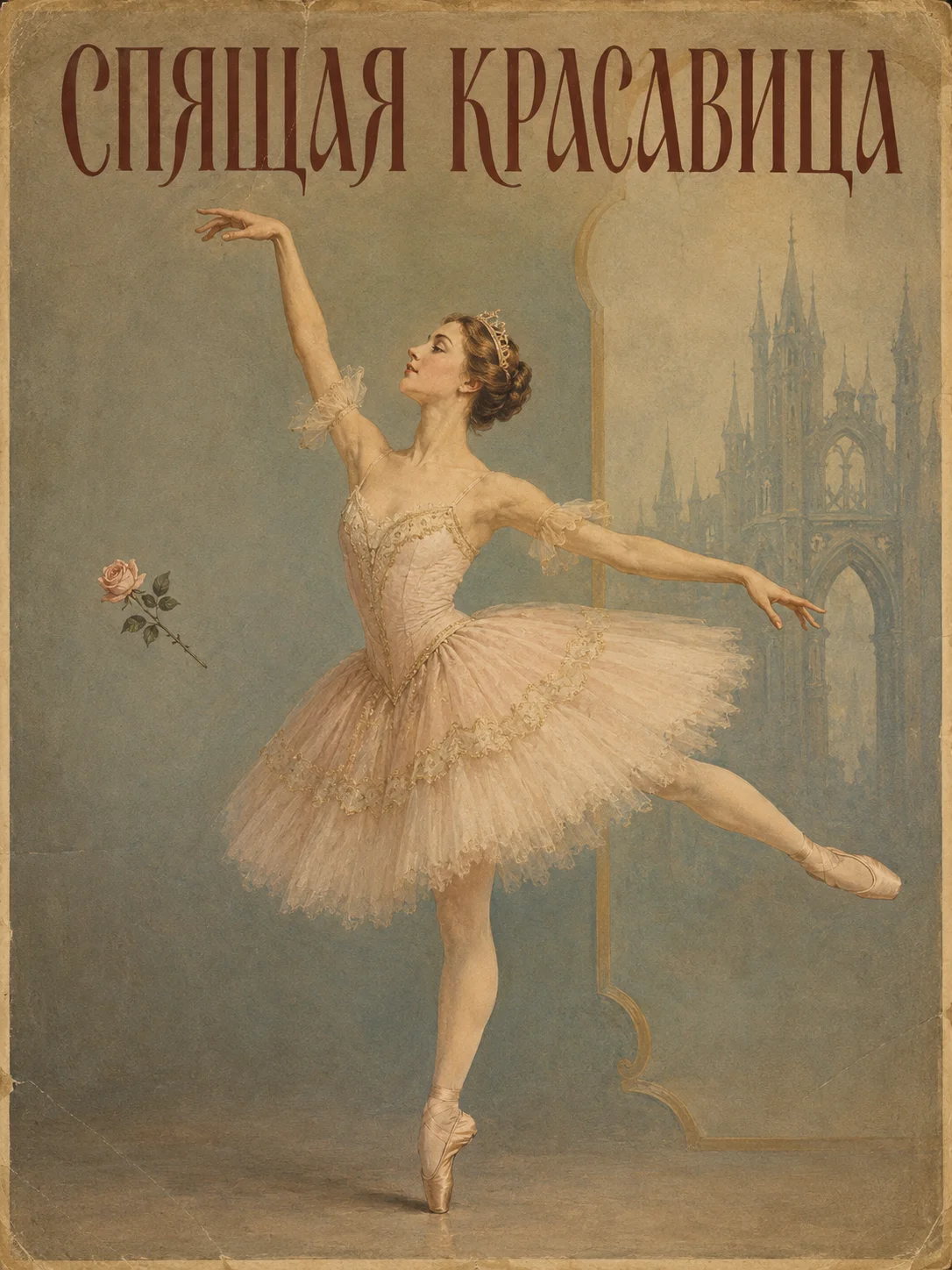
About the work
Pyotr Ilyich Tchaikovsky's fairy-tale ballet in a prologue and three acts was premiered in 1890 at the Mariinsky Theatre in Saint Petersburg, with choreography by Marius Petipa after the tale by Charles Perrault. It was the first and closest collaboration between Tchaikovsky and Petipa, who gave the composer detailed instructions on the metre and character of each number. The work is regarded as the very epitome of classical Petersburg ballet.
Plot
At Princess Aurora's christening the good fairies are invited, but the overlooked wicked fairy Carabosse appears and curses the child: on her sixteenth birthday she will prick herself on a spindle and die. The Lilac Fairy cannot lift the curse but softens it to a hundred-year sleep. At the birthday celebration Aurora pricks herself despite every precaution; the whole castle sinks into deep slumber, enclosed by a hedge of thorns. A century later the Lilac Fairy leads Prince Désiré to Aurora through a vision; his kiss awakens her and the court. The ballet ends with a magnificent wedding featuring fairy-tale characters such as Puss in Boots and the Bluebird.
Cultural significance
The Sleeping Beauty is regarded, alongside Swan Lake and The Nutcracker, as one of Tchaikovsky's three great ballets and as the summit of classical academic dance. The Rose Adagio in Act One, in which Aurora balances on point while giving her hand to four suitors in turn, is among the most feared technical tests for any ballerina. Rudolf Nureyev's celebrated stagings and the legendary touring performances of the Kirov Ballet made the work known worldwide; its through-composed symphonic character influenced all later ballet music.