About the work
Pyotr Ilyich Tchaikovsky's two-act ballet was premiered in 1892 at the Mariinsky Theatre in Saint Petersburg, with choreography by Marius Petipa and Lev Ivanov. The libretto is based on Alexandre Dumas père's adaptation of E.T.A. Hoffmann's story The Nutcracker and the Mouse King. The original production had a cool reception but the ballet has since become one of the most beloved works in the classical repertoire.
Plot
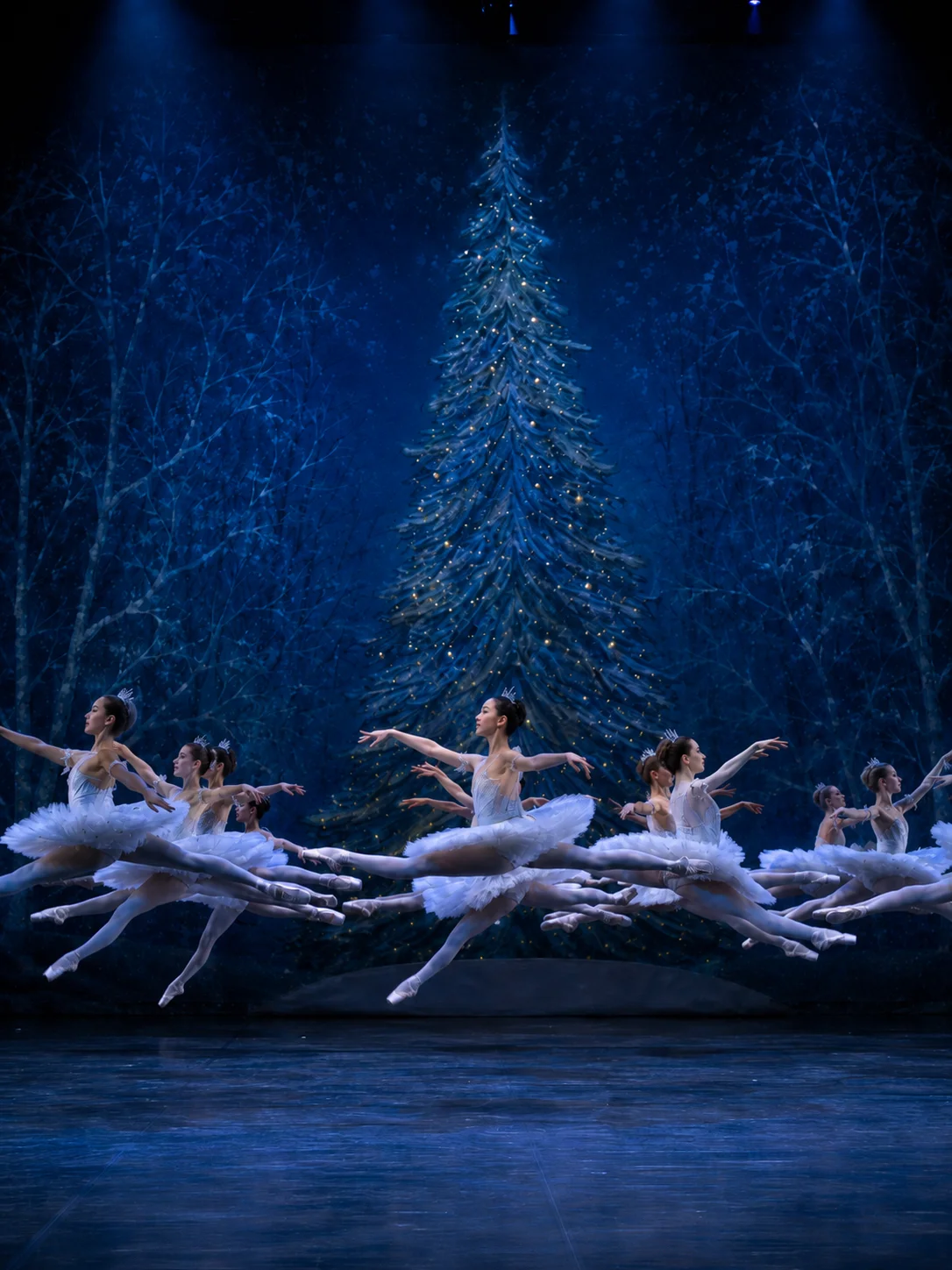
On Christmas Eve, young Clara receives a nutcracker doll from her mysterious godfather Drosselmeyer. At midnight, the Christmas tree grows enormously and the nutcracker leads an army of toy soldiers against an invading Mouse King. When Clara helps defeat the Mouse King, the nutcracker transforms into a handsome prince. He takes Clara through a snowy forest to the Kingdom of Sweets, where the Sugar Plum Fairy presents a series of divertissement dances from around the world. In most productions, Clara wakes at home on Christmas morning—was it a dream?
Cultural significance
Der Nussknacker is the most frequently performed ballet in the United States, where its annual Christmas-season runs by regional companies have made it a cornerstone of holiday culture. The Dance of the Sugar Plum Fairy, with its prominent celesta—an instrument Tchaikovsky encountered only shortly before composing—is one of the most recognisable pieces of classical music in existence. George Balanchine's 1954 New York City Ballet production established the definitive American staging. The work's seemingly simple charm conceals sophisticated orchestration and harmonic daring.