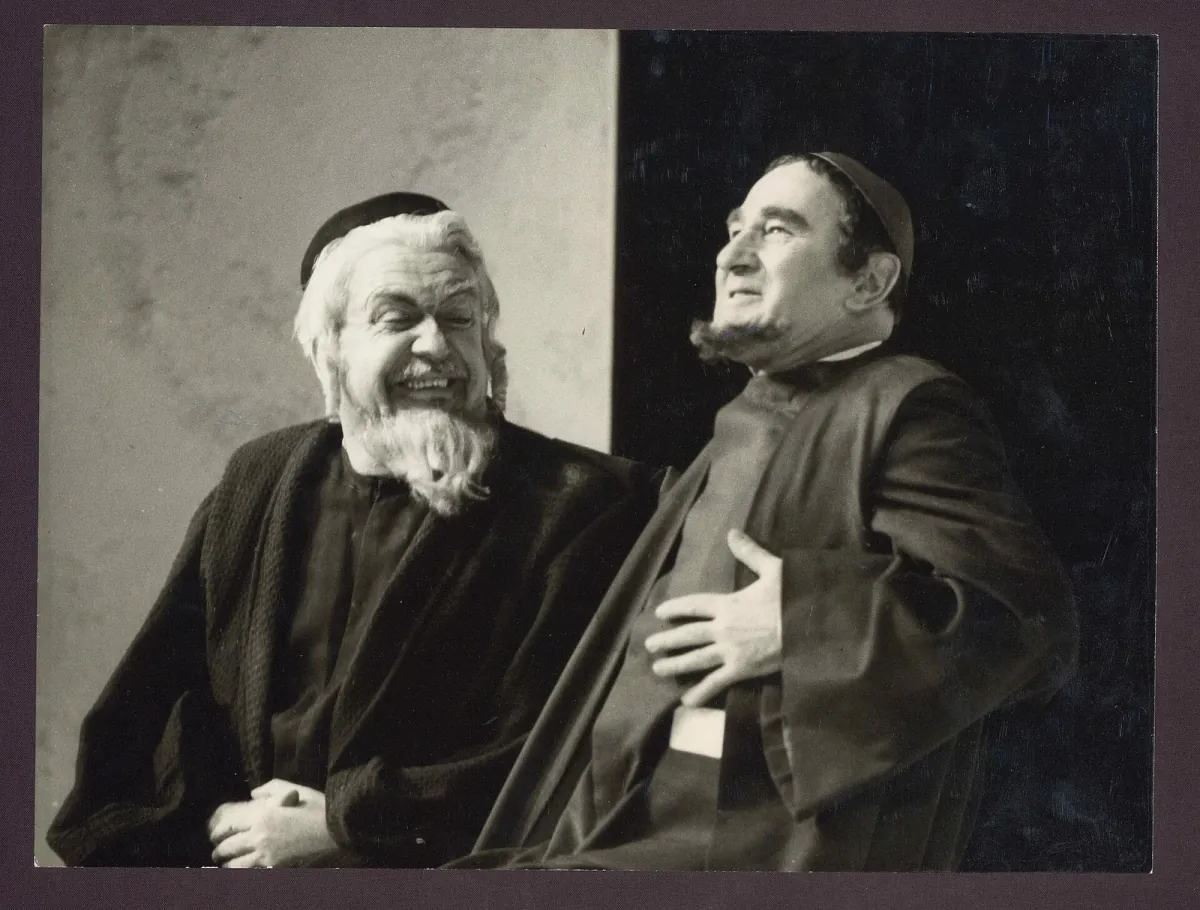
About the work
William Shakespeare's „The Merchant of Venice" was probably written in 1596-97 and is one of his most contested works — its classification as a „comedy" stands in sharp conflict with the antisemitic material around the Jewish moneylender Shylock. The play interweaves a comedy of love and disguise with a court drama over a blood-bond.
Plot
In Venice the merchant Antonio borrows for his friend Bassanio three thousand ducats from Shylock, a Jewish moneylender to whom Antonio has previously shown open antisemitism. As a „jest" Shylock demands a bond entitling him in default to a pound of Antonio's flesh. Bassanio travels with the money to Belmont, where he wishes to woo the wealthy heiress Portia. Three suitors must choose from three caskets (gold, silver, lead) — Bassanio chooses correctly (lead) and wins Portia; his servant Gratiano wins her servant Nerissa. Then comes word: Antonio's ships are lost, the bond is due. Shylock insists on his pound of flesh — even when offered three times the money. Before the Doge's court both sides plead. Portia, disguised as a lawyer, at first sides with Shylock — then adds that the bond permits flesh, but „not one drop of blood". Shylock is trapped: he must give half his wealth to the state, the other to Antonio, and convert to Christianity. In the final act all return to Belmont; the couples forgive each other their fidelity-games. Antonio's ships have not been lost after all.
Cultural significance
The Merchant of Venice is Shakespeare's most uncomfortable comedy. Shylock's monologue „Hath not a Jew eyes?" is one of the most powerful indictments of antisemitism in world literature — written at a time when Jews had been banished from England since 1290. Modern productions wrestle with the play's dual nature. Famous Shylocks include Edmund Kean, Henry Irving, Laurence Olivier (1970), Al Pacino (film 2004), F. Murray Abraham. On German stages since 1945 it is approached with special care: Shylock as a tragic figure, not a caricature.