About the work
Die Legende von Sleepy Hollow is the stage adaptation of Washington Irving's famous tale "The Legend of Sleepy Hollow," first published in 1820. The ghost story is set in a dreamy, Dutch-influenced valley in New York State that is haunted by the legend of a headless horseman — the ghost of a Hessian mercenary killed in the War of Independence. Irving's tale combines gentle humour, local colour and an eerie atmosphere and counts as one of the first classics of American literature. On stage the material unfolds as an atmospheric, spooky-comic theatrical experience, especially popular in the autumn and Halloween season.
Plot
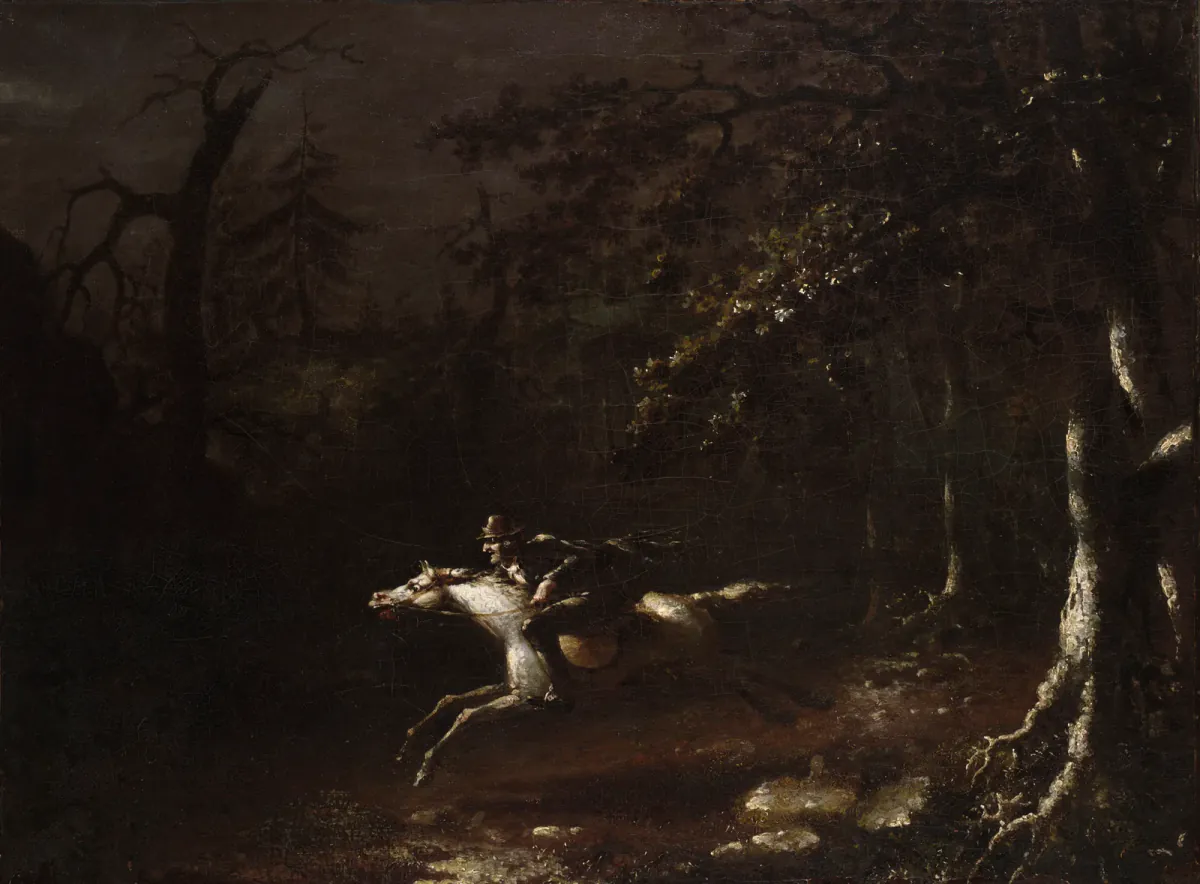
The gaunt, superstitious village schoolmaster Ichabod Crane arrives in tranquil Sleepy Hollow and falls in love less with the beautiful Katrina van Tassel than with the prospect of her father's rich inheritance. His rival is the daredevil Brom Bones. Riding home at night from a party at the van Tassel farm, Ichabod is pursued by the most dreadful figure of the region: the headless horseman. Fleeing wildly across the bridge, he vanishes without trace. All that remains is his hat and a shattered pumpkin, leaving it open whether a ghost or a very earthly prank drove him away.
Cultural significance
Washington Irving's "The Legend of Sleepy Hollow" is among the founding texts of American storytelling and created, in the headless horseman, one of the best-known figures of horror in popular culture. The tale has been filmed, illustrated and dramatised countless times and still shapes the image of American Halloween. On stage the material appeals through its mix of the eerie and the ironic, through the ambivalence between the supernatural and exposed superstition.