About the work
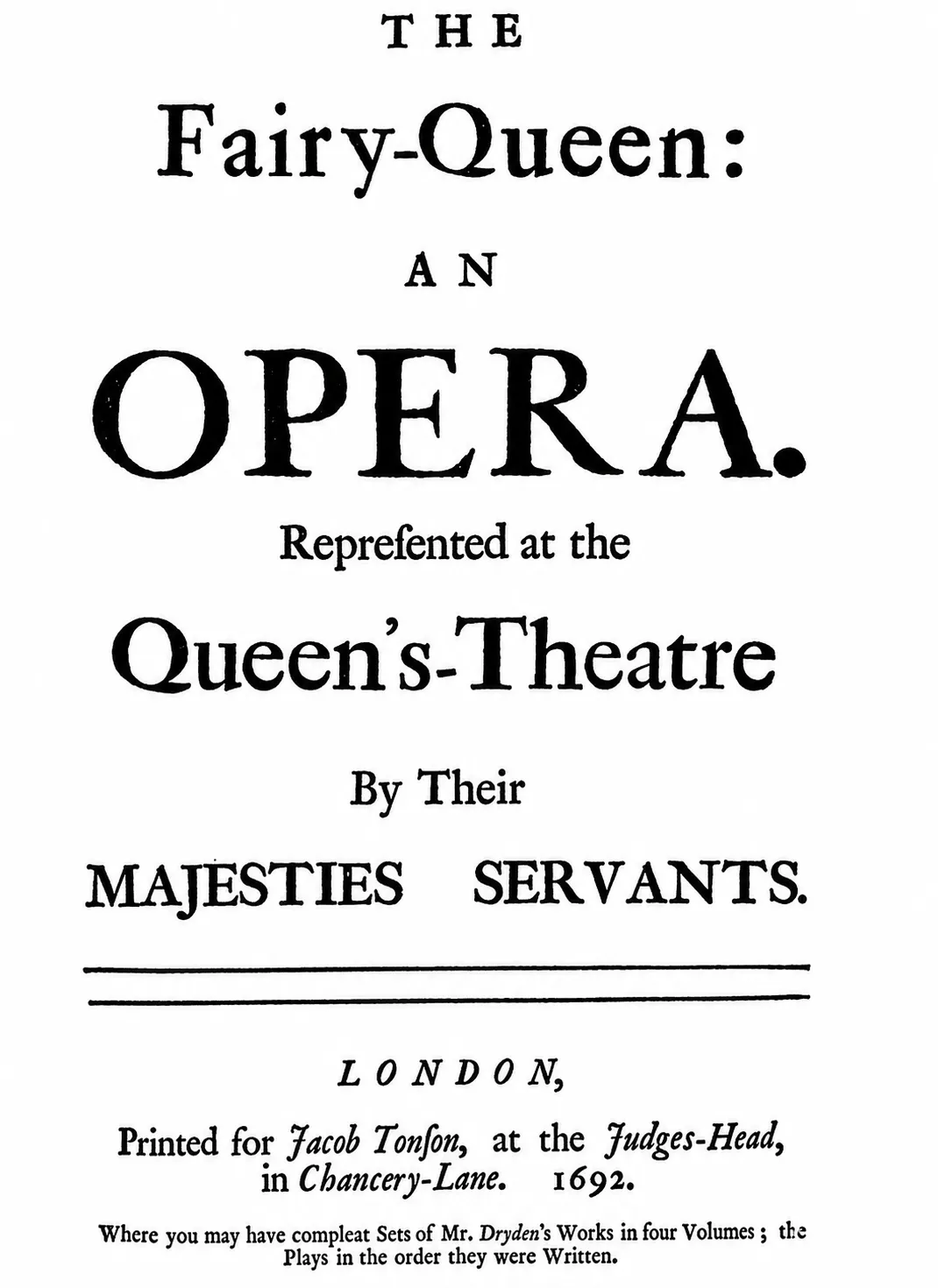
The Fairy Queen is a semi-opera (masque) by Henry Purcell, premiered in London in 1692. The anonymous libretto is an adaptation of Shakespeare's A Midsummer Night's Dream. It is among the most magnificent examples of English semi-opera, in which spoken drama and extended musical "masques" alternate.
Plot
The spoken frame follows Shakespeare's comedy of the confused lovers in the forest, the quarrel of the fairy king and queen Oberon and Titania, and the play of the craftsmen. Purcell's music, however, does not set Shakespeare's verse directly but unfolds in five great allegorical "masques" at the ends of the acts: celebrations of Night and Sleep, a procession of the Seasons, a quarrel between a drunken poet and the fairies, and a splendid Chinese closing tableau—images of overflowing musical imagination.
Cultural significance
The Fairy Queen is Purcell's most extensive stage work and a high point of English Baroque theatre. After his death the score was lost and was considered missing for almost two centuries until its rediscovery around 1900. Today the work is celebrated in historically informed performance and is striking for its wealth of dances, arias, and choruses, attesting to Purcell's inventiveness and his central place in English music history.