About the work
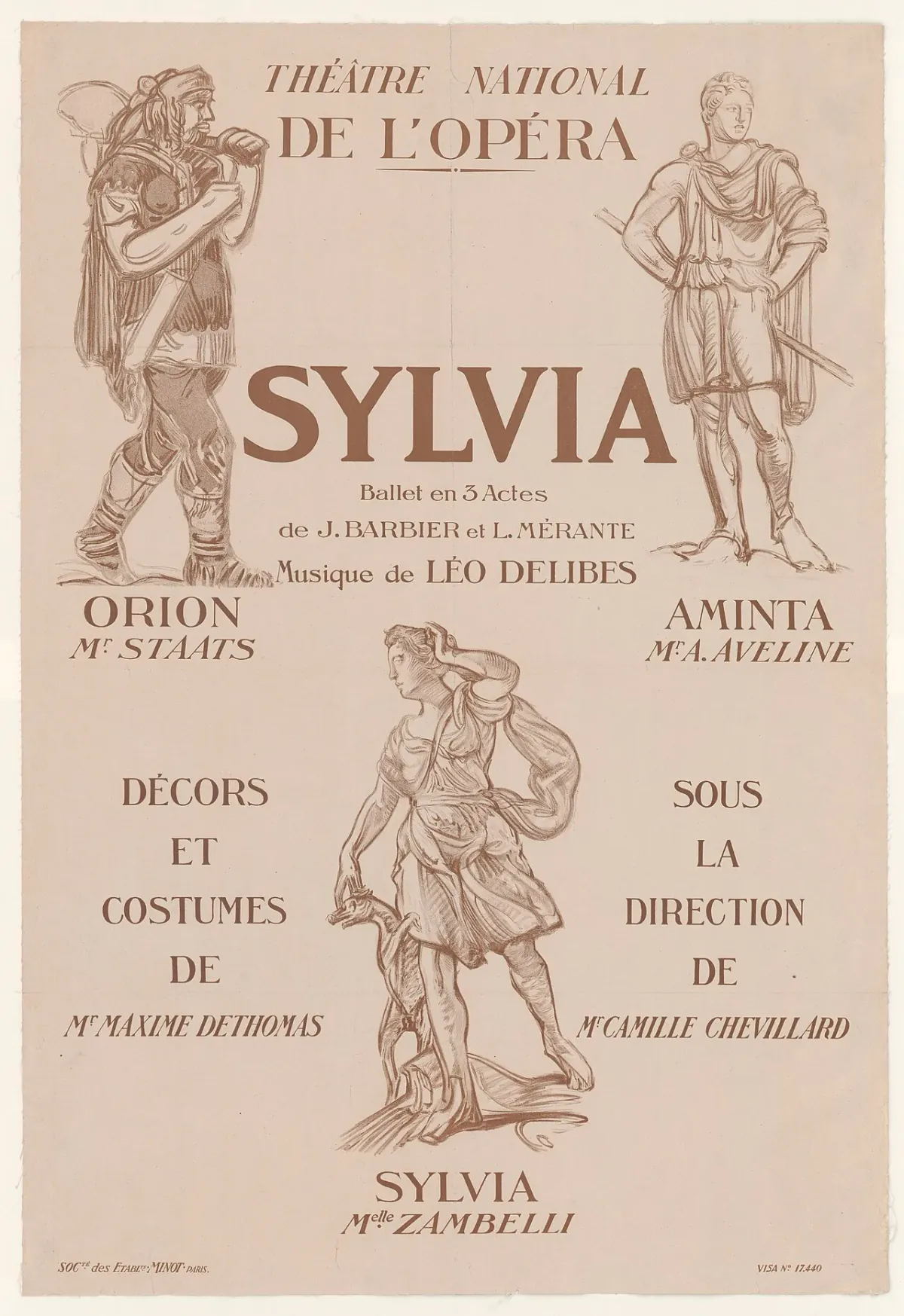
Sylvia is a narrative ballet with music by Léo Delibes, premiered in 1876 at the Paris Opera, originally choreographed by Louis Mérante. The work, after Torquato Tasso's pastoral drama Aminta, is regarded as a milestone of ballet music—Tchaikovsky himself admired Delibes's score.
Plot
The nymph Sylvia, a companion of the goddess Diana, has renounced love and devotes herself solely to the hunt. When the simple shepherd Aminta declares his love for her, Sylvia mocks him—and nearly wounds him with an arrow when the god of love, Eros, intervenes. Struck by Eros's arrow, Sylvia now falls in love herself. After her abduction by the sinister hunter Orion, her rescue, and Diana's initial wrath, Eros finally brings the lovers happily together.
Cultural significance
Sylvia is significant above all for Delibes's pioneering symphonic ballet music, which contains the famous Pizzicato and the majestic March and Procession of Bacchus. Delibes raised ballet music from mere accompaniment to independent symphonic quality—an influence Tchaikovsky openly acknowledged. Later choreographers such as Frederick Ashton created acclaimed new versions that kept the work in the repertoire.