About the work
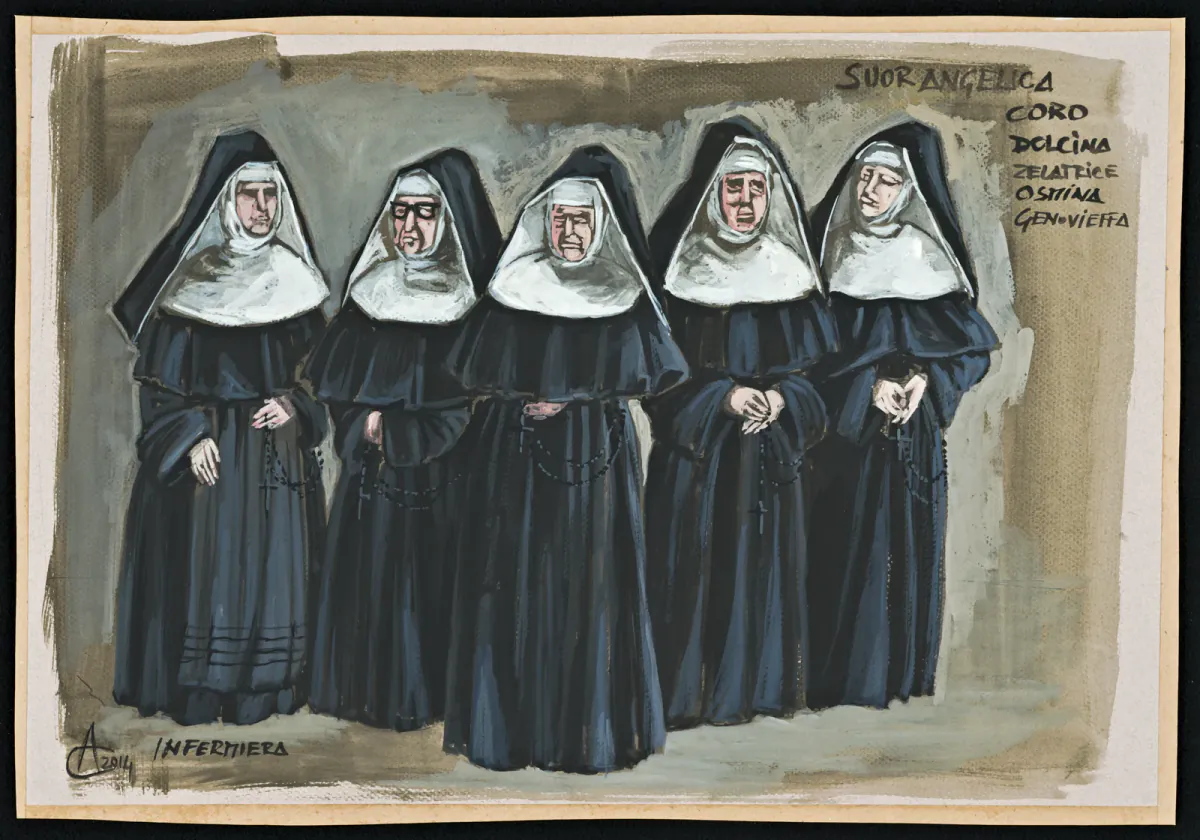
Giacomo Puccini's one-act opera forms the second part of Il Trittico, premiered with Il Tabarro and Gianni Schicchi on 14 December 1918 at the Metropolitan Opera New York. Set in a seventeenth-century Italian convent, the opera is the only all-female opera in the standard repertoire—no male voices appear at all. Puccini, whose sister was a nun, regarded Suor Angelica as his most personal work and was reportedly hurt by its early reception.
Plot
Sister Angelica, seven years a nun in a Tuscan convent, is the illegitimate mother of a child she has never been allowed to see. Her aristocratic aunt, the Principessa, arrives with papers for Angelica to sign renouncing her inheritance to her younger sister's marriage. When Angelica begs for news of her son, the Princess coldly tells her: the child died two years ago. After the Princess leaves, Angelica mixes a poison from herbs in the convent garden and drinks. As she dies, realising she has committed the mortal sin of suicide, she prays to the Virgin Mary. In a luminous vision, the Virgin appears holding Angelica's dead son, leading him toward his dying mother.
Cultural significance
Suor Angelica contains Puccini's most concentrated exploration of religious faith and one of his most beautiful soprano arias, Senza mamma. The role requires a soprano of exceptional emotional transparency. The Principessa, a mezzo-soprano role, is one of the coldest and most memorable villains in Italian opera. Productions in the full Trittico sequence have become increasingly frequent, as the three works together reveal Puccini's command of widely different emotional and theatrical registers in the compressed one-act form.