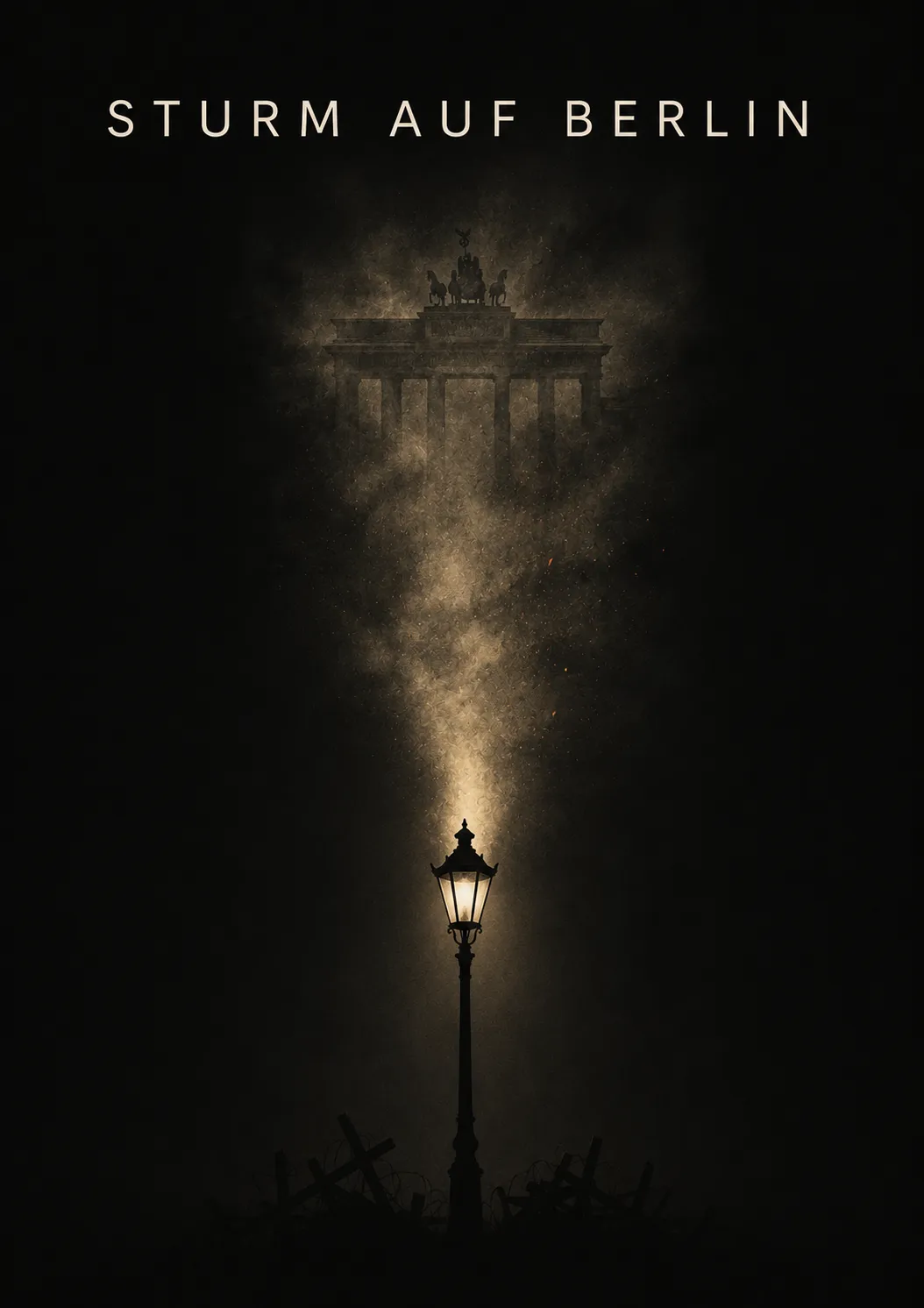
About the work
"Sturm auf Berlin" ("Storming Berlin") is a documentary research project by director Marie Schwesinger, premiered on 7 May 2026 at the Berliner Ensemble (created within the emerging-directors programme WORX). It is based on some 1,200 pages of court records from the "Reichsbürger" trial against the "Reuß group". The evening asks what happens when democracy is attacked from within – and examines the dangers of right-wing extremism and conspiracy narratives.
Plot
The play sets two historical moments against each other. On 13 March 1920 – after the First World War and the Treaty of Versailles – the Ehrhardt Marine Brigade marched on Berlin to overthrow the democratic government (the Kapp Putsch); a general strike then mobilised millions to defend democracy. Almost a hundred years later, on 1 August 2021, four people meet in the Bundestag, among them a member of parliament, and discuss with a former elite soldier a plan to storm the Reichstag. From the montage of real records and historical parallel emerges a condensed picture of the return of anti-democratic fantasies of overthrow.
Cultural significance
"Sturm auf Berlin" stands in the tradition of documentary theatre that brings real files and trial records to the stage in order to diagnose the present. In the face of the strengthening of "Reichsbürger" and conspiracy milieus, the evening makes the fragility of democratic institutions tangible while reminding us that their defence – as in 1920 – depends on the engagement of many. The play is thus an example of political theatre as a form of democratic self-assurance.