About the work
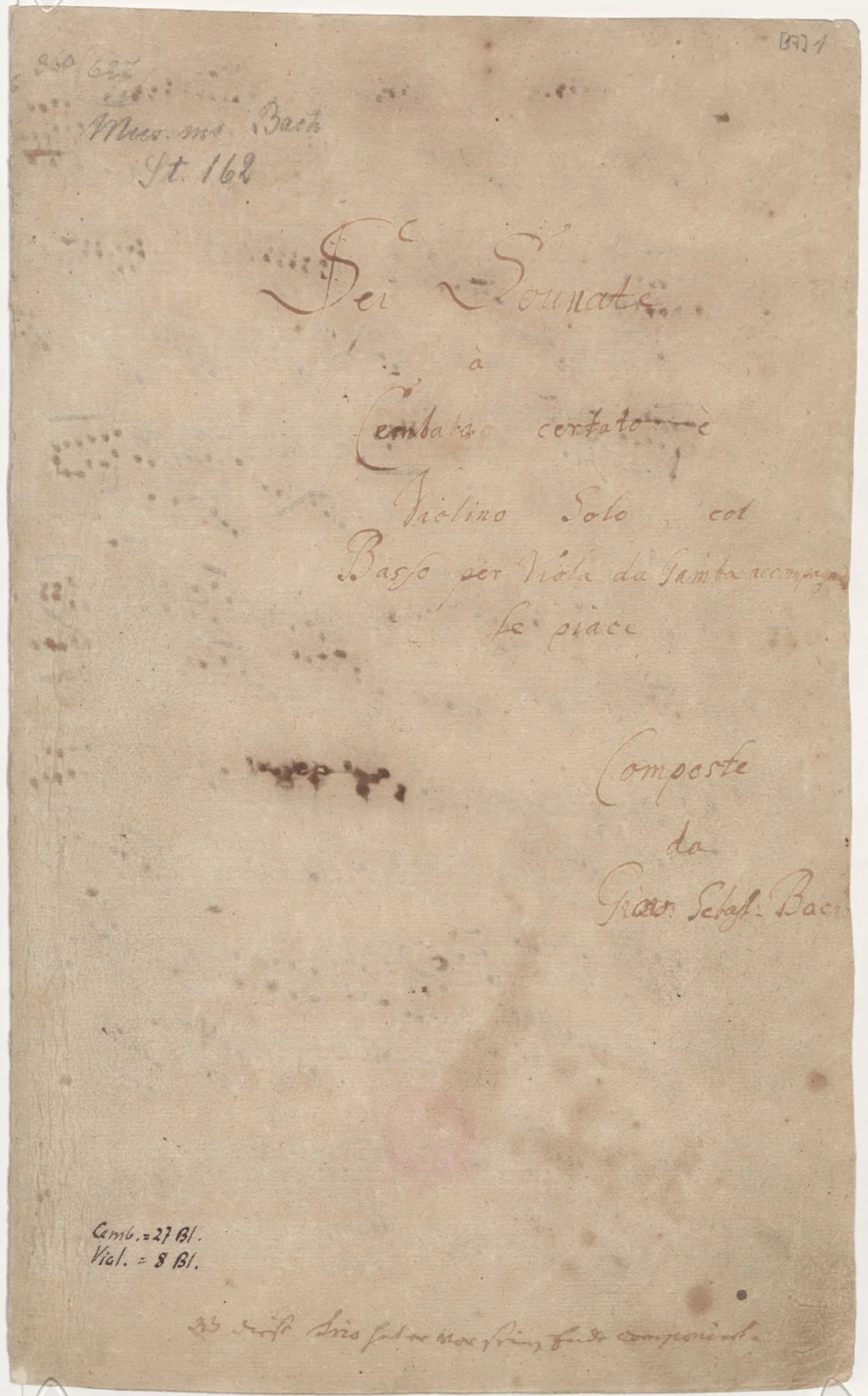
The Sonata in B minor, BWV 1014, is the first of the six sonatas for violin and obbligato harpsichord that Johann Sebastian Bach probably composed during his final Cöthen years, between 1717 and 1723, and continued to revise into his Leipzig period. What sets this collection apart is that the harpsichord is no longer a mere figured-bass continuo instrument but an equal partner: Bach writes out the right hand in full, producing a three-part trio-sonata texture — two melodically equal upper voices (violin and the harpsichord's right hand) over an independent bass in the left hand. Carl Philipp Emanuel Bach counted the set among his father's finest works. BWV 1014 follows the four-movement church-sonata model (slow–fast–slow–fast) and opens the cycle with solemn gravity.
Plot
The opening Adagio lets the violin unfold a broadly arched, songful line over the harpsichord's steady pulse, the texture thickening at times to five real parts through the violin's double stops. A lively Allegro in strict fugal writing follows, with violin and both hands of the harpsichord stating the subject on equal terms. The third movement, an Andante in the relative key of D major, weaves violin and the harpsichord's right hand into a delicate filigree over a walking bass. The closing Allegro returns to B minor and drives the three voices through brisk counterpoint to an energetic conclusion.
Cultural significance
With the sonatas BWV 1014–1019 Bach created a new kind of chamber music that anticipated the later duo sonata for keyboard and melody instrument. By composing out the harpsichord part, he removed the music from the vagaries of figured-bass realisation and secured its artful voice-leading. As the opening work, BWV 1014 sets the serious, learned tone of the collection, which ranks among the summits of Baroque chamber music and holds a firm place in modern concert life on both period and modern instruments.