About the work
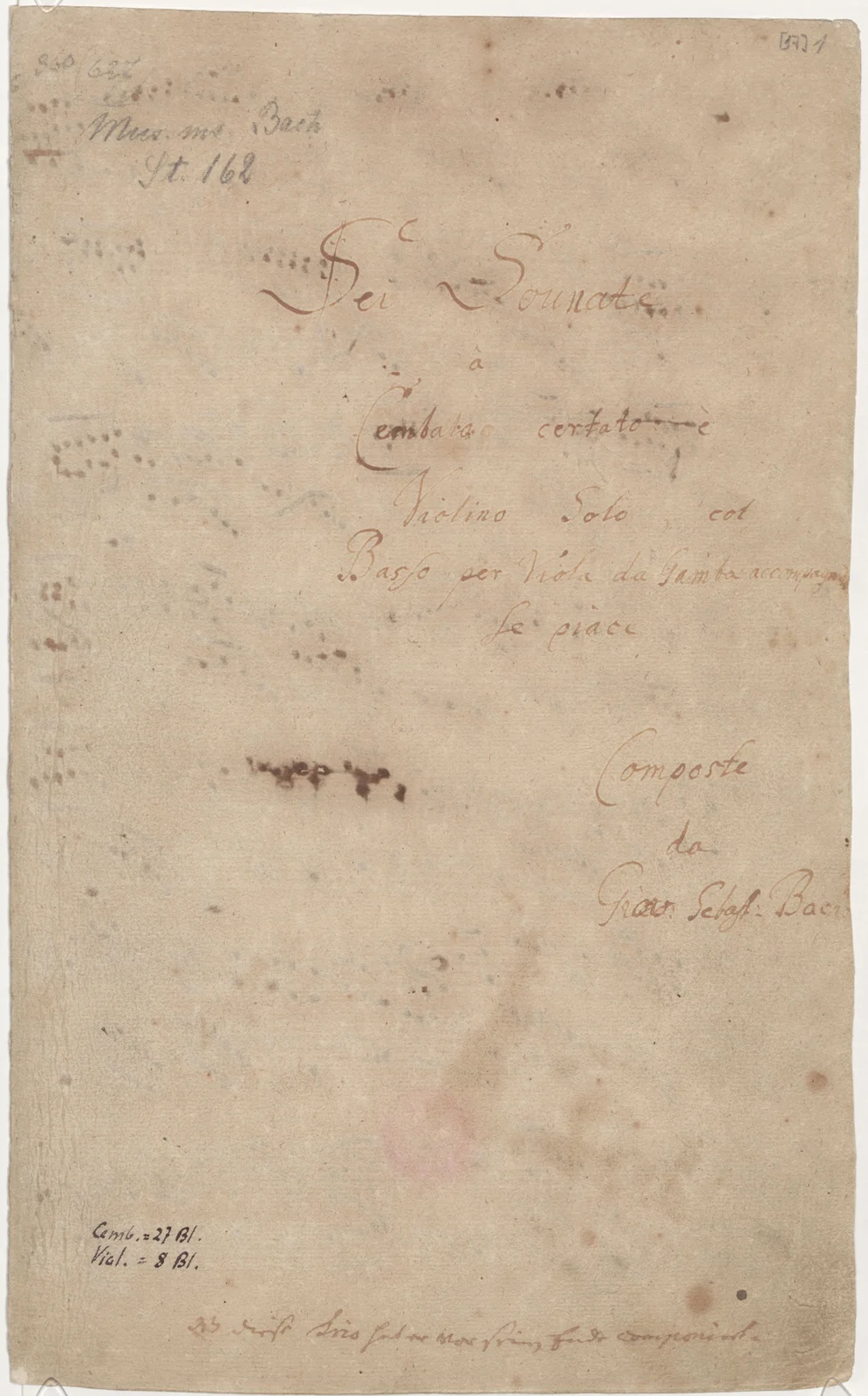
The Sonata in F minor, BWV 1018, is the fifth of Johann Sebastian Bach's six sonatas for violin and obbligato harpsichord. It is regarded as the most serious and darkest in tone of the cycle. Here too the violin and the harpsichord's right hand are led as equal voices over an independent bass, yet in this sonata Bach departs at times from pure trio writing and explores unusual textures. Like its companions it probably originated in Bach's Cöthen period and was later revised. The four-movement layout essentially follows the slow–fast–slow–fast scheme of the church sonata.
Plot
The opening Largo strikes an atmosphere of deep introspection reminiscent of Bach's great sacred works: in four-part counterpoint the harpsichord first develops the theme, while the violin enters only after several bars on a long sustained note, embellishing the movement rather than joining the contrapuntal interplay. A lively Allegro follows. The third movement, an Adagio, stands out for its unusual texture, in which the violin sustains double stops over the harpsichord's figuration. A spirited Vivace closes the sonata.
Cultural significance
BWV 1018 holds a special place within the cycle: its opening Largo is among the most moving slow movements in Baroque chamber music, and Bach's idiosyncratic handling of the instruments breaks the usual trio-sonata mould. The key of F minor lends the work an austere, almost tragic cast. As part of the collection that C. P. E. Bach especially prized, the sonata stands as an impressive testimony to Bach's experimental chamber music.