About the work
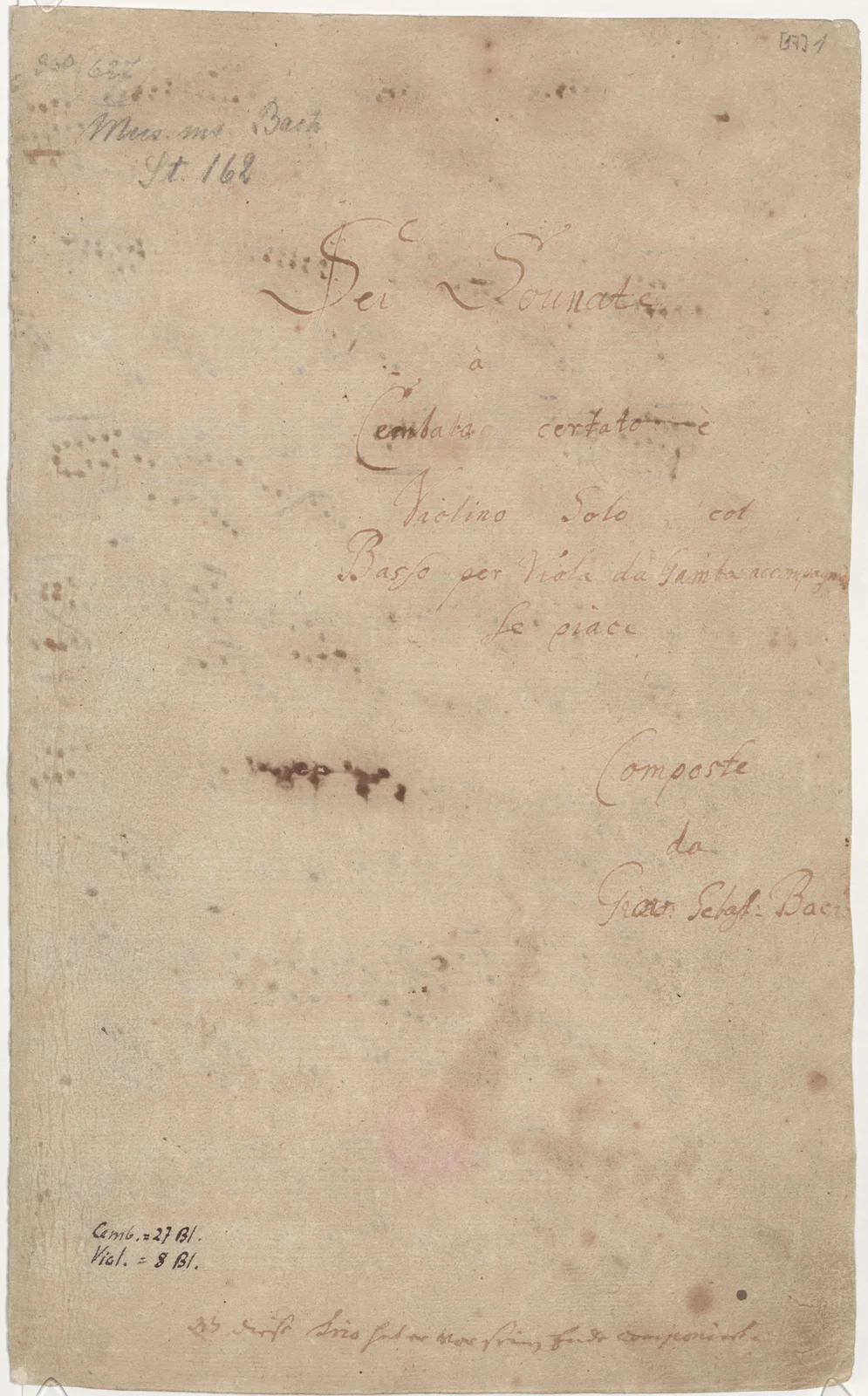
The Sonata in A major, BWV 1015, is the second of Johann Sebastian Bach's six sonatas for violin and obbligato harpsichord. Like the whole cycle it is conceived as a trio sonata: the violin and the written-out right hand of the harpsichord form two equal upper voices over the bass in the left hand. Compared with the grave opening sonata in B minor, BWV 1015 strikes a brighter, more lyrical tone. Its first movement carries no tempo marking, but its 6/8 metre, the indication "dolce" and the graceful subject point to an intimate, songful character. Like its companions, the work probably originated in Bach's Cöthen years and was revised repeatedly thereafter.
Plot
The first movement unfolds a tender dialogue between violin and harpsichord over a rocking bass, the two upper voices entwining in thirds and sixths. A lively Allegro in fugal trio-sonata manner follows, interlocking the parts in close imitation. The slow third movement — an Andante un poco — sinks into songful repose before the closing Presto rounds off the sonata with virtuoso brilliance and dancing energy. The slow–fast–slow–fast layout preserves the church-sonata model.
Cultural significance
BWV 1015 exemplifies how Bach unites learning and sensuousness in the violin sonatas: the strict three-part writing is never an end in itself but serves an expressive, often intimately chamber-musical music-making. Within the cycle that C. P. E. Bach especially prized, the A major sonata counts among the most endearing pieces. It remains part of the core repertoire for violin and harpsichord or piano and is equally at home on period and modern instruments.