About the work
Johann Wolfgang von Goethe's three-act Singspiel was composed in 1784 and was first set by Philipp Christoph Kayser, later again by Max Bruch (1856-58, performed 1858 in Cologne). Goethe's libretto is a light-footed commedia dell'arte variation on a trio of swindler, doctor, and disguised woman — an entirely different tone from his deeply serious dramas of the same period.
Plot
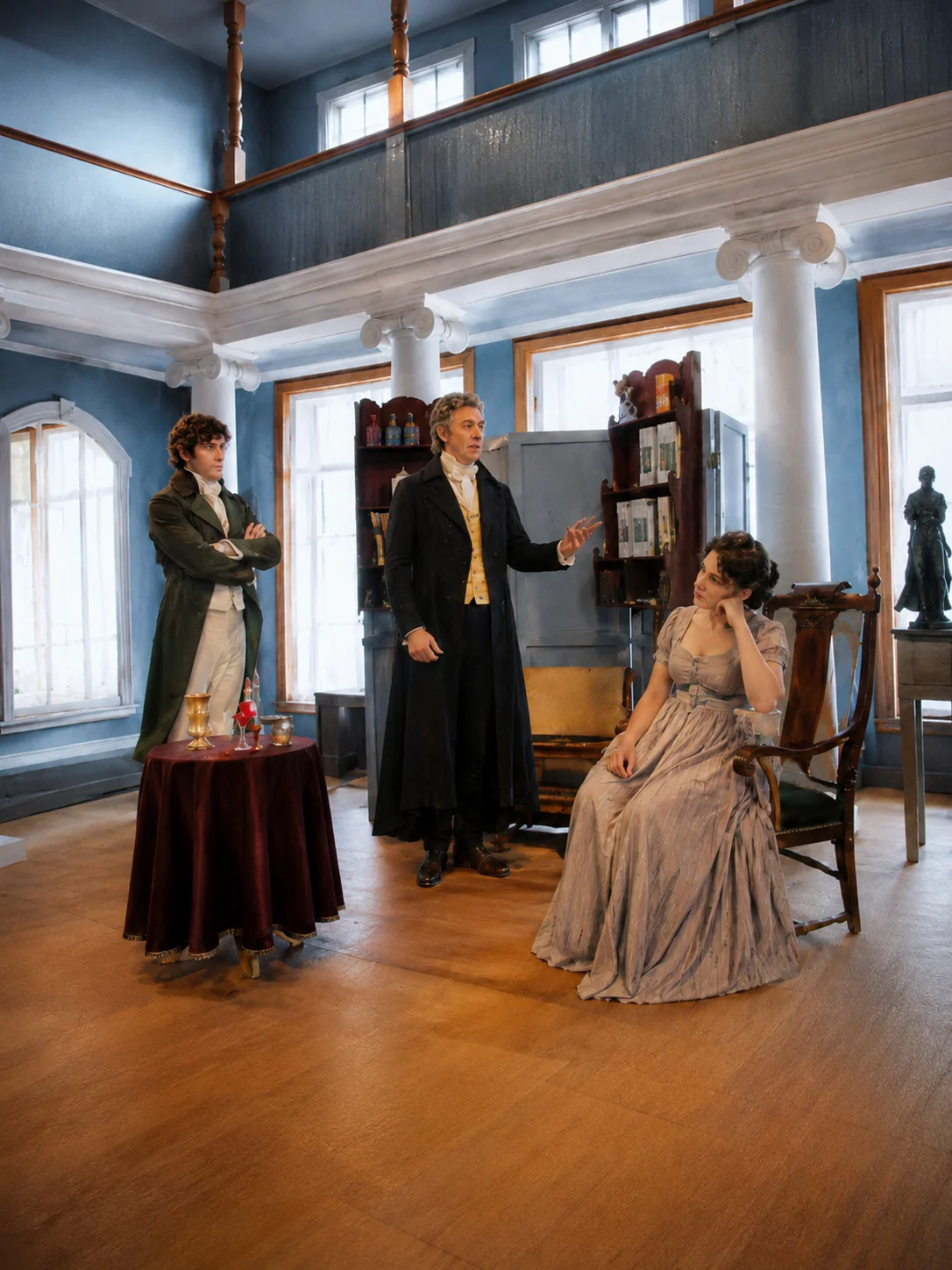
Scapin and Scapine, a cunning servant couple, have been swindled out of their money by the quack Doctor Weltrungen. Scapine disguises herself as a distinguished sick lady and summons the doctor to her. While Weltrungen is occupied with his nonsensical cures, Scapin carries out a series of pranks that increasingly corner the doctor. Finally the two confess their identity, the doctor confesses the swindle, and justice triumphs in a closing terzetto that quotes the title: Jest, cunning, and revenge have won the day.
Cultural significance
Scherz, List und Rache is Goethe's wittiest dramatic text and was absorbed into the German opera tradition through Max Bruch's 1858 setting — Bruch's version was his most successful stage work. The commedia reduction to three characters and the short performance time make the work a popular vehicle for young opera ensembles and music theatre festivals.