About the work
Camille Saint-Saëns' three-act opera was premiered in Weimar in 1877 under Franz Liszt's direction. Ferdinand Lemaire's libretto dramatises the Old Testament narrative from the Book of Judges about the Israelite hero Samson and the Philistine seductress Delilah.
Plot
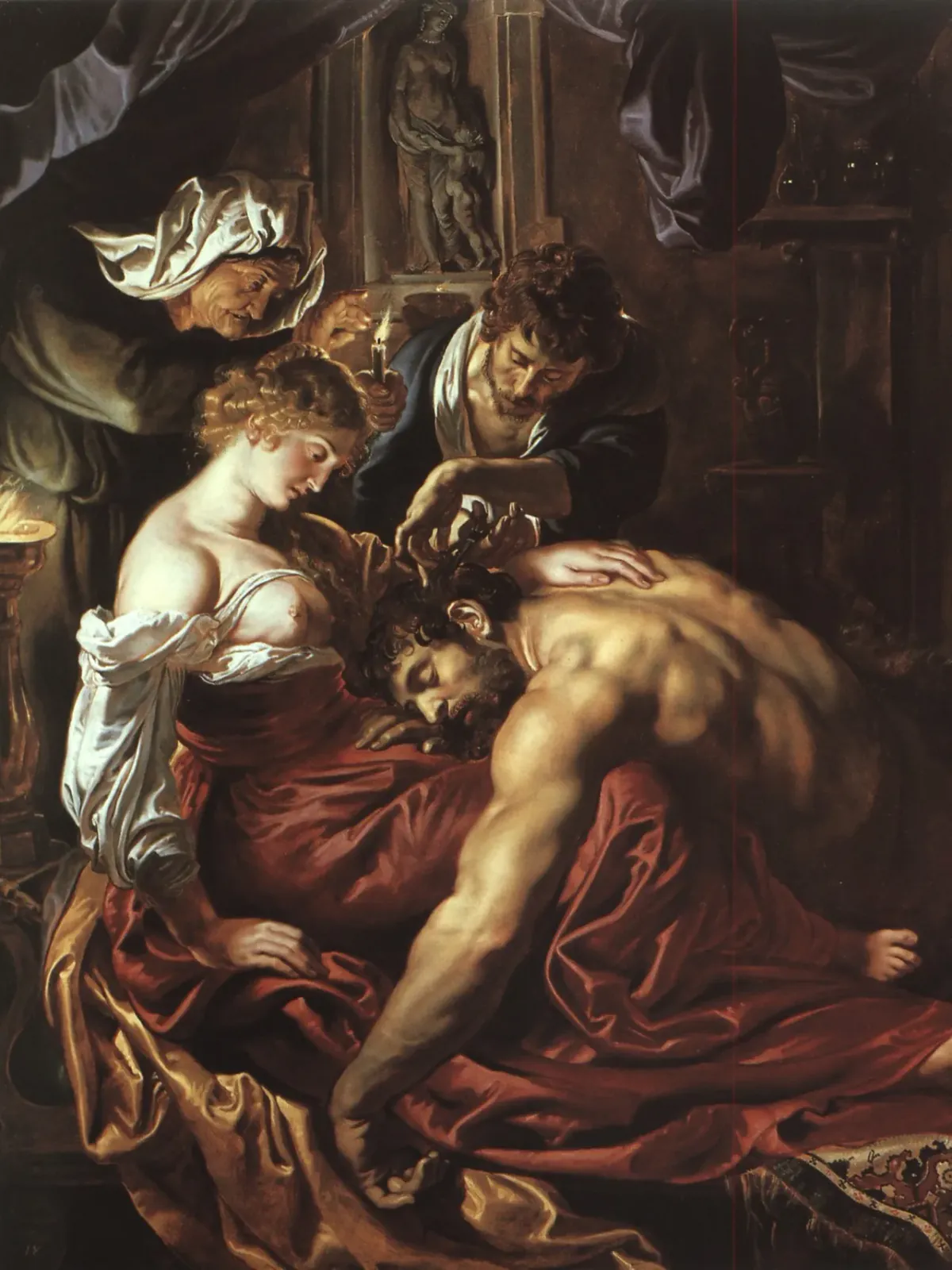
In Gaza, oppressed by the Philistines, Samson rallies the Israelites to rise up and kills the Philistine governor Abimélech. The High Priest of Dagon vows revenge. Delilah, once Samson's lover, agrees to the priest's plan: she is to coax from Samson the secret of his superhuman strength. In a great seduction scene Samson yields and reveals that his power lies in his uncut hair. While he sleeps, Delilah cuts his hair; the Philistines overpower the weakened hero, blind him and chain him to the mill. At the feast in Dagon's temple the Philistines mock the blinded Samson. In silent prayer he regains his strength, brings down the two great pillars and buries himself and the assembled Philistines beneath the rubble.
Cultural significance
Samson et Dalila is the only one of Saint-Saëns's thirteen operas to have remained in the repertoire. Delilah's seduction aria „Mon cœur s'ouvre à ta voix" ranks among the most famous mezzo-soprano arias ever written. The work fuses grand-opera tableau with orientalist sensual sonority and stands as a key piece between the Meyerbeer tradition and French musical modernism.